
Longtail boats brimming with tropical fruit, sizzling street food cooked on the water, and vendors bartering from canoe to canoe—Thailand’s floating markets offer a vivid slice of local life that’s unlike anything found on land. These bustling canals are more than tourist attractions; they’re working marketplaces where centuries-old traditions continue to thrive. From the early morning rhythm of Damnoen Saduak to the hidden charm of Amphawa by lantern light, each destination reveals something unique about Thai culture. This guide reveals where to go, what to eat, and how to shop like a local across Thailand’s most iconic and authentic water markets.
Sunrise Boat‑Noodle Breakfast Quest

Morning light glistens across the canal as the first boats begin ladling steaming bowls of boat noodles to early risers. Locals know these floating vendors serve some of the richest flavors when the market is just waking. Tables set up along wooden docks fill with regulars slurping beef or pork broth layered with chili, vinegar, and peanuts. It’s not uncommon to see school kids and monks sharing bench space while docked boats continue to roll out fresh portions.
Thai boat noodles, or kuay teow reua, are a breakfast staple around these waterways. What sets the sunrise experience apart is the quiet rhythm of the canal—no engine roar, just soft paddle strokes and sizzling broth. Most of these vendors have been serving the same recipes for decades, often inherited from their grandparents. Vendors may ask what level of spice you can handle, and portions are often small, so you’ll want at least two bowls.
Expect prices as low as 10–20 baht per bowl. Early mornings also offer better seating and shorter queues, making this a must-do for anyone wanting to eat like a true local. For the freshest experience, aim for arrival just after 6 AM.
Firefly Night Canoe at Amphawa

Twinkling lights shimmer in the treetops as you glide silently along the canal after dusk. These aren’t man-made—they’re fireflies, flickering in unison like floating lanterns. Amphawa’s evening canoe tours take you deep into mangrove-lined waterways where nature puts on a hypnotic light show.
Boatmen steer small wooden canoes without motors, preserving the tranquility and allowing fireflies to remain undisturbed. The best time for sightings is during the dry season, from November to February, especially on moonless nights. These fireflies cluster near Lamphu trees, which line the canals like glowing sentinels.
Tours often begin after 6:30 PM, just as the floating market starts winding down. Booking with a local operator ensures a respectful approach to nature, as some avoid using harsh lights that disrupt the fireflies’ patterns. Many locals bring snacks from the market—grilled squid or mango sticky rice—to enjoy onboard.
This experience blends serenity with spectacle and is ideal for couples, families, or anyone looking to wind down a busy day of exploring. Just remember to wear mosquito repellent and carry a light sweater, as evenings near the water can be breezy. For a magical end to your Amphawa visit, few moments compare.
Hidden Halal Boat‑Snack Trail

Bobbing between narrow khlongs, a lesser-known network of Halal-friendly boat vendors caters to Muslim locals and curious foodies alike. These boats serve up crispy chicken skewers, beef satay, pandan-wrapped delights, and spicy peanut sauce—all prepared in accordance with Islamic dietary laws.
Mostly operating around Thonburi and Taling Chan, the stalls don’t always have signs. Instead, you follow the crowd—local families in modest dress, often chatting in Southern Thai dialects. Vendors frequently display a small green crescent sticker or a handwritten “Halal” note as your cue to dock and order.
The culinary trail includes coconut-rice pancakes (kanom krok), grilled banana leaf parcels, and noodle rolls infused with turmeric. Many boat owners source their ingredients from nearby Halal wet markets to ensure authenticity. Some even offer boat-to-boat delivery if you’re floating and can’t dock.
Early afternoons tend to be busiest, though some begin just before lunch. Look for congregations near riverside mosques or Islamic schools. The atmosphere is friendly and welcoming, with vendors more than happy to explain their dishes to non-locals.
Food here isn’t just delicious—it’s a cultural bridge. For those seeking both flavor and respect for tradition, this floating Halal trail is a hidden treasure.
Local Granny Fruit‑Vendor Snap

Perched low in a wooden canoe, a weathered smile beneath a wide-brimmed straw hat tells the story of decades spent selling fruit by the river. These elderly women—often called “Mae Kha” vendors—are icons of Thailand’s floating markets, offering more than just produce; they represent resilience and cultural continuity.
You’ll spot them slicing rose apples or peeling rambutans with the finesse of someone who’s done it for 40 years. Their boats are mini orchards—neatly stacked with mangoes, bananas, pomelo, and even rare seasonal fruits like salak or longan. Many locals insist the best deals and sweetest picks come from these grannies, who’ve sourced from the same growers for generations.
Photos with them are common among travelers, but etiquette matters. Always ask permission first and consider buying something before snapping. A respectful smile and basic Thai greeting (sawasdee ka/krap) go a long way.
Early mornings are ideal, as these vendors often head home by midday. Their presence may dwindle over the coming years, making it all the more special to interact with them today. Beyond the lens, you’re supporting a micro-economy of independent women who shaped these canals long before tourism arrived.
Coconut‑Bowl Tom Yum by the Water

Steam wafts from a carved coconut shell as the tang of lemongrass, chili, and lime hits your nose. This floating market twist on Tom Yum soup isn’t just about flavor—it’s about presentation, atmosphere, and cultural fusion.
Vendors gently heat the soup over boat-top stoves, then pour it into natural coconut bowls, retaining both heat and aroma. Some include shrimp, squid, or fish balls, while others go the vegetarian route with tofu and mushrooms. The soup’s citrus edge balances perfectly with coconut flesh scraped fresh from the bowl’s interior.
This dish is especially popular at weekend floating markets near Bangkok like Bang Nam Phueng or Khlong Lat Mayom. Most vendors use biodegradable materials, aligning with eco-conscious trends and reducing single-use plastics. The coconut bowl also acts as a natural flavor enhancer, slightly sweetening each sip.
Expect to pay between 40–60 baht, and vendors may top it with cilantro, roasted chili oil, or kaffir lime leaf slivers for added depth.
Pull up a dockside stool or eat right in your boat while watching canal life drift by. This isn’t your average street food—it’s a feast that’s sustainable, scenic, and unforgettable.
Plastic‑Free Basket Swap Challenge

Vendors paddle toward you offering goods—but instead of handing over your items in plastic bags, they smile and gesture toward woven baskets, fabric wraps, or banana leaves. This is the market’s local initiative to reduce plastic waste: bring your own reusable container and you’ll be rewarded.
Participating vendors display hand-painted signs reading “No Plastic Today” or offer discounts for customers using cloth totes or tiffin tins. Some even organize informal “swap days” where you can trade plastic you’ve collected for handmade baskets or eco goods.
Markets like Bang Kachao and Tha Kha are leading the way with their plastic-free culture. Vendors often come prepared with biodegradable packaging but always appreciate when customers contribute. Students from nearby schools sometimes assist with the program, handing out recycled paper straws or helping sort trash into compost piles.
The challenge isn’t enforced by rules but by community pride. Locals are deeply committed, making it easy for tourists to join the movement without confusion.
Bring a backpack or tote, and you’ll fit right in. Every small choice contributes to preserving the canals that keep these floating markets alive. Sustainability here isn’t a trend—it’s part of the local identity.
DIY Boat Fruit‑Carving Pop‑Up

Colorful peels curl like ribbons as local artisans turn watermelons and papayas into intricate edible sculptures—all from the comfort of a floating boat. These pop-up fruit-carving stations are not pre-scheduled attractions but spontaneous displays of craftsmanship that appear on weekends and holidays.
You’ll often find them near larger floating markets like Damnoen Saduak or Amphawa, where artisans balance carving tools and fruits on narrow canoe benches. Designs range from lotus flowers to Thai mythical creatures, all carved with delicate precision using curved knives and skewers. Some vendors even allow visitors to try carving small fruit slices for free, making it interactive and unforgettable.
The practice stems from royal Thai traditions where fruit carving was once a courtly art, now adapted into street-level showmanship. While these vendors accept tips or purchases of the carved fruits, they’re mainly here to keep the tradition visible and alive.
Ask questions, snap respectful photos, and marvel at how quickly a melon becomes a blooming rose. If lucky, you may stumble upon a teacher explaining techniques to a young apprentice, continuing the cultural cycle right there on the water. It’s artistry afloat—fueled by tradition and shared through spontaneous joy.
Market‑to‑Temple Alms Row
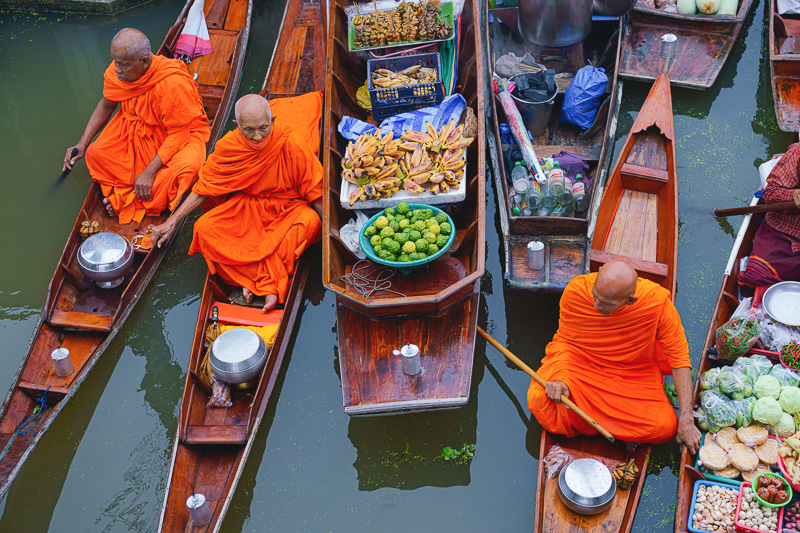
Before the sun reaches its peak, locals begin a quiet paddle from the floating market toward nearby temples, carrying alms offerings for resident monks. This daily ritual—steeped in Buddhist tradition—reflects the spiritual heartbeat of canal communities.
Offerings typically include steamed rice, tropical fruits, small desserts, and bottled water, packed into tiered trays or banana leaf parcels. Locals queue respectfully in their boats, presenting their items with bowed heads as saffron-robed monks accept the gifts in silence.
Some floating markets, such as Bang Phli and Kwan Riam, are directly connected to temples via narrow khlongs. The route itself is often adorned with water lilies, and the soundscape is hushed except for soft chanting or temple bells in the distance.
Tourists are welcome to observe, and some vendors offer pre-packed alms sets if you wish to respectfully participate. Just remember to dress modestly, remove hats or shoes where required, and never point your feet toward monks.
This short canal journey transforms commerce into compassion. For locals, it’s not merely a religious duty—it’s a way of maintaining balance between material life and spiritual giving. Witnessing or joining this practice offers a rare, authentic lens into Thai Buddhist customs.
Riverside Seafood Sizzle Sequence

A cloud of smoke curls above the water as tiny grills sizzle with marinated river prawns, squid, and sea bass. The aroma of garlic, lime, and chili mingles with drifting boat smoke to signal a must-stop spot for seafood lovers.
These floating grill vendors aren’t easy to miss. Many anchor near piers or walkways and cook fresh catch-to-order in small batches over charcoal pits. Menus vary but often include grilled river prawns with chili seafood sauce, salt-crusted tilapia, or calamari skewers with tamarind glaze.
Markets like Taling Chan and Amphawa offer some of the best sequences—where one boat handles grilling, another preps sauces, and yet another handles plating and sides. Each vendor has their specialty, and you’re encouraged to mix and match. Prices remain reasonable, with full grilled platters starting around 100 baht.
Eating by the riverside lets you soak in local chatter, flickering lanterns, and sounds of sizzling seafood with every bite. Don’t forget to pair your meal with fresh coconut juice or lemongrass tea offered by neighboring boats.
This isn’t your typical dine-and-dash—it’s a riverside ritual of patience, smoke, and bold flavor. Sit down, let the flavors build, and enjoy the theatre of floating cuisine in motion.
Local Handicraft Boat‑Hop Dropoff

Paddling from stall to stall, it’s easy to miss the subtle network of floating artisans offering handmade crafts beyond the typical souvenirs. These vendors specialize in delicate woven baskets, wood carvings, fabric-dyed bags, and coconut shell trinkets—crafted aboard their narrow boats.
Markets like Bang Nam Phueng and Tha Kha are known for boat-hoppers who sell on commission. You’ll spot them receiving goods from nearby villages, loading them on their boats, and dropping off at various floating sellers through the day. Each stop becomes a mini market.
You can follow their trail and collect goods as they’re being delivered, gaining access to fresh stock before it’s shelved. Artisans often include small bios or family stories with their products, adding a personal connection. While language may be a barrier, gestures and smiles go far.
Prices are typically non-negotiable as proceeds go directly to rural creators. Buying from these drop-off stops helps sustain local craftsmanship and ensures traditional arts don’t get replaced by factory imports.
If you’re seeking handmade authenticity over mass production, track these boat-hoppers and let your souvenirs tell a deeper story. Every piece you purchase carries the hands and heritage of Thailand’s river-based makers.
Canal‑Edge Cafe Hop Instagram Map

Boho swings, floating hammocks, and coconut milk lattes served in bamboo cups make these canal-side cafés more than just coffee stops—they’re social media magnets. Locals have mapped out unofficial “Instagram cafe trails” that guide you through the most photogenic canal-facing cafés along routes like Khlong Lat Mayom and Amphawa.
Each stop offers distinct charms. One may feature rustic wooden decks with hanging lanterns, another showcases Thai desserts on leaf-lined platters. Many spots even rent traditional Thai outfits for photo ops, drawing visitors looking to merge aesthetics with culture.
These cafés typically open around 9 AM and fill up by noon, especially on weekends. Some offer kayak parking while others let you sip iced butterfly pea tea in floating chairs. The map, often shared by local TikTok creators or café owners themselves, updates weekly with trending stops.
You won’t find corporate chains here—only local entrepreneurs curating ambiance to match canal life. Look for chalkboard signs at market entrances or QR codes that link to the latest trail.
For travelers who love both caffeine and content, this is the float-and-snap journey worth scheduling. Just don’t forget your camera and maybe an extra SD card.
Off‑Peak Weekday Market Escape

Midweek mornings shift the pace entirely. Without weekend crowds, floating markets reveal a quieter, more intimate charm. Vendors have time to chat, sample portions are more generous, and boat rides feel unrushed—making weekday visits the smart traveler’s secret.
Markets like Bang Khla and Wat Sai remain active on weekdays, catering mainly to locals. You’ll likely find fishermen selling fresh catch, kids helping grandparents on the boats, and older vendors weaving garlands as they wait for customers.
Stalls display seasonal goods not always stocked on weekends—like wild ferns, local pickles, or sticky rice wrapped in banana leaves. Some artisans test new crafts or recipes midweek before debuting them to larger weekend crowds.
It’s also easier to access waterside seating, photo spots, and exclusive interactions, like watching noodle broth get perfected over a charcoal flame. Prices occasionally dip midweek too, especially on perishable goods nearing the end of their shelf life.
For those seeking authentic connections without the hustle, weekdays offer a slower, richer immersion. You’ll leave not only with full bags but memorable conversations.
Markets breathe differently when the rush fades—and that’s when the soul of the canal truly surfaces.