
Behind Ha Long Bay’s iconic limestone karsts lies a labyrinth of caves steeped in legend, beauty, and geological wonder. These hidden chambers, sculpted by wind and water over millions of years, offer a dramatic shift from the bay’s sunlit serenity to an eerie, awe-inspiring underground world. Travelers who journey beyond the surface uncover soaring grotto ceilings, ancient stalactites, and folklore etched into stone. This isn’t just a cruise through a scenic bay—it’s an invitation to step into Vietnam’s natural cathedral. This guide reveals the most remarkable caves, how to reach them, and what makes each one worth the descent.
Paddle-Through Entry at Luon Cave During Low Tide
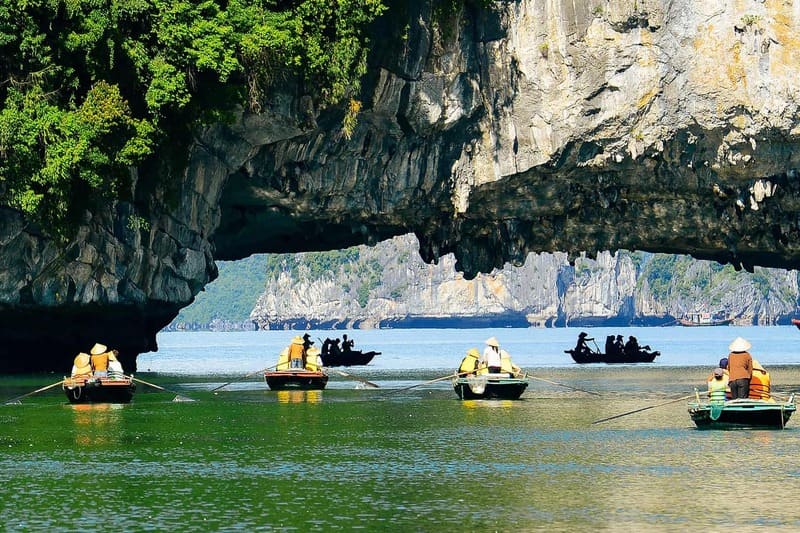
Cradled between towering limestone cliffs, Luon Cave unveils its narrow archway only when the tides dip low. Paddling through this short but serene passage reveals a hidden lagoon brimming with still water, vibrant greenery, and echoing bird calls. The calm current allows for a smooth kayak glide under the stone ceiling, reflecting thousands of years of karst erosion. Crabs scurry along the wet limestone, and monkeys are often spotted peering down from the cliff foliage. The cave’s shallow entrance means rowboats and kayaks are the only vessels able to pass, preserving the delicate ecosystem within. Early morning or late afternoon excursions often mean fewer boats, amplifying the sense of seclusion. While the cave itself is brief, the reward lies in emerging into a completely encircled lagoon — a circular pocket of paradise unreachable by larger cruise ships. This spot offers some of the bay’s most peaceful paddling experiences and ideal photography angles, particularly when the tide is just low enough to expose the mossy cave mouth. With clear visibility and gentle acoustics, Luon Cave is less about grandeur and more about the intimate connection between traveler, tide, and terrain — making it one of Ha Long Bay’s most meditative cave experiences.
First-Light Silence Inside Sung Sot Before Cruise Rush

Steps carved into rocky outcrops lead visitors into Sung Sot Cave, but arriving at dawn transforms this usually bustling destination into a tranquil cathedral of stone. Before the tour groups descend, the interior remains cloaked in silence, broken only by the gentle drip of mineral-rich water. Dim morning light filters through the crevice near the upper entrance, casting a soft glow across towering stalagmites and draped curtains of limestone. The two main chambers reveal intricate formations formed over millennia, untouched by the artificial lighting that later drowns the cave in brightness. Early arrivals can experience the full breadth of its size — 10,000 square meters — with space to breathe, reflect, and take photos without interruption. The dramatic vaulting ceiling resembles an underground amphitheater, while rock textures shift with every change in lighting. Guides often skip deeper explanations this early, giving self-guided travelers the rare opportunity to experience the cave purely through observation. With fewer footsteps and no echoing voices, Sung Sot becomes what its name suggests: truly surprising. For travelers seeking depth, silence, and a sense of unhurried wonder, nothing compares to this first-light moment within one of Ha Long Bay’s most iconic caverns.
Kayak Access Only to Dark & Bright Cave Back Channel

Tucked away beyond tourist boat routes, the remote passage linking Dark and Bright Caves reveals its quieter side only to kayakers. This serene waterway flows beneath a craggy stone archway, with steep walls narrowing toward a back channel that’s invisible to larger vessels. Entering during slack tide ensures smoother paddling, allowing access to the hidden continuation where sunlight and shadow dance along karst edges. The contrast between light-drenched waters and sudden darkness gives the caves their names, but this lesser-known corridor feels like a secret tunnel. Bats nest in the upper crevices, and barnacles cling to the lower walls. Occasional shafts of light pierce through small gaps, spotlighting ripples below. This channel offers a cool microclimate, rich in quietude and wildlife. Once inside, the water widens into a circular grotto — part-lagoon, part-cave — that reflects the towering cliffs above. Few visitors reach this secluded spot, making it an ideal location for uninterrupted exploration. The acoustics amplify even the dip of a paddle, enhancing the atmosphere. This off-route gem rewards adventurous kayakers with both silence and splendor, a reminder that Ha Long Bay’s grandeur often hides in its smallest, most concealed corners.
Thien Cung Cave Ceiling Shot with Side Torch Glow
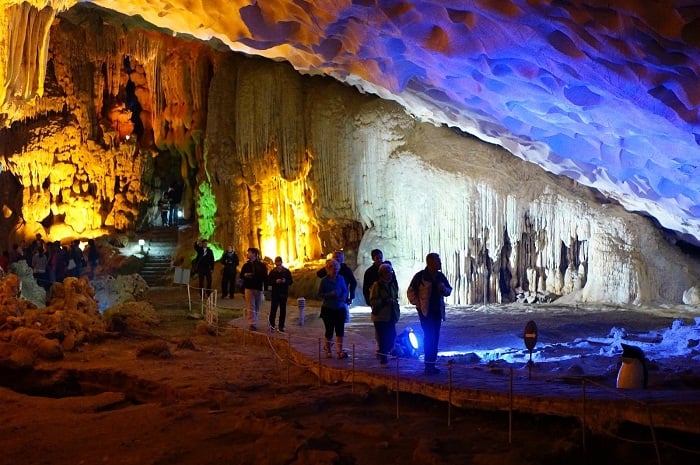
Intricate formations line every surface inside Thien Cung Cave, but the ceiling often steals the spotlight — especially when subtly illuminated by a sidelong torch. Nestled on Dau Go Island, this cavern is known for its high, irregular roof filled with swirling mineral patterns, jagged stalactites, and shapes resembling mythical scenes. Bringing a directional light source, rather than relying solely on overhead LEDs, highlights the textures without overpowering them. From certain angles, the formations cast dramatic shadows, giving the illusion of movement across the dome. Early or late visits offer better light control, as midday crowds and camera flashes often wash out detail. Photography enthusiasts often lie flat on the wooden walkway for a clean ceiling composition, especially beneath the central dome where stone appears to spiral skyward. Locals believe the ceiling carvings depict a celestial wedding of dragons — adding folklore to the geological marvel. When viewed with care, the ceiling becomes less a roof and more a mural carved by time. Thien Cung’s visual drama lies in its vertical layers, and a side-lit approach transforms an already dazzling cave into a surreal stone theater — perfect for travelers seeking visual impact and mystical storytelling in one frame.
Drone Above Bo Hon Island Revealing Split Cave Arches
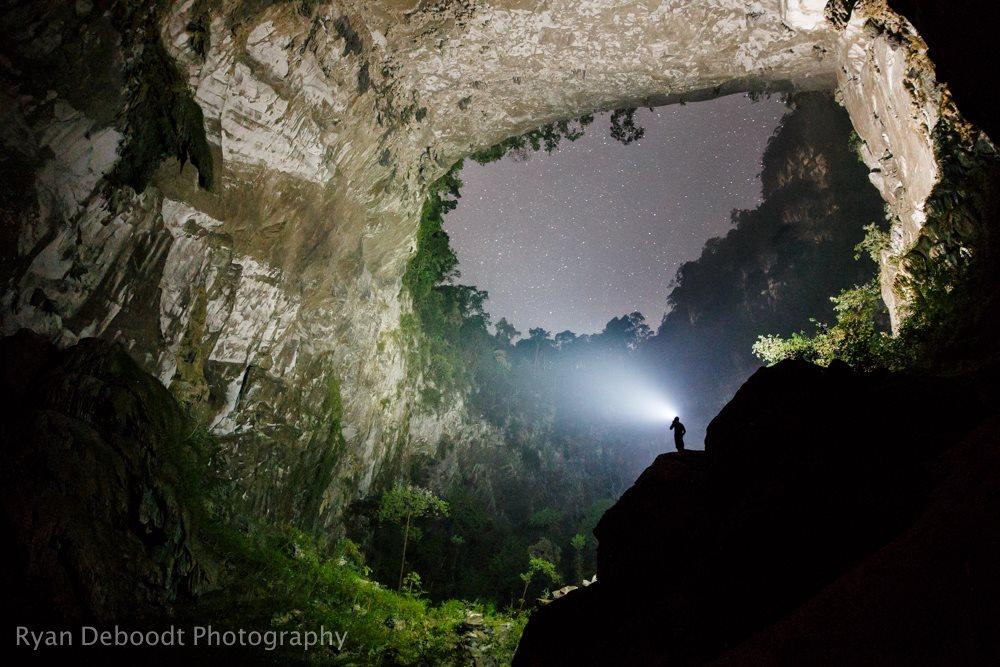
From the air, Bo Hon Island unravels like a natural sculpture garden, with its split cave arches forming jagged doorways through the stone. Drone footage from above captures the dramatic geometry — two natural arches carved side by side, divided by a narrow wall that’s been worn down by centuries of waves. This symmetrical rock structure often goes unnoticed from water level, but aerial views showcase the island’s unique topography and its green tufts perched atop rugged karst towers. The water shifts from emerald to sapphire depending on depth, enhancing the visual contrast with the pale limestone. To get a clean shot, flying during golden hour or midday (with sun overhead) minimizes shadow interference. Navigating a lightweight drone carefully between the cliffs reveals tight views of the arches from both sides. These formations are located near other major caves, making the island a visual centerpiece in Ha Long Bay. Though inaccessible on foot, the twin arches stand as a geological bridge between erosion and artistry. For those seeking iconic, high-impact perspectives, Bo Hon’s arched caves deliver a natural symmetry rarely seen elsewhere in the bay — ideal for visual storytelling, mapping, or cinematic travel footage.
Late-Day Golden Hue at Virgin Cave (Trinh Nữ Cave)
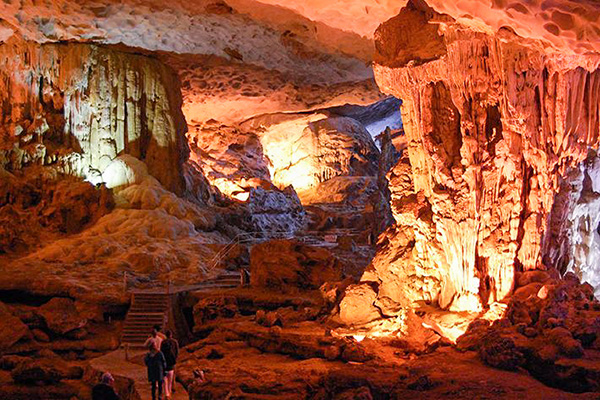
As the sun begins its descent, light strikes the cliffs near Trinh Nữ Cave with a golden hue, casting the limestone in warm amber tones. This time of day transforms the cave’s entrance, softening its rugged textures and highlighting subtle mineral details along the walls. Located on Bo Hon Island, this site carries emotional weight in Vietnamese folklore — said to house the petrified figure of a young woman who turned to stone waiting for her lost love. When approached in the late afternoon, the interior reflects soft orange and pink tones across its rugged formations. The adjacent tunnel system remains cool and shaded, offering a stark contrast as you transition from warmth to shadow. Despite its romantic legend, Trinh Nữ remains relatively quiet during this time, as most tours begin departing. Travelers who time their visit to coincide with the sunset glow can capture both beauty and myth in a single frame. The warm lighting also enhances photos, especially when framed from the waterline looking inward. For those interested in the intersection of natural wonder and local legend, this golden-hour visit to Virgin Cave provides a rich, reflective moment at the day’s close.
Low-Paddle Tunnel Under Me Cung Cave’s Inner Ring

A shallow tunnel encircles the heart of Me Cung Cave, accessible only to low-sitting kayaks during favorable tide windows. This tunnel arcs beneath a stone bridge formation, forming a circular paddling route that feels hidden from the outer bay. The cave itself, located on Lom Bo Island, has archaeological significance — remnants of prehistoric humans were discovered here — but the tunnel experience feels entirely present. Water movement is minimal, offering mirror-like reflections that amplify the feeling of enclosure. Overhead rock comes within inches of the kayak’s path, requiring careful posture and slow navigation. Small fish dart through submerged openings, while the soundscape becomes hollow and amplified. Inside the inner ring, the limestone opens into a lagoon framed by dense jungle, making it an ideal resting point before returning through the tunnel. As light filters from both ends, the water appears emerald green under the arched stone. Due to its isolated access, the route sees fewer visitors, preserving its calm and clean conditions. This looped paddle offers a circular narrative — entry, enclosure, and emergence — ideal for those looking to experience Ha Long Bay’s cave systems from a more intimate, less traveled angle.
Unmarked Lagoon Cave on Bai Tu Long Bay Route

Tucked into the lesser-traveled waters of Bai Tu Long Bay, an unmarked cave mouth opens into a pristine lagoon accessible only by kayak or small sampan. The entrance blends with the surrounding cliff, easily missed without a local guide or sharp eye. Once inside, the ceiling lowers into a dim passage where cool air replaces the tropical heat. After a brief paddle through darkness, the space widens suddenly into a sunlit pool enclosed by vertical limestone walls. No signage, no crowds—just silence and the occasional splash of fish beneath the surface. This natural chamber remains off mainstream cruise routes, preserving its untouched feel. The lagoon hosts floating vegetation and occasional bird nests in the rocky crevices above. Timing the visit for mid-morning or early afternoon ensures sunlight pours in at an angle, brightening the jade-colored water and casting rippling reflections onto the stone. This hidden pocket feels worlds away from the more trafficked caves nearby, offering solitude and sensory calm. For travelers seeking Ha Long Bay’s quieter side, this unnamed lagoon rewards with rare stillness, vivid natural color, and a fleeting sense of discovery that can’t be replicated on any itinerary or guidebook map.
Hidden Emerald Pool Behind Dau Go’s Side Passage

Deep within the multi-chambered maze of Dau Go Cave lies a narrow passage that leads to a secluded emerald pool. Often overlooked as visitors explore the main caverns, this side corridor tapers into a dim, cool space where mineral-rich water has collected for centuries. The pool reflects hues of green and blue, intensified by subtle lighting and natural seepage from the limestone walls. It sits beneath a pocketed dome ceiling, adorned with stalactites that drip slowly into the basin below. Few tours mention this spot, making it a surprising discovery for those who linger or explore beyond the central viewing platforms. While swimming isn’t permitted, the pool’s stillness and depth provide a mirror-like surface, ideal for photography or quiet contemplation. Geological layers in the walls offer evidence of prehistoric shifts, while tiny cave-dwelling insects hover near the moist surfaces. It’s a corner of Dau Go that feels entirely separate from the grand chambers outside — a microcosm of tranquility. For travelers willing to pause, observe, and step off the main trail, this hidden pool offers a rare moment of introspective beauty within one of Ha Long Bay’s most historically significant cave systems.
Cave Snorkel Stop in Lan Ha Bay’s Quiet Eastern Pocket

Lan Ha Bay’s eastern edge remains a secret to many, especially its cliffside caves accessible only by kayak or snorkel. One particular stop, known among locals but unsigned for tourists, offers a narrow opening that widens just enough to float inside. Anchoring near the entrance and slipping beneath the surface reveals a world of submerged limestone ledges, coral nubs, and darting reef fish. Unlike Ha Long’s broader caves, this snorkel-access cavern demands both timing and physical ease. Visibility tends to peak at midday, when overhead sun lights up the sandy floor and casts glints off underwater stone. The cave’s roof rises a few meters above, forming an acoustic chamber where sound echoes faintly with each kick. Sharp-eyed swimmers may spot sea cucumbers and crabs tucked in the rock grooves. With limited entry, the water stays clear and undisturbed. For those preferring a more active exploration, this snorkel cave offers both challenge and reward — blending Ha Long Bay’s dramatic karst formations with the unexpected presence of marine life. It’s a rare combination of geological grandeur and aquatic serenity, best suited to travelers who prefer hidden gems over tour group routes.
Floating Dock to Light-Shaft Entry Cave at Noon

A small floating dock off a limestone island marks the starting point for one of Ha Long Bay’s most photogenic caves, where sunlight streams in through a vertical shaft at high noon. The cave itself is modest in length but striking in visual drama — its entry chamber features a ceiling aperture that focuses sunlight like a spotlight on the stone floor. Visiting between 11 a.m. and 1 p.m. aligns the sun’s angle perfectly, creating a golden column that pierces the darkness and dances across mineral pools. The dock, often overlooked by larger boats, sits quietly at the edge of the karst, with only a tethered platform and rope rail for support. Foot access leads to the mouth, where the temperature drops and echoes replace the hum of engines. The narrow trail winds inside before opening into the illuminated chamber, where visitors can pause and photograph the light beam in full intensity. This cave rarely appears on main brochures, making it a highlight for independent travelers or small-group eco tours. It’s less about scale and more about timing — a visual phenomenon that transforms a simple stone cavity into a natural light show, revealing Ha Long Bay’s quieter, more cinematic moments.
Sunset Bioluminescence Paddle Along Base of Cliff Caverns

As twilight descends, certain corners of Ha Long Bay light up below the surface — not from artificial sources, but from living bioluminescence. Near the base of shaded cliff caverns, paddlers can witness tiny plankton glowing blue with each stroke of the paddle. These cliff-lined caves, unreachable by larger boats, form a sheltered zone where the water remains still enough for the glowing effect to build. Timing the paddle for just after sunset is crucial; ambient light must drop, but the moon should still be low to preserve visibility. As kayaks skim the surface, each motion disturbs the organisms, sending ripples of blue light in every direction. The base of the cliffs remains quiet, often with birds settling into crevices above while the water below flickers alive. With minimal sound and no engine disturbance, this paddle becomes a near-spiritual encounter with nature’s subtle wonders. No photos do it justice — the glow must be seen in motion, in darkness, in silence. For visitors seeking something beyond the limestone and lagoons, this natural phenomenon offers an unforgettable experience that fuses geology, biology, and a sense of quiet awe into one glowing trail of light.