
Grass-roofed villages cling to misty cliffs while waterfalls tumble straight into the ocean—few destinations offer such surreal beauty without the crowds. Tucked between Iceland and Norway, this remote North Atlantic archipelago feels untouched by time yet increasingly sought after by curious travelers. Its dramatic volcanic landscapes, puffin colonies, and Viking heritage create an unforgettable journey. For those craving scenic hikes, storm-sculpted coastlines, and off-the-beaten-path serenity, this guide offers everything needed to experience one of Europe’s most awe-inspiring hidden treasures.
Illusion Lake Edge

Glass-still waters mirror jagged cliffs, creating the surreal effect that sky and land melt into one another. This remote lake edge in the Faroe Islands offers views that shift with every step—sometimes revealing hidden basalt ledges, other times stretching endlessly toward the horizon. Its shoreline blends pebble-strewn patches with bursts of hardy coastal grass, where seabirds nest in quiet clusters. Visitors often remark on the way the reflection plays tricks on perception, making it difficult to tell where reality ends and illusion begins. In the early morning, mists roll in from the North Atlantic, softening the outlines of the mountains and casting the entire scene in silvery light. Afternoon brings sharper contrasts, with the cliffs glowing against the deep blue water. This area has minimal human intrusion, making it ideal for those seeking solitude. A narrow footpath winds along the waterline, occasionally interrupted by natural rock steps. Photographers treasure this location for its atmospheric drama, while hikers value it for its peaceful rhythm—every turn offering a new perspective. Whether approached from the higher ridges or directly along the shore, the Illusion Lake Edge rewards patience, especially when the weather shifts, unveiling yet another version of its striking, layered beauty.
Village by Waterfall

Tucked beneath towering cliffs, a small Faroese settlement sits within earshot of a cascading waterfall that plunges straight into the sea. The scene feels almost cinematic: turf-roofed houses clustered on a green slope, with spray from the falls drifting over rooftops on windy days. The sound of rushing water is constant yet calming, blending with the cries of seabirds that circle the cliffs. Villagers have lived here for generations, adapting to the rugged terrain by positioning homes to shelter from Atlantic storms while still facing the ocean. The waterfall, fed by mountain streams, changes character with the seasons—gentle in summer, thundering after autumn rains, and often partly frozen in winter. Walking paths trace the cliff edges above, offering views where the village, waterfall, and open ocean align perfectly in a single frame. Below, fishing boats bob in sheltered coves, continuing a centuries-old reliance on the sea. Local folklore speaks of the falls as a guardian spirit, protecting the community from misfortune. Today, visitors are welcomed to explore the footbridges and narrow stone lanes, but the village retains a lived-in authenticity. Standing here, with the waterfall’s mist on your face and the smell of salt air, it’s easy to understand why this spot has endured as a cherished home.
Hidden Cove Village

Shielded from the open ocean by towering basalt cliffs, this secluded cove shelters a village that seems suspended in time. The approach is dramatic—whether by narrow hiking trail or small boat, the moment you round the headland, the sight of turf-roofed houses lining the shoreline is unforgettable. The cove’s natural amphitheater muffles the roar of the sea, replacing it with the softer sounds of waves lapping against the pier and gulls calling overhead. Here, fishing remains the heart of daily life, with brightly painted boats pulled up onto the stony beach during rough weather. Vegetable plots thrive in sheltered pockets, nourished by the mild microclimate the cliffs provide. Local families have perfected the art of preserving fish and lamb, traditions passed down through generations. The village’s small church, simple but dignified, faces the water as a reminder of faith’s central role in survival. At low tide, the rocky shallows reveal tidal pools filled with starfish and sea anemones, captivating both locals and travelers. Visiting this hidden enclave feels less like stepping into a tourist site and more like being quietly invited into someone’s life. With each tide change, the cove reveals subtle shifts in light and color, making every return visit a new experience.
Sea Arch & Stacked Stones

Waves have spent centuries carving a graceful basalt arch into the cliffside, framing the restless North Atlantic like a living painting. This natural gateway draws both seabirds and travelers, its dark volcanic stone contrasting sharply with the foaming white surf below. Around the arch, small cairns—carefully stacked stones—dot the grassy bluff, left by visitors as quiet markers of their passage. The tradition is rooted in Faroese custom, where such piles once guided shepherds and fishermen across treacherous terrain. The wind here carries a mix of salt spray and earthy peat, and on sunny days, the arch casts a sharp silhouette against the shifting blues of the ocean. Below, the tide churns through the opening, sending sprays that glisten in the light. Some hikers choose to approach from the high ridge, gaining a bird’s-eye view of the arch and the winding coastline beyond. Others descend to the base at low tide, where the scale of the formation becomes truly imposing. Every angle reveals new textures—weathered grooves, moss-lined cracks, and tide-polished rock. The surrounding headland offers an ideal vantage point for watching puffins dart above the surf. In this place where human tradition meets raw geology, the Sea Arch and its humble stone sentinels feel like both landmark and legacy.
Sunlit Ridge Panorama
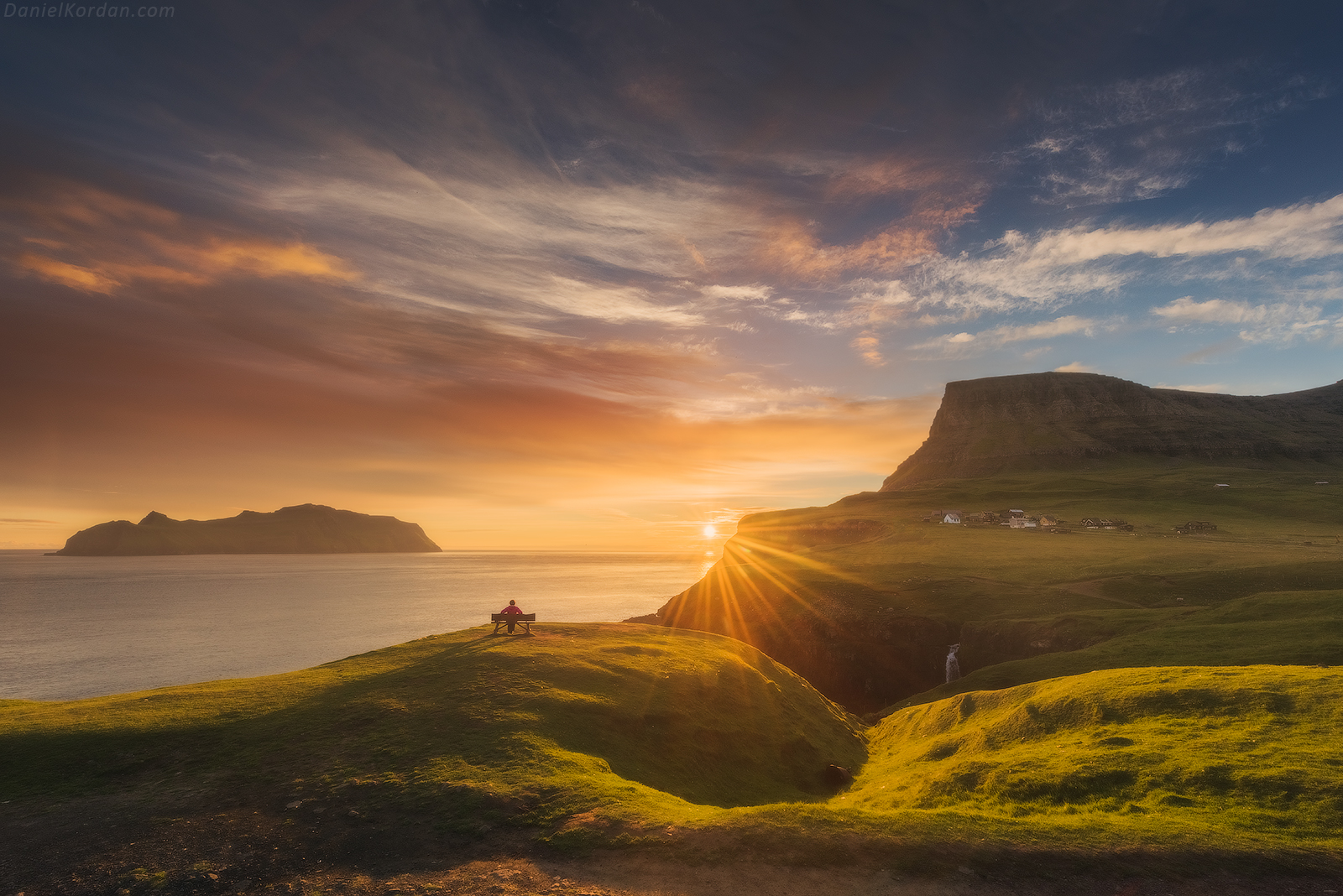
Atop a windswept ridge, sunlight spills across the Faroe Islands’ layered landscapes, revealing an endless sweep of sea, valley, and sky. From this height, the patchwork of green fields, dark cliffs, and shimmering inlets stretches toward the horizon in every direction. The ridge itself is crowned with short grass, hardy wildflowers, and the occasional sheep grazing unbothered by the height. In the morning, low clouds drift beneath the summit, offering the strange sensation of looking down on the weather. By midday, the sun’s angled light sculpts the terrain into sharp relief, picking out every fold in the cliffs and glinting off distant waves. A narrow footpath traces the ridge line, giving walkers uninterrupted views that shift with every step—one moment revealing a waterfall-fed valley, the next an island chain rising from the sea. On calm days, the air carries the faint scent of heather, but more often the wind brings briny gusts from the open Atlantic. This is a favored spot for photographers who chase the interplay of light and shadow, as well as for locals who see the ridge as a place of quiet contemplation. Standing here, bathed in sunlight and surrounded by horizon, the panorama feels both infinite and deeply personal.
Remote Harbor Trails

Beyond the main roads, a network of narrow trails weaves down to a secluded harbor where fishing boats rest in calm, sheltered waters. The approach is a journey in itself—paths skirt steep slopes, cross small wooden bridges, and pass through pockets of blooming sea thrift. The harbor, flanked by cliffs, offers protection from the Atlantic’s force, making it a lifeline for the handful of homes scattered along the shore. Rust-red boathouses line the water, their weathered wood telling stories of decades of use. Nets hang to dry in the wind, and the scent of salt and tar mingles with the cry of gulls overhead. Each trail has its own character: some are gentle and grassy, others rocky and uneven, hinting at the island’s untamed heart. In summer, the harbor is alive with quiet industry—boats setting out at dawn, returning with catches of cod and haddock. In winter, it becomes a place of stillness, the sea often mirroring the gray sky. For those who make the trek, the reward is not just the view but the feeling of having arrived somewhere apart from the world. Here, time seems to move at the pace of the tides, measured in the rhythm of work, rest, and return.
Tunnel-Connected Villages

In a land where steep mountains once made travel nearly impossible, a series of hand-carved and modern tunnels now links small Faroese villages that were once days apart by foot or boat. Approaching the tunnel entrance, it’s easy to imagine the isolation these communities endured before such connections existed. Inside, the cool, echoing passage feels like a threshold between worlds, with distant pinpoints of daylight marking the exit ahead. Emerging into a new valley often feels like stepping into a different climate—sunlit meadows in one, misty shores in the next. These tunnels have preserved the cultural individuality of each settlement while allowing families to share resources, schools, and traditions more easily. Along the route, roadside pull-offs reveal sweeping views of fjords and jagged peaks, reminders of the terrain the tunnels traverse. In some places, older stone passageways still exist, their rough-hewn walls a testament to earlier engineering. For locals, the connections are more than convenience; they are lifelines that have reduced isolation, strengthened economies, and encouraged younger generations to remain. Travelers who drive or cycle through these mountain corridors often find themselves stopping at every new village, each with its own charm, to experience the remarkable blend of remoteness and connection that defines the Faroese spirit.
Subsea Sculpture Roundabout
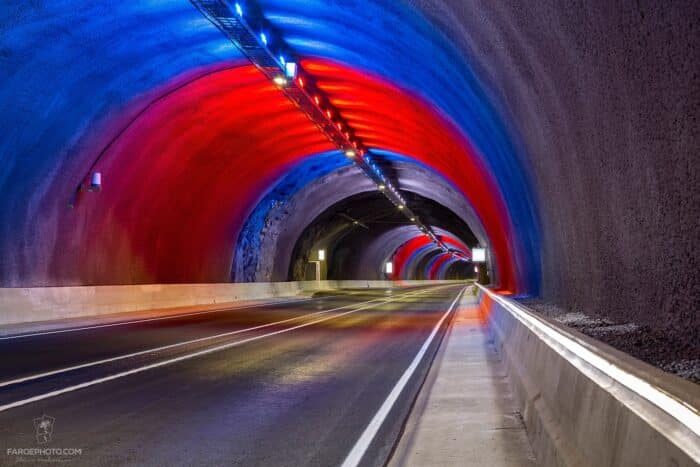
Beneath the sea, where a submerged tunnel links islands, a roundabout unexpectedly appears—its centerpiece a striking undersea sculpture that merges art, history, and engineering. Lit by carefully placed lights, the sculpture seems to float in the dark water, its curves and angles inspired by Faroese myths of sea creatures and maritime life. Drivers slow instinctively, not just for navigation but to take in the surreal beauty of this meeting point between human design and natural surroundings. The tunnel walls here are lined with rock that has been cut but not polished, leaving a rugged texture that contrasts with the sculpture’s smooth forms. This unusual landmark has become a symbol of modern Faroese ingenuity, proving that infrastructure can also inspire wonder. Above ground, few realize such a feature exists, hidden far below the waves. For locals, it’s a source of quiet pride—functional, safe, and uniquely theirs. For travelers, it’s often an unexpected highlight, a moment of awe in the middle of a routine drive. The roundabout also serves a practical purpose, guiding traffic efficiently between branches of the tunnel system. In a country where art often lives outdoors in harsh elements, this protected, otherworldly installation feels like a treasure held in the deep.
DIY Trail Care Projects
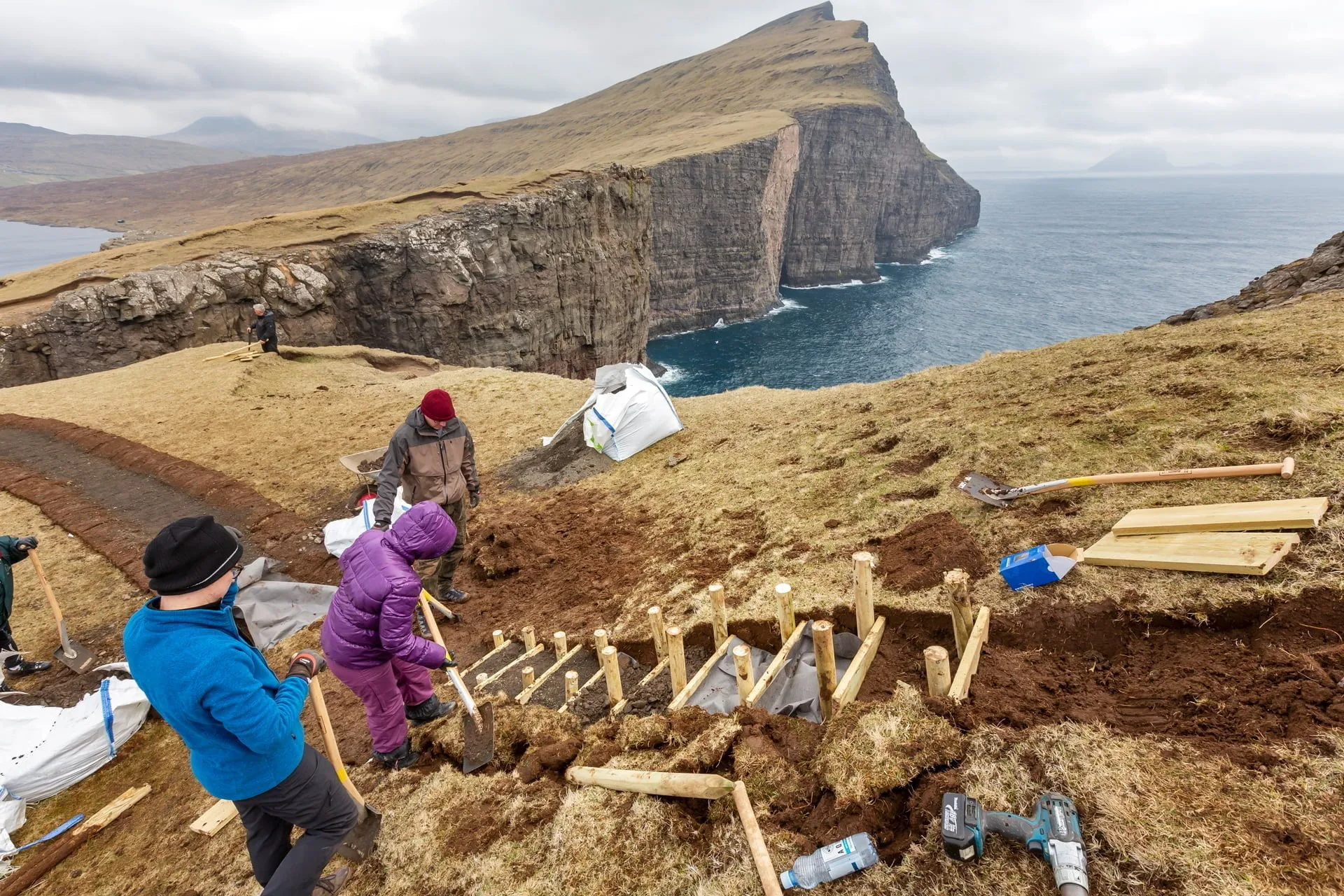
Maintaining the Faroes’ intricate web of footpaths has long been a community effort, with locals and visitors joining in small-scale projects to keep trails safe and accessible. On certain weekends, villagers gather with tools—spades, hammers, rope—to repair stone steps, clear drainage channels, and replace weather-worn waymarkers. These activities aren’t just maintenance; they’re a passing down of knowledge about the land. Volunteers learn which stones withstand constant wetness, how to anchor wooden bridges against fierce winds, and where to reroute paths to protect delicate vegetation. Such workdays often end with shared meals, fostering bonds between residents and those simply passing through. Tourists who take part leave with a deeper respect for the challenges of keeping trails open in a place where landslides, bogs, and sudden storms are common. The results benefit everyone: safer routes, preserved heritage paths, and reduced environmental impact from erosion. Even modest efforts—like building cairns at key junctions—can make a difference in foggy conditions. These projects reflect a wider Faroese philosophy of stewardship, where the landscape is both a provider and a responsibility. For those who walk the trails later, each secure step on a newly repaired path is a quiet reminder of the collective hands that keep these routes alive.
Home-Hosted Hospitality

Across the Faroes, some of the most memorable stays happen not in hotels but in private homes, where hosts open their doors to travelers seeking an authentic connection. Guests might find themselves in a centuries-old turf-roofed house, its thick walls holding warmth against the coastal winds, or in a modern farmhouse with sweeping views of sheep-dotted hills. Breakfasts feature homemade bread, rhubarb jam, and eggs gathered that morning. Conversation flows easily—about fishing seasons, local folklore, or the unpredictable weather that shapes daily life. Often, hosts share family histories intertwined with the surrounding landscape, pointing out where ancestors once farmed or fished. For visitors, the experience offers insight into how Faroese traditions adapt to modern life, blending self-sufficiency with a welcoming openness. Some homes double as small workshops, where guests can watch knitting, boat building, or fish drying in progress. Evenings might end with shared meals of fresh-caught seafood or lamb slow-cooked in traditional styles. Unlike anonymous accommodation, home stays invite travelers into the rhythms of island life—listening to the wind at night, waking to the sound of gulls, and seeing firsthand the resilience and warmth of the people who call these remote islands home. It’s hospitality rooted in place, shaped by sea, and offered from the heart.
Cultural Woodwork Sanctuaries

Nestled in quiet valleys or perched near windswept shores, traditional Faroese churches stand as living museums of craftsmanship. Their interiors glow with the warm tones of hand-carved pews, ornate altar pieces, and ceilings often painted with biblical scenes, each brushstroke reflecting both faith and artistry. Many date back centuries, built when timber was scarce and every plank carried a story—some fashioned from driftwood washed ashore after long Atlantic journeys. The woodwork inside tells of generations who maintained these sanctuaries, passing down techniques for joinery that withstands both time and weather. Outside, turf roofs and simple whitewashed walls blend with the surrounding landscape, making these buildings appear as natural extensions of the earth itself. Stepping inside, visitors are struck by the quiet, almost tactile sense of history, where the scent of aged pine mingles with candle wax and sea air drifting through open doors. Community gatherings still center here, from baptisms to Christmas concerts, each event reinforcing the church’s role as both spiritual and cultural anchor. For travelers, these sanctuaries offer more than architectural beauty—they are windows into a way of life where resourcefulness meets devotion, and where every carved detail is a testament to the enduring relationship between people, place, and tradition.
Pop-Culture Backdrop

Sweeping cliffs, dramatic weather, and stark seascapes have made the Faroe Islands a sought-after setting for film and television, their landscapes doubling as distant worlds in international productions. Certain locations have gained quiet fame after appearing in music videos, fantasy epics, and nature documentaries. Villages with turf-roofed houses have served as stand-ins for historical settlements, while jagged headlands have framed scenes of adventure and peril. Locals often share stories of film crews navigating unpredictable weather, pausing shoots as fog swallowed entire valleys, or racing to capture rare bursts of sunlight. For visitors, standing in a spot they’ve seen on screen adds a surreal layer to the experience—the recognition of a place already etched in memory yet now alive beneath their feet. Tourism boards tread carefully, balancing the allure of pop-culture fame with preserving the fragile landscapes that make these sites so compelling. Whether it’s a windswept cliff featured in a blockbuster or a secluded beach used for an atmospheric music video, the cinematic appeal lies in the islands’ authenticity. Nothing here is constructed for show; the drama belongs to the land itself. In the Faroe Islands, the line between fiction and reality blurs, allowing travelers to step directly into scenes that feel both mythical and real.