
Bibury, Cotswolds

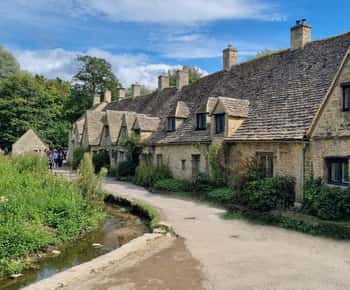
Stone cottages lining a quiet river corridor create one of the most photographed rural scenes in Britain. Arlington Row, originally built as a wool store in the 14th century, later became weavers’ homes and now stands protected by the National Trust. Gentle footpaths trace the River Coln, where clear water flows past historic stone arches and water meadows. Traditional limestone buildings define the village character, with steep pitched roofs and ivy-clad walls reinforcing its medieval identity. Seasonal flower displays soften the pale stone, while trout can often be seen gliding beneath the surface. The surrounding Cotswold countryside offers rolling farmland and public walking routes ideal for short rambles. St Mary’s Church adds architectural depth with Norman features and centuries-old memorials. Visitors often arrive for quiet exploration, light countryside photography, and riverside picnics. Independent tearooms, craft shops, and heritage plaques provide historical context without commercial overload. Despite its popularity, early mornings and off-season visits preserve its peaceful village rhythm. Strong heritage protections ensure the streetscape remains largely unchanged, maintaining one of the finest surviving examples of traditional English village planning within the wider Cotswold landscape.
Castle Combe, Wiltshire
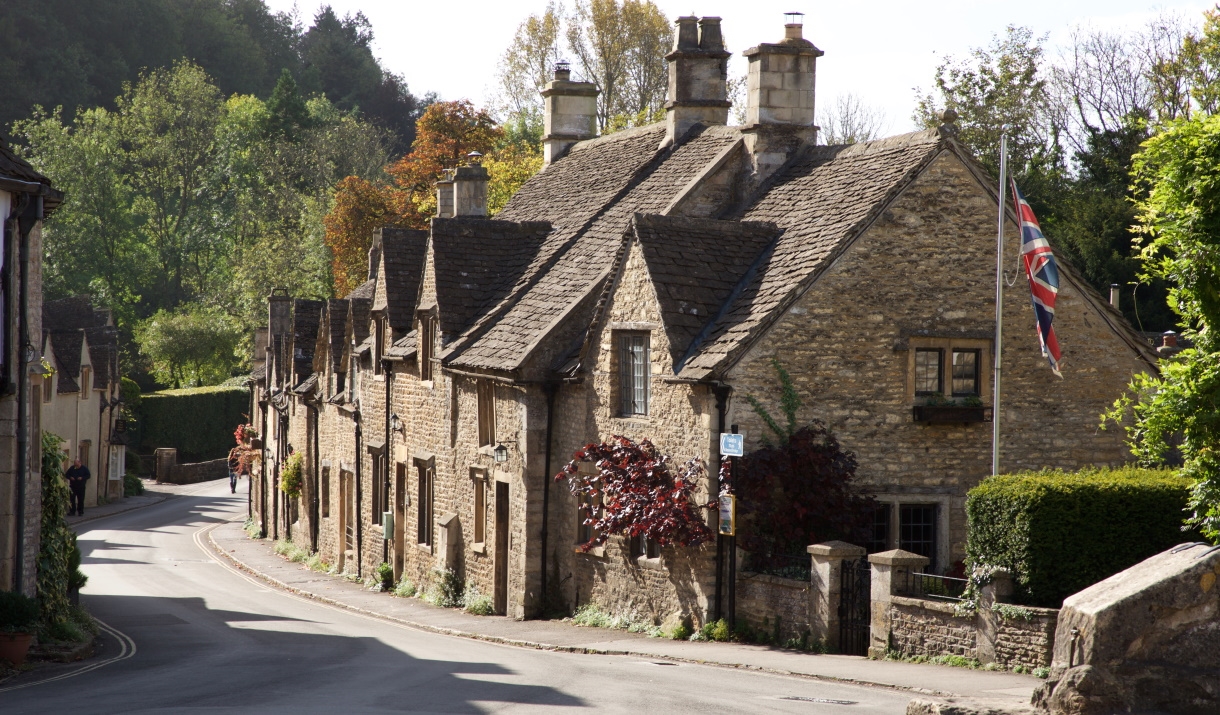
Steep wooded hills funnel visitors toward a secluded limestone settlement arranged almost entirely along a single historic street. No modern streetlights interrupt the evening glow, preserving an atmosphere that feels firmly rooted in medieval England. A 13th-century market cross anchors the village center, while the Bybrook River passes beneath timeless stone bridges. The parish church rises above the rooftops, offering elevated views across rooftops and surrounding woodland. Former textile cottages reflect the village’s industrial past in the wool trade. Footpaths radiate outward into open farmland and shaded valley trails. The nearby motor-racing circuit contrasts sharply with the village’s tranquil appearance yet supports the local economy. Seasonal mist drifting through the valley creates striking early-morning scenery. Film productions frequently use the streets due to the lack of visible modern infrastructure. Tearooms, small inns, and heritage signage keep tourism manageable while preserving historical integrity. Strict planning controls prevent inappropriate development, protecting its original layout. The result remains a rare example of a near-perfect preserved medieval streetscape within rural Wiltshire.
Lustleigh, Devon

Moorland breezes filter down wooded valleys toward a granite-built village settled at the eastern edge of Dartmoor National Park. Traditional stone cottages cluster around a central green known for hosting one of England’s oldest traditional outdoor games, cherry-hanging, during Easter celebrations. Clear streams thread through the valley, feeding ancient watercourses once vital to early industry. The parish church of St John the Baptist sits near the heart of the settlement, its tower visible from surrounding footpaths. Wooded walking routes connect the village to surrounding tors and open moorland. Local pubs and village stores maintain community life without excessive commercial pressure. Seasonal wildflowers line hedgerows, enhancing spring and summer walks. The former railway line now serves as a popular cycling and walking trail linking nearby settlements. Granite boundary walls, thatched roofs, and slate detailing reflect regional building traditions. Wildlife is abundant, from moorland birds to river otters. The balance between protected landscape and lived-in village life creates a peaceful base for exploring southern Dartmoor’s quieter trails.
Hutton-le-Hole, Yorkshire

Wide green verges and a gentle stream define a spacious village landscape set within the North York Moors National Park. Rather than narrow lanes, an open grassy heart runs through the settlement, crossed by small stone bridges and bordered by traditional cottages. Sheep often graze freely across the central green, reinforcing the agricultural roots of the area. A 12th-century church anchors the village historically, while thatched and pantiled roofs reflect regional vernacular architecture. Surrounding hills provide direct access to moorland hiking routes and panoramic viewpoints. The Ryedale Folk Museum nearby documents rural life through reconstructed historic buildings and working exhibits. Clear night skies attract stargazers due to minimal light pollution. Local tearooms and craft workshops serve visitors without overwhelming the village environment. Spring and summer bring colorful gardens that contrast with the muted stonework. Winter snowfall transforms the broad green into a quiet pastoral scene. The village layout remains largely unchanged for centuries, preserving a sense of spatial openness rarely found in compact terraced settlements elsewhere in northern England.
Staithes, Yorkshire Coast
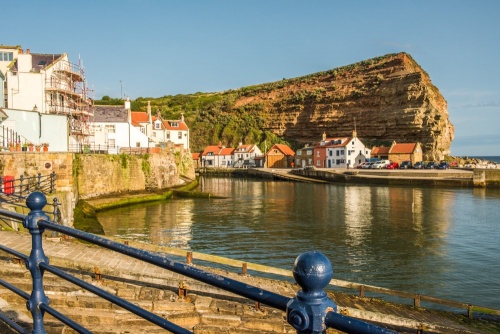
Red-tiled rooftops spill steeply toward the North Sea within a narrow fishing valley framed by towering cliffs. Former fishing cobles still line sections of the harbor, recalling the village’s maritime heritage long before tourism arrived. Narrow ginnels wind between tightly packed cottages, some carved directly into the cliffside rock. The harbor wall provides shelter from rough North Sea weather while doubling as a walking route during calm conditions. Captain James Cook trained here during his early seafaring years, now marked by heritage signage along the waterfront. Coastal footpaths lead toward dramatic headlands and fossil-rich cliffs that attract geology enthusiasts. Artist studios and small galleries occupy former fishermen’s cottages, reflecting the village’s creative revival during the 20th century. Strong sea winds shape both the architecture and local vegetation. Tidal movements dramatically alter harbor views within hours. Independent cafés overlook the water, offering uninterrupted views across the bay. Despite growing visitor numbers, fishing activity continues to operate alongside tourism, preserving Staithes’ authentic coastal working-village character.
Cerne Abbas, Dorset
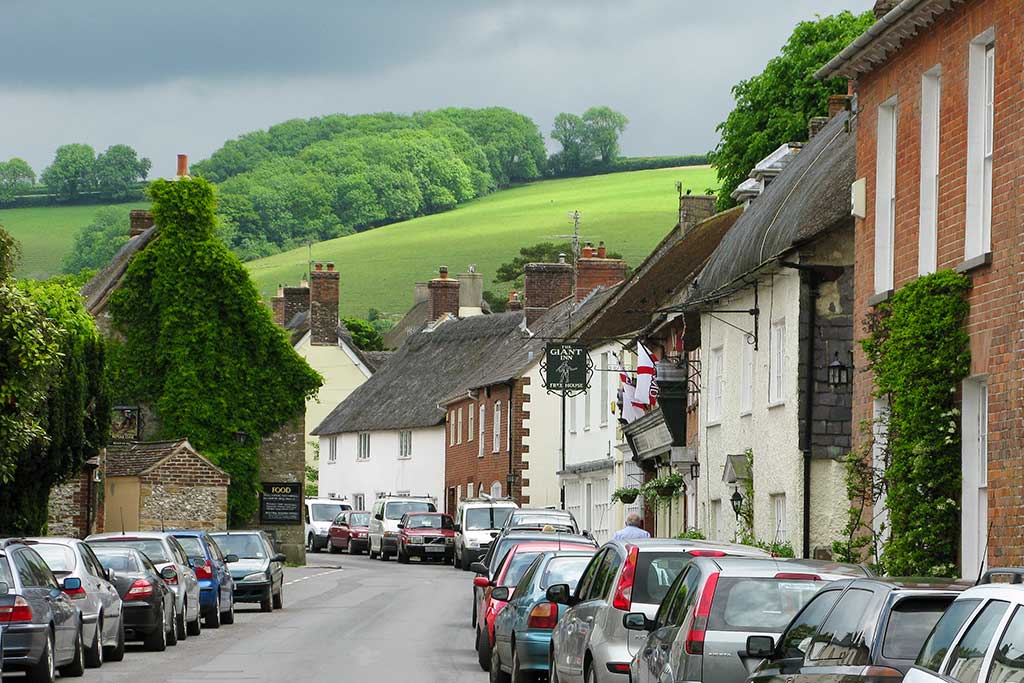
Ancient chalk grassland rises steeply behind a clustered settlement known worldwide for one of Britain’s most debated prehistoric hill figures. The Cerne Giant, carved into the chalk hillside, dominates views across the valley and draws archaeological curiosity throughout the year. Below it, a compact village spreads along the River Cerne with stone cottages, medieval bridges, and timber-framed inns. A 14th-century church stands close to the water, while remnants of a once-powerful Benedictine abbey remain visible in scattered masonry. Traditional Dorset stone gives the village a warm, honeyed tone under afternoon light. Fed by natural springs, the river provides clear shallow channels through the center. Footpaths rise toward open chalk downland with sweeping views over the Cerne Valley. Local folklore intertwines with Roman and Saxon history, creating layers of cultural storytelling. Seasonal festivals celebrate both village traditions and the surrounding agricultural calendar. The setting blends archaeology, myth, and countryside access within a remarkably compact and walkable historic settlement.
Hellidon, Northamptonshire

High ridgelines of rural Northamptonshire surround a discreet village positioned along watersheds feeding both the River Avon and River Nene. Agricultural fields stretch toward distant hedgerows, broken only by occasional stone farmhouses and woodland patches. The village church dates back to Norman foundations, offering quiet architectural focus without dominating the skyline. Thatched cottages and ironstone structures reflect traditional Midlands building materials. Public bridleways connect the settlement to long cross-county walking routes used by hikers and cyclists exploring the Daventry uplands. Birdlife thrives along nearby hedgerows, particularly skylarks and red kites. Local lanes remain narrow and lightly trafficked, maintaining a strong sense of rural isolation. Historical records show continuous settlement since the Domesday Book. Small village greens and communal spaces provide gathering points despite scattered housing patterns. The absence of commercial development strengthens its appeal for those seeking untouched countryside. Fields change dramatically with seasonal crop rotation, adding visual variety throughout the year. The village atmosphere remains defined by farming rhythms, long horizons, and uninterrupted night skies across the surrounding ridge farmland.
Saltaire, West Yorkshire

Grand Italianate mill architecture rises beside the River Aire, forming one of Britain’s most complete Victorian model villages. Established by Sir Titus Salt in the 19th century, the settlement was designed to provide improved living conditions for mill workers. Uniform stone terraces, public baths, schools, and hospitals created a fully self-contained industrial community. The vast Salts Mill complex now houses art galleries, independent shops, and the internationally known David Hockney exhibition spaces. Nearby Roberts Park provides landscaped riverside walks with views toward the industrial skyline. The Leeds and Liverpool Canal runs adjacent, offering scenic towpath routes for walkers and cyclists. UNESCO World Heritage status protects the architectural unity of the area. Public buildings display striking classical proportions rarely found in northern English industrial settlements. Tree-lined streets and allotment gardens soften the regimented layout. Community events continue to activate former mill spaces without altering historic fabric. The village remains a landmark example of social reform through architecture, blending heavy industry, progressive housing design, and modern cultural reuse within a tightly preserved urban landscape.
Appledore, Devon
Color-washed terraces climb a riverside slope where the Taw and Torridge estuaries converge on the North Devon coast. Narrow winding streets reveal panoramic estuary views between tightly grouped fishermen’s cottages. The village has deep shipbuilding traditions, once producing wooden sailing vessels for global trade. Decorative ceramic tiles embedded in walls reflect its artistic leanings developed during the 20th-century craft revival. The quay remains central to village life, hosting small boats, seafood landings, and seasonal waterfront events. Strong tidal flows define daily rhythms, shifting mudflats and sandbanks dramatically with the tide cycle. Small galleries, maritime museums, and traditional pubs occupy former warehouses along the shoreline. Long estuary walks lead toward Braunton Burrows and coastal bird reserves. Flower displays spill across stairways and doorsteps during warmer months. Annual maritime festivals celebrate both commercial and creative heritage. The settlement’s vertical layout provides ever-changing viewpoints across water, rooftops, and sky. The balance of working estuary culture and relaxed coastal tourism shapes the distinctive atmosphere of this historic Devon waterside village.
Hawkshead, Lake District

Whitewashed cottages gather beneath surrounding Lake District fells where Roman roads once linked early northern settlements. Literary history defines much of the village identity, with close associations to both William Wordsworth and Beatrix Potter. The former grammar school attended by Wordsworth now serves as a heritage attraction. Potter’s nearby Hill Top farmhouse continues to draw visitors interested in her countryside inspiration. Car-free central streets preserve the traditional stone paving and shopfronts without modern traffic intrusion. Historic inns once provided shelter for packhorse traders crossing mountain passes. A small parish church anchors the settlement near green grazing land at the village edge. Walking routes extend directly from the streets into Grizedale Forest and surrounding fell landscapes. Dry stone walls partition fields into timeless pastoral geometry. Seasonal sheep markets still echo the area’s agricultural roots. The proximity to Windermere and Coniston Water adds accessible lake scenery nearby. Despite popularity, early mornings restore quiet charm as mist settles between rooftops and neighboring hills.
Broadway, Cotswolds
Wide high street proportions immediately distinguish this northern Cotswold settlement from narrower village counterparts. Set near the Worcestershire border, the village rises gently toward expansive escarpment views across the Vale of Evesham. Boutique shops and traditional coaching inns line the main thoroughfare, reflecting its historic status as a stopping point on trading routes. Arts and Crafts influences appear in nearby studios and historic houses associated with early 20th-century designers. Footpaths climb toward Broadway Tower, offering panoramic countryside vistas across multiple counties on clear days. Local stone architecture blends with manicured gardens and tree-lined verges. Antique shops, cafés, and specialist food stores attract weekend visitors year-round. Seasonal market activity maintains commercial vitality without resorting to mass tourism. Historic links to theatrical and literary circles strengthened its cultural reputation. The open village layout allows sunlight to reach lower storeys, enhancing the pale limestone façades. Positioned at a natural gateway to the Cotswolds, the village functions as both cultural hub and countryside access point with equal appeal.
Clovelly, North Devon
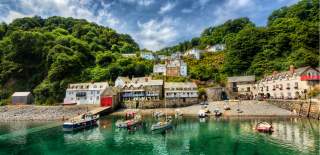
Gravity governs daily movement along a famously steep cobbled street descending directly toward the Bristol Channel. Vehicular traffic remains nearly absent, preserving a soundscape shaped by footsteps, seabirds, and surf. Former maritime warehouses cluster around the small working harbor below. Donkeys once transported goods up and down the slope, now remembered through village heritage displays. Fishing remains active, reinforcing the village’s original coastal purpose. Whitewashed cottages stack tightly together, secured by stone retaining walls embedded into the cliff face. Mooring lines, lobster pots, and slipways define the lower quay at low tide. Coastal footpaths branch toward rugged headlands and hidden coves. Dramatic weather patterns roll in quickly from open sea, transforming light conditions within minutes. Strict conservation management controls all property changes under single estate ownership. Visitor access helps fund long-term preservation of historic infrastructure. The combination of vertical geography, maritime tradition, and enforced architectural consistency makes this one of Britain’s most visually distinctive coastal settlements.