
Golden waves of sand tower over the horizon, etched by wind and time into some of the most surreal landscapes on Earth. Scaling these colossal dunes in Namibia isn’t just an adrenaline rush—it’s a front-row journey into an ancient desert forged over millions of years. From the fiery reds of Sossusvlei to the silence of Dead Vlei’s petrified trees, every step tells a story. This guide unveils the essential routes, tips, and experiences to make your desert climb unforgettable.
Climb Big Daddy Dune (325 m Star Dune)

Standing tall against the orange Namibian horizon, Big Daddy Dune challenges even seasoned climbers with its steep ridgeline and towering 325-meter height. This star-shaped dune dominates the Deadvlei landscape, offering unmatched aerial views of the cracked clay pan and distant desert ridges. Early morning is the best time to start, as the sand remains cool underfoot and shadows stretch dramatically across the terrain. The route begins near the Deadvlei parking lot and ascends gradually before tapering into a sharp incline, where every step forward feels like sliding back half a stride. Reaching the summit requires stamina, patience, and steady pacing, but the reward is surreal—sweeping desert vistas in every direction and the ethereal glow of golden-orange hues dancing on shifting sands. Many hikers choose to descend directly into Deadvlei, sliding or jogging down the slip face—an exhilarating finish. Prepare with plenty of water, UV protection, and firm-soled shoes or go barefoot for better grip. While Big Daddy isn’t the tallest dune in Namibia by technical measure, its commanding presence and proximity to Deadvlei make it a favorite for iconic climbs. For photographers and adventurers alike, this experience delivers the quintessential Namib Desert ascent with unforgettable visual payoffs.
Sunrise Ascent of Dune 45 for Color Drama
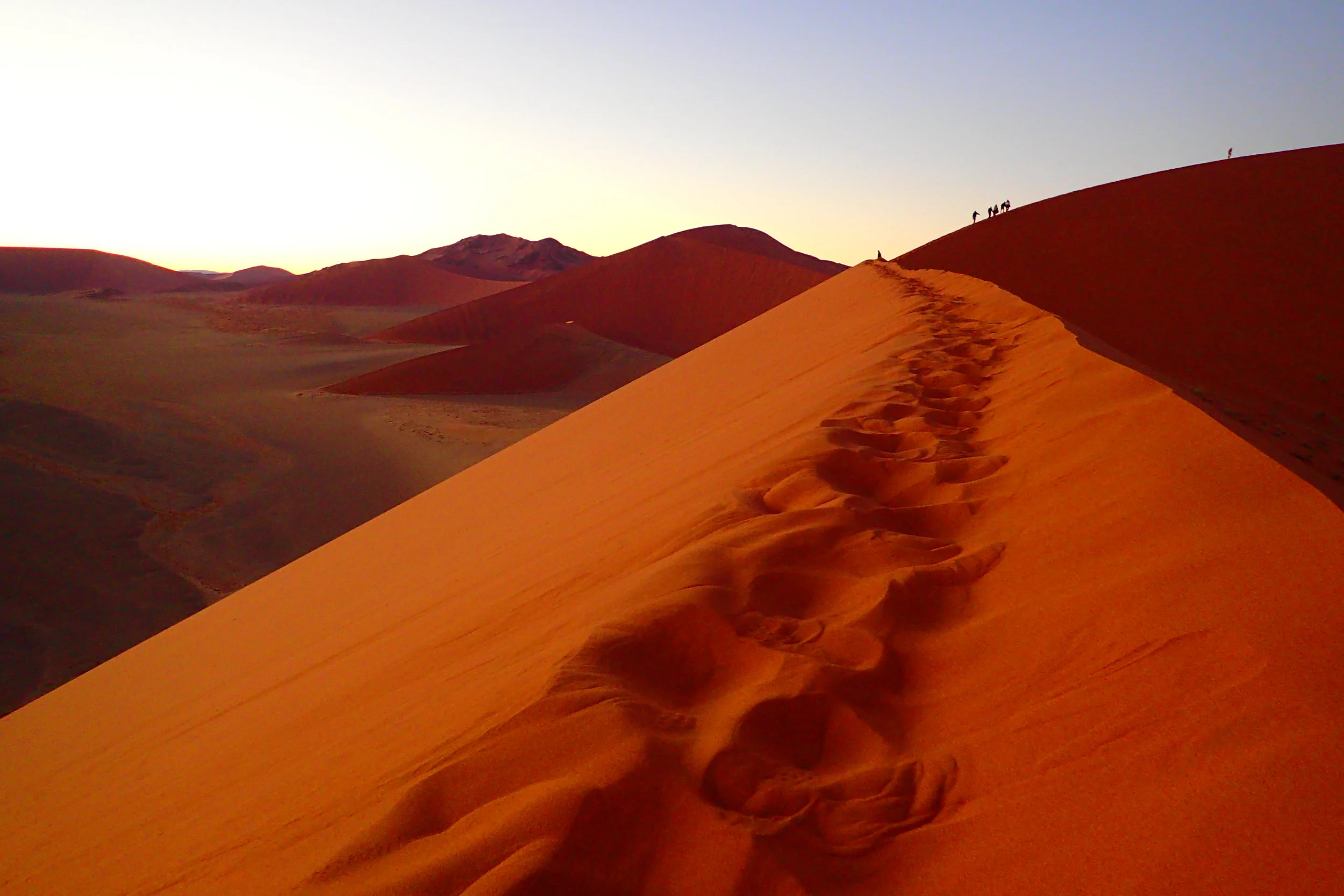
Golden light breaks across the Namib-Naukluft desert, illuminating Dune 45 in fiery tones that shift from soft apricot to deep rust within minutes. Situated just 45 kilometers from the Sesriem Gate, this accessible dune offers a manageable climb paired with a front-row seat to one of Africa’s most mesmerizing sunrises. The trek begins before dawn, ideally around 4:30 to 5 a.m., to allow ample time for the hike and a serene perch at the crest before the sun crests the horizon. At approximately 80 meters high, Dune 45 is less intense than Big Daddy, making it suitable for travelers of all fitness levels while still delivering cinematic scenery. As the light changes, long shadows etch into the ripples of red sand, and the sweeping plains below gradually awaken in layered shades of gold, coral, and ochre. Photographers will appreciate the depth and color contrast, while casual climbers can pause frequently along the route without pressure. Access is easiest with a pre-arranged shuttle or self-drive pass, and early gate entry is key for optimal timing. For those looking to experience the Namib’s full drama without the grueling climb, Dune 45’s sunrise trek offers a stunning, soulful alternative.
Big Mama Dune Panoramic Dune Viewpoint
Towering opposite Deadvlei from Big Daddy, Big Mama offers another dramatic ridgeline climb for visitors seeking a less-crowded but equally scenic ascent. Although slightly shorter, at roughly 200 meters, this dune rewards hikers with panoramic perspectives of the entire Sossusvlei basin, including distant dunes curving into the horizon like waves frozen in time. The climb is demanding, especially as the sun intensifies post-dawn, but the route is often quieter, providing a more meditative journey across the crest. Sand ridges shaped by constant wind create a rhythmic pattern underfoot, and occasional traces of beetles or jackals hint at the desert’s subtle life. From the top, the color contrast between the red-orange sands and the chalky white of Deadvlei below is astonishing—ideal for wide-angle photography. Those who venture up Big Mama often descend into the pan or retrace their steps, both offering memorable perspectives of the shifting terrain. As with other dune hikes, hydration, early arrival, and sun protection are essential. The experience is less about physical endurance and more about absorbing the Namib’s vast scale in stillness. Big Mama’s ridgeline proves that sometimes, the quieter climb holds just as much wonder.
Deadvlei White Clay Pan Contrast Shots

Cracked white clay underfoot, scorched black camelthorn trees rising like sculptures, and surrounding red dunes make Deadvlei one of the most visually surreal landscapes in Africa. Once nourished by the Tsauchab River, this pan has been dry for centuries, leaving behind a salt-rich crust and fossilized tree skeletons that date back over 900 years. Early morning is the best time for visitors, when the rising sun casts long shadows that dramatize the skeletal trees and intensify the surrounding dune colors. Photographers should use this time for wide-angle shots capturing the stark juxtaposition of the bleached clay, burnt trunks, and glowing orange ridges. Minimalist compositions thrive here, as each tree stands isolated against a painterly backdrop. Midday lighting flattens the colors, while crowds thin later in the afternoon, offering another quiet window. Whether accessed from Big Daddy’s descent or a flat walk from the parking area, Deadvlei demands respect—stay on established paths and avoid damaging the fragile terrain. For those seeking Namibia’s most iconic photographic contrast, this sunbaked basin delivers unfiltered drama. Bring extra camera batteries, ample water, and tread lightly through a location that feels more Mars than Earth.
Stay Inside Park Gates for Dawn Access
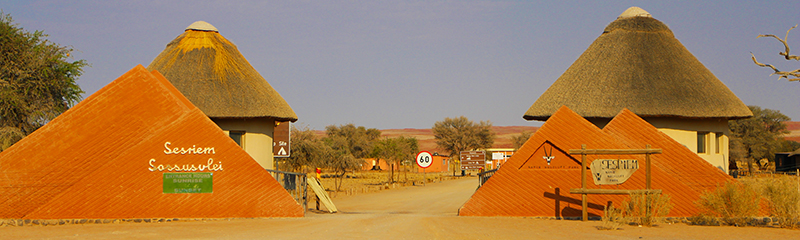
Timing is everything in the Namib Desert, and securing accommodation inside the Sesriem park gate offers a decisive edge. Unlike travelers staying outside who must wait for the official 6:15 a.m. opening, overnight guests at Sesriem Campsite or Sossus Dune Lodge gain pre-dawn access—crucial for reaching Dune 45 or Big Daddy before sunrise. This exclusive window of time allows early climbers to beat the heat, avoid crowds, and enjoy uninterrupted golden-hour photography. Inside-lodge guests are often among the only vehicles on the sand road at 5 a.m., making the journey into the heart of Sossusvlei feel immersive and almost otherworldly. Booking early is essential, as park accommodations fill quickly, especially during peak travel months. Visitors also benefit from shorter drives to Sesriem Canyon, shuttle launches, and balloon rides. The logistics are straightforward—check in by late afternoon, get an early dinner, and rest up for a 4 a.m. wake-up. Flashlights or headlamps are useful for early morning preparations. For those serious about catching the desert at its most cinematic, staying inside the gates isn’t just a convenience—it’s a strategic move that unlocks access to experiences most travelers miss.
Barefoot Climb Strategy to Conserve Energy
Footwear choice can make or break your dune climbing experience, especially when tackling soft, steep ridgelines like Big Daddy or Dune 45. Many seasoned visitors opt to remove their shoes entirely and go barefoot during early morning ascents. In cooler hours, the sand remains comfortable and pliable, allowing toes to grip more securely into shifting surfaces compared to rigid soles that often slide or trap fine particles. Barefoot movement reduces fatigue by eliminating the added weight and instability of filled shoes. However, timing is essential—by late morning, desert temperatures soar, and walking unprotected becomes unsafe. Thin socks or minimalist water shoes can offer a middle ground for those with sensitive feet. Before committing, test the sand’s temperature and texture at the base. If manageable, stow your footwear in a small backpack and proceed with caution. Be mindful of sharp objects, thorny debris, or buried rocks near vegetation zones. This strategy works best on open dunes with clear paths and minimal shade vegetation. For travelers seeking maximum traction, agility, and energy efficiency, ditching shoes—temporarily—can make the climb feel less like a slog and more like a flowing ascent up nature’s largest sand sculpture.
Polarizer Lens Hack for Saturated Sky

Photographers chasing vibrant contrast between sky and sand will benefit from packing a circular polarizer lens. This simple attachment deepens the blues of the Namibian sky while cutting glare bouncing off sunlit dunes, helping capture richer tones and improved definition in every shot. Particularly effective during mid-morning when the sun sits higher, polarizers reduce atmospheric haze and reveal crisp dune lines. Used at a 90-degree angle to the sun’s direction, the filter darkens the sky uniformly, making red dunes pop more dramatically. Avoid wide-angle lenses when using this accessory, as they may cause uneven sky shading or dark patches. Adjusting the polarizer’s rotation ring allows fine-tuning the effect based on the sun’s position. Combine this with early or late-day light for more dimensional imagery, especially at Deadvlei or from high vantage points like Big Mama. Keep in mind that polarizers reduce overall light, so slower shutter speeds or higher ISO may be needed. Always check for dust before mounting, as Namibia’s fine grains can scratch glass. For desert photographers aiming to intensify tonal separation and cut reflective glare from clay pans or sand ridges, this lens hack delivers unmatched depth without relying on post-processing tricks.
Step-by-Step Deadvlei Walk Before Tourists Arrive

Arriving early at the Deadvlei trailhead allows for a peaceful and surreal experience before foot traffic fills the scene. The walk begins at the 4×4 parking lot past Sossusvlei’s final shuttle drop, where a flat 1.1-kilometer trek leads directly to the white clay pan. Starting before 7 a.m. ensures cooler air, undisturbed dunes, and that coveted first light casting long silhouettes of ancient camelthorn trees. Begin on the compacted sand trail heading west. As the terrain opens up, veer left along the base of Big Daddy for an optional climb or continue straight until the skeletal trees begin to emerge. Avoid shortcutting over the dunes, both to preserve delicate crusts and maintain direction. Photographers should set up near the central trees to capture symmetry between the cracked ground, shadows, and encircling dunes. From here, choose either a loop return toward Big Daddy’s base or retrace the inbound route. Keep water on hand—even short walks drain energy quickly under the rising sun. For solo travelers or early birds, this walk becomes a moment of desert stillness rarely found once tour groups arrive. With proper timing, Deadvlei offers a private window into one of Namibia’s most iconic natural sculptures.
Sesriem Canyon Quick Side-Trip Hike

Just minutes from the Sesriem gate lies a hidden marvel that often gets overlooked—Sesriem Canyon. Carved over millennia by the Tsauchab River, this narrow chasm offers a cool, shaded contrast to the surrounding dune landscape. Stretching nearly a kilometer long and reaching depths up to 30 meters, the canyon invites exploration through winding rock corridors, natural pools, and striking sediment layers. Best visited early morning or late afternoon to avoid harsh light, it makes for a perfect side-trip either before heading into Sossusvlei or upon returning. The descent is via natural rock steps and gravel paths—manageable for most fitness levels, though sturdy footwear is recommended. Dry for much of the year, the canyon floor reveals smooth walls, sculpted hollows, and even remnants of old water channels. Flashlights or phone lights can help in shaded areas, and photography enthusiasts will appreciate the interplay of filtered light and textured rock. While not as vast as Fish River Canyon, Sesriem’s intimacy offers an entirely different desert dynamic. For travelers seeking variety beyond dune ascents, this short detour packs geological intrigue, cooler air, and peaceful respite—right on the doorstep of the world’s tallest sand giants.
Hot-Air Balloon Rides from Sesriem Camp

Drifting silently over a golden sea of dunes at sunrise offers one of the most surreal perspectives of the Namib Desert. Hot-air balloon rides typically launch just before dawn from private areas near Sesriem, offering passengers breathtaking aerial views of Sossusvlei, Dune 45, Big Daddy, and beyond. As the balloon rises, colors shift from deep rust to radiant gold, revealing the vast pattern of windswept ridges and contrasting salt pans. The journey lasts roughly an hour, followed by a champagne breakfast in the desert—a tradition that dates back to early European ballooning. Flights must be booked in advance and are weather-dependent, so scheduling flexibility is essential. Operators provide transfers from most park lodges, with check-in usually around 4:30 a.m. Altitude changes are smooth, and even those hesitant about heights often find the experience surprisingly calm and quiet. With minimal motion and panoramic visibility, it’s a dream for photographers and couples alike. From this vantage point, the vast silence of the desert becomes immersive. Few travel experiences compare to witnessing Namibia’s dune fields unfold from the sky, making this excursion an unforgettable highlight for those seeking once-in-a-lifetime views of the oldest desert on Earth.
Race the Sun Shuttle + Drive Schedule

Timing your entry into Sossusvlei is key for catching sunrise over the dunes, and that means mastering the shuttle and drive logistics. From Sesriem Gate to the 4×4 shuttle area near Sossusvlei pan is a 60-kilometer drive on a paved road. If you’re staying inside the park, you can begin this journey as early as 4:30 a.m., beating the main crowds. Those outside must wait for the gate to open at 6:15 a.m., cutting it close for prime golden-hour shots at Dune 45. Once the paved road ends, a deep-sand section follows—only accessible via 4×4 or the park’s paid shuttle service. The shuttle runs frequently from the 2WD parking area and is your best option if you’re in a sedan or van. Rides take around 15 minutes to reach Deadvlei or Sossusvlei drop-offs. Arrive early to avoid waiting in long shuttle lines, especially during peak season. For self-drivers, dropping tire pressure to around 1.5 bars improves traction. No cell signal exists on this stretch, so finalize plans beforehand. Proper timing of gate entry, drive duration, and shuttle handoff can make the difference between a crowded climb and a solitary sunrise over Namibia’s iconic sands.
Ostrich and Oryx Wildlife from Dune Ridge
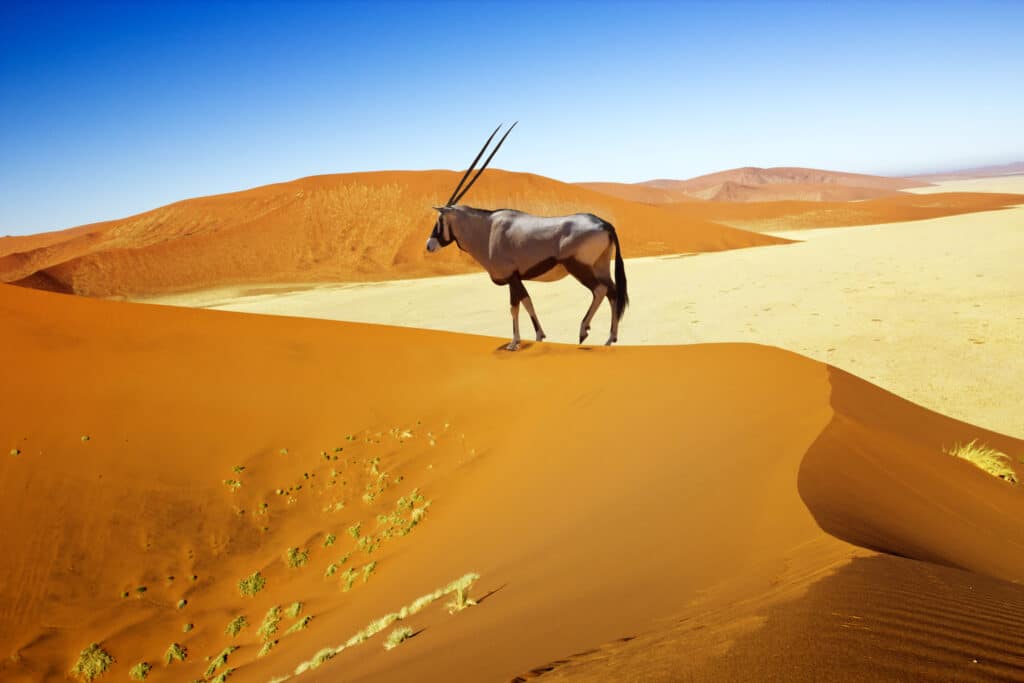
High vantage points along dune ridges offer more than sweeping views—they quietly reveal life across the barren-looking terrain. Early morning and late afternoon are ideal for spotting native wildlife like oryx and ostriches wandering the valley floors below. Oryx, with their striking black-and-white facial markings and long straight horns, are well adapted to Namibia’s arid climate, relying on dew and desert vegetation to survive. Their movements across the flats often leave visible tracks that appear as brushstrokes on the sand canvas. Ostriches, the world’s largest birds, move in small groups or pairs and can often be seen kicking up dust as they trot between shaded spots. The best way to observe without disturbing them is from atop Big Daddy, Big Mama, or the ridgeline near Dune 45. Bring binoculars or a zoom lens to capture their presence without encroaching. While sightings aren’t guaranteed, patience rewards those who wait quietly and scan the terrain during cooler hours. Spotting these animals in their natural desert habitat reinforces the ecosystem’s subtle vitality. These moments—when wildlife silhouettes against rippling dunes—offer a rare and humbling connection between the vast stillness of the Namib and the resilient creatures that call it home.