
Tucked behind busy streets and famous landmarks, London holds a quieter, more surprising side that many residents pass without noticing. These lesser-known spots matter because they reveal layers of history, creativity, and calm rarely found in guidebooks or crowded attractions. From forgotten courtyards and secret gardens to underground museums and timeworn alleys, each place offers fresh perspective on a city thought to be fully explored. For visitors seeking originality and locals craving something new, these discoveries redefine familiar neighborhoods. This guide uncovers hidden gems across London, helping readers escape the predictable, dodge the crowds, and experience the city through stories, spaces, and moments that feel genuinely undiscovered.
Hampstead Pergola Gardens

Along the edge of ancient woodland near Hampstead Heath, this elevated walkway unfolds as a forgotten Edwardian fantasy suspended above overgrown terraces and ivy-draped columns. Originally part of a grand private estate, the pergola now feels like a secret ruin reclaimed by nature, where stone balustrades weave between archways choked with wisteria and wild vines. Quiet footpaths guide visitors through layered gardens, hidden staircases, and unexpected viewing points overlooking sandy-coloured lawns below. Even on bright weekends, the atmosphere remains calm, attracting photographers, walkers, and architecture lovers seeking a quieter pocket of London history. Seasonal changes dramatically reshape the experience, with blossom in spring, dense green cover in summer, and skeletal vines framing the structure in winter light. Its hidden position above the Hill Garden adds to the surreal effect, making it feel far removed from city noise despite its Zone 2 location. This spot rewards slow exploration rather than checklist tourism, offering space for reflection, sketching, and unhurried wandering. Few first-time visitors expect to encounter such a romantic landscape concealed so close to major neighbourhood routes.
St Dunstan in the East Ruins

Once a bustling medieval church near the Thames, this skeletal sanctuary now stands as one of the most atmospheric open-air sanctuaries in the city. Bombed during the Blitz, the remaining stone frame encloses a peaceful public garden where climbing plants stretch across gothic windows and broken arches. Office workers slip inside during lunch breaks, while travellers often stumble upon it by chance while exploring the historic core near the Tower. The contrast between surrounding glass towers and this ivy-wrapped ruin heightens its emotional weight. Benches beneath archways provide quiet refuge from street noise, with dappled light filtering through layered foliage overhead. The site’s layered history unfolds through visible scars, carvings, and softened masonry that speak of centuries of worship and loss. Despite its central location, many pass within minutes without noticing its gated entrance. Those who step inside experience a rare blend of silence, memory, and living greenery within one of London’s busiest districts. It remains one of the capital’s most quietly moving outdoor spaces.
Camden Passage Market

Cobblestone lanes near Islington conceal a compact antique corridor that reveals itself only on select days each week. This narrow passage fills with stallholders offering vintage jewellery, vinyl records, enamel signs, antique cameras, and small furniture pieces that reflect decades of British design. Permanent independent shops line the route year-round, creating continuity between market days and quiet weekdays. The atmosphere leans local rather than tourist-heavy, with long-established traders chatting easily with returning collectors. Cafés spill onto side streets serving coffee beside stacked crates of curiosities. Mornings tend to be the best time to browse before the crowds build, allowing relaxed conversation with sellers who know their stock in detail. Unlike large commercial flea markets, this route offers carefully sourced items rather than bulk imports. The scale makes browsing feel personal, while the surrounding Georgian streets add architectural charm to the experience. It provides a slower, more curated contrast to nearby high-energy shopping zones and remains one of the city’s most rewarding small-format vintage destinations.
God’s Own Junkyard

Deep within an industrial estate in Walthamstow, a colour-saturated warehouse bursts with glowing typography, retro signage, and hand-crafted neon installations. This family-run collection reflects generations of sign makers whose work once lit cinemas, theatres, and street corners across Britain. Inside, layered light fills every surface as stacked words, arrows, and symbols compete for attention in a constantly shifting glow. The visual overload feels intentional, celebrating excess rather than restraint. Coffee is served beneath flickering phrases, turning the café area itself into part of the exhibition. Film crews, designers, and photographers return repeatedly to capture the atmosphere, yet it retains a workshop realism rather than a polished gallery feel. Many pieces remain functional commissions rather than static displays, giving the space a working-studio energy. Visitors expect novelty but often leave with respect for the craft behind every glowing curve. Its location, far from central districts, makes discovery feel earned rather than packaged.
Lincoln’s Inn Courtyards

Behind formal gateways near Holborn lies a sequence of unexpectedly tranquil legal courtyards layered with fountains, clipped hedges, and Palladian red-brick façades. These grounds belong to one of the city’s historic Inns of Court, yet much of the outdoor space remains quietly accessible to the public during daylight hours. Lawyers in wigs cross paths with office workers eating lunch beneath plane trees, creating a rare blend of ceremonial tradition and everyday routine. Geometric lawns and gravel paths organise the space with restrained elegance, offering visual relief from dense commercial streets nearby. Stone statues and understated memorials reinforce the centuries-old academic and judicial legacy of the area. The soundscape softens dramatically once inside the gates, allowing conversation and footsteps to replace traffic noise. Seasonal flowers brighten the central gardens without overwhelming their classical structure. This pocket of order and calm feels worlds away from the retail corridors only minutes outside, rewarding those willing to step through otherwise overlooked entrances.
Salters’ Garden

Hidden above the Thames between historic livery halls, this elevated riverside garden offers rarely matched views across the water toward the South Bank skyline. Maintained by the Worshipful Company of Salters, the landscaped terrace features neatly arranged flower beds, benches, and unobstructed sightlines along the curve of the river. Office workers often use it as a quiet retreat during lunch hours, but most pedestrians overlook its discreet street-level entrance. The elevated position provides a gentle feeling of separation from the crowds below on Upper Thames Street. Seasonal planting ensures colour from early spring bulbs to late-summer blooms, while mature trees soften the surrounding architecture. Sightlines extend toward Blackfriars Bridge and the dome of St Paul’s, especially striking at golden hour. The garden’s modest scale adds to its charm, creating intimacy rather than spectacle. It demonstrates how civic stewardship preserves pockets of calm even along some of London’s busiest thoroughfares.
Brick Lane Vintage Market

Beyond the street art and food stalls that dominate Brick Lane’s global reputation, a layered network of indoor vintage markets hums with quieter discovery. Multiple historic buildings host stalls filled with retro denim, military jackets, vinyl records, leather bags, and handmade jewellery. Each floor offers a different era, from 1960s tailoring to 1990s streetwear. Bargain hunting remains part of the culture, especially during early hours before foot traffic peaks. The surrounding Spitalfields architecture frames the experience with Victorian brickwork and narrow alleys that heighten the market’s character. Many traders curate collections rather than mass-purchase inventory, resulting in genuine variety between stalls. Seasonal demand shifts the stock toward festival style in summer and heavier outerwear in winter. The setting attracts stylists and collectors alongside casual shoppers. While the wider area draws international tourism, the indoor stalls preserve a distinctly local trading rhythm that rewards patient browsing.
Neal’s Yard
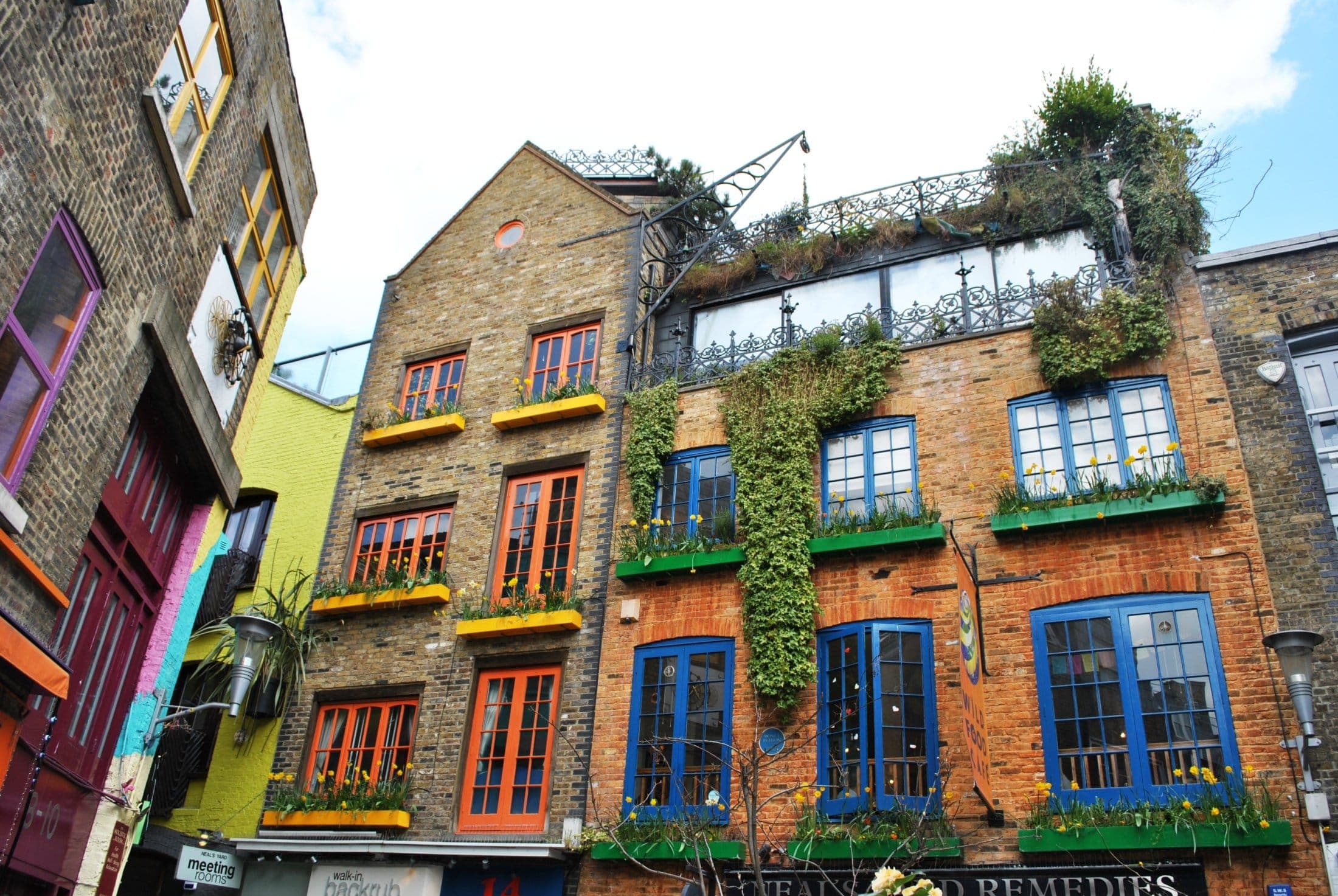
A sudden burst of saturated colour interrupts the muted streets of Covent Garden within this compact courtyard hidden just beyond the main shopping flows. Painted façades in cobalt, turmeric yellow, and terracotta enclose a tight cluster of independent cafés, ethical skincare shops, and vegetarian kitchens. The scale creates instant immersion, with balconies, flower boxes, and stacked windows framing a persistent hum of conversation. Sunlight reaches the centre despite surrounding taller buildings, making outdoor seating possible even in cooler months. The space developed its identity through alternative wellness culture long before it became widely photographed. Organic food, natural remedies, and community-oriented businesses still anchor its commercial mix. Musicians occasionally play beneath the upper walkways, adding to the intimate atmosphere without tipping into performance spectacle. Despite growing recognition, the courtyard retains a village-like rhythm shaped by regulars rather than passing crowds. It remains a vivid reminder that even central zones still hide unexpected pockets of personality.
Holland Park Kyoto Garden

Japanese landscape principles shape this secluded garden inside one of West London’s grandest parks, where cascading water, stone lanterns, and sculpted shrubs are arranged with deliberate restraint. Gifted to commemorate cultural ties, the garden uses elevation changes, stepping stones, and reflective pools to create a sense of journey within a compact footprint. Koi glide through clear water below a tiered waterfall that provides a natural sound barrier from city noise. Carefully pruned maples, azaleas, and mossy ground cover create layered texture throughout the year. Peacocks roaming the wider park occasionally wander into the garden, heightening the feeling of an enclosed sanctuary. Sightlines have been carefully controlled so that each turn reveals a new composition rather than a full overview. Visitors often pause in near silence, drawn into the meditative rhythm of flowing water and shifting light. The setting demonstrates the enduring impact of traditional garden design when placed within an urban context.
Regent’s Canal Path
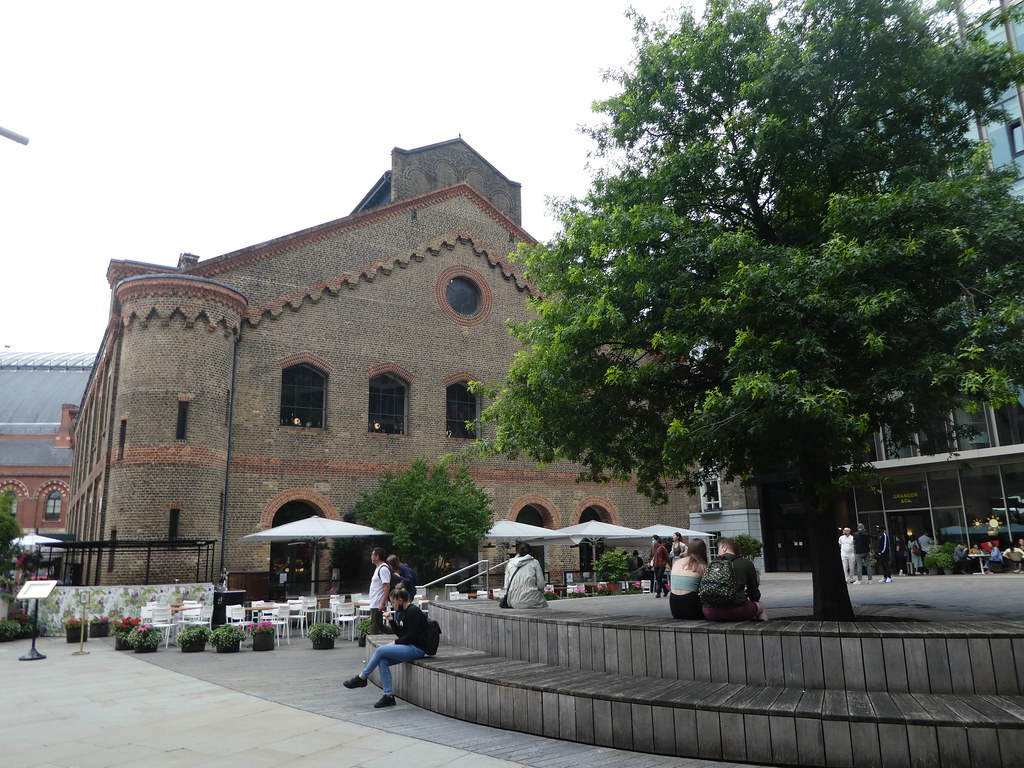
Winding discreetly through multiple neighbourhoods, this narrow towpath delivers waterside calm beneath converted warehouses, houseboats, and iron footbridges. The route links Paddington with Limehouse, cutting behind residential terraces and creative districts with minimal street interference. Joggers, cyclists, and walkers share the space along slow-moving water lined by reeds and moored vessels decorated with potted plants. Reflections of brick façades shimmer against narrow ripples, especially at dusk when interior lights begin to glow. Certain stretches feel surprisingly pastoral despite being only metres from busy roads above. Wildlife thrives along quieter sections, where ducks, swans, and occasional herons appear. Cafés and micro-galleries emerge intermittently beside the path, adding subtle social energy without overwhelming the atmosphere. The canal offers a continuous corridor of movement through changing architectural zones, revealing how London evolved along its industrial waterways. Completing even a short section subtly reframes familiar districts from an entirely different perspective.
The Viktor Wynd Museum

Behind an unassuming Hackney storefront lies a compact cabinet of curiosities devoted to the strange, macabre, and obscure. The collection blends taxidermy, occult artefacts, medical oddities, and surreal artworks arranged not chronologically but by emotional effect. Displays provoke curiosity rather than instruction, inviting interpretation rather than formal explanation. Victorian-era objects sit beside contemporary counterculture pieces, collapsing traditional museum hierarchies. The basement hosts lectures and performances exploring folklore, cryptozoology, and fringe history. A cocktail bar upstairs extends the experience into social space, blurring the boundary between exhibition and nightlife. Visitors often describe the effect as unsettling yet playful, with humour counterbalancing darker themes. Labels avoid academic detachment, favouring storytelling over formal cataloguing. The museum’s unusual scope attracts artists, researchers, and unconventional collectors alike. It remains one of London’s most distinctive micro-institutions, rewarding those drawn to cultural edges rather than polished mainstream narratives.
Sky Garden Hidden Corner

High above the City’s financial district, a lesser-known shaded alcove within the glass-domed Sky Garden provides quiet contrast to the main observation areas. While most visitors cluster along the panoramic windows, this planted corner offers seating among palms, ferns, and layered shrubs away from foot traffic. The ambient climate creates a year-round conservatory environment, softened further by filtered daylight through the curved roof. From this tucked-away zone, skyline views remain partially framed through leaves rather than fully exposed. The shift in perspective encourages lingering rather than quick photo stops. Soft background sound from water features and gentle airflow replaces the louder echo common near viewing rails. Early morning reservations yield the calmest experience before crowds build. This overlooked section demonstrates how architectural scale can still contain intimate zones within monumental structures. It provides a rare elevated refuge where slow observation replaces spectacle-driven tourism.