
Stone battlements stretch across rugged mountains, tracing centuries of history with every rise and dip along the horizon. The Great Wall of China isn’t just a marvel of ancient engineering—it’s a living monument to resilience, scale, and human ambition. Traversing its weathered paths offers more than panoramic views; it connects you with dynasties, legends, and the spirit of endurance. This guide reveals where to go, when to hike, and how to experience the Wall beyond the tourist zones for a journey that’s as meaningful as it is monumental.
Mutianyu Early Morning + Toboggan Descent

First light brings solitude to this restored stretch, making early access to Mutianyu ideal for avoiding mid-morning tour groups. The fresh mountain air coupled with gentle silence lets you appreciate each watchtower and crumbling stone detail without distraction. Mornings here often offer clearer skies, especially from March to October, allowing panoramic views over the forested slopes with fewer haze disruptions. This section is known for its balance of restoration and authenticity, offering a secure climb that still retains its historic charm.
After a tranquil walk along the battlements, the real fun begins. Instead of backtracking or taking the cable car down, opt for the toboggan slide—a winding metal chute offering a thrilling and surprisingly smooth descent through the wooded hillside. Controlled by a hand brake, the ride caters to both adrenaline seekers and cautious travelers. Children over a certain height can ride solo, while younger kids can share a sled with an adult.
This combination of peaceful sunrise hike and exciting descent blends serenity with adventure. Visitors traveling with families or short on time find this dual experience both memorable and efficient. Pair it with a private transfer to maximize time and avoid the hassle of public transport schedules from Beijing’s city center.
Unrestored Jiankou → Mutianyu Ridge Trek

Cracked stonework, loose bricks, and wild vegetation characterize the rugged stretch between Jiankou and Mutianyu. This ridgeline trek links one of the most dramatic unrestored segments with one of the most photogenic restored sections, offering unmatched contrast in a single journey. Local guides often recommend starting at Xizhazi village, where steep ascents and raw terrain lead hikers through forest trails before meeting the spine of the wall.
The trail traverses famous landmarks like the “Eagle Flies Facing Upward” and the “Nine-Eye Tower,” with narrow paths and steep climbs requiring proper footwear, gloves, and a reasonable fitness level. No commercial facilities exist until reaching Mutianyu, so water and snacks are non-negotiable. Expect to climb unstable steps, balance along ridge crests, and scramble through growth-covered corridors—this isn’t for casual tourists.
After two to three hours of unfiltered wilderness, the sleek stonework of Mutianyu feels almost surreal. Transitioning from wild wall to polished parapets underscores the scope of the Great Wall’s evolution. This trek remains a favorite among photographers and seasoned hikers seeking an immersive, physically rewarding experience without the intensity of more remote wilderness segments like Jiayuguan or Gubeikou.
Huanghuacheng Lakeside Wild Wall Hike

Terraced hills and glistening water reservoirs frame this lesser-traveled section northwest of Beijing. Huanghuacheng stands out for its interplay between mountain and lake, where stretches of unrestored wall drop directly into emerald waters. Some towers remain partially submerged, creating photogenic contrasts between stone and reflection.
Hiking here blends natural scenery with a more relaxed pace. Trails vary in difficulty depending on the entry point—Xishuiyu allows for lakeside walks with minimal elevation, while deeper hikes toward the ridge offer expansive panoramas and bramble-filled paths. Visitors must pay local villagers an entrance fee, as this area isn’t part of the official ticketed park network.
Spring visitors witness blooming yellow wildflowers for which the region is named, while autumn colors sweep across the hills in amber and gold. Morning mist often hugs the water, especially in cooler months, so it’s wise to bring a lens cloth or clip-on polarizer to reduce glare during photography sessions.
Huanghuacheng is ideal for those seeking peace without sacrificing visual drama. With far fewer crowds than Badaling or Mutianyu, it attracts couples, solo travelers, and serious hikers hoping for cinematic views with a tranquil backdrop. Consider combining the visit with a traditional meal at a nearby farmhouse restaurant.
Simatai Steep “Heavenly Ladder” Climb

Towering above remote hills, the Simatai section holds a reputation for steep ascents, narrow steps, and jaw-dropping ridge views. Only the eastern portion is open to the public, but that’s more than enough to showcase the section’s raw challenge—especially the “Heavenly Ladder,” a nearly vertical series of stone steps scaling a narrow spine.
This hike begins after crossing a wooden suspension bridge spanning the reservoir near Gubei Water Town. A mandatory guide accompanies each group due to the steep terrain and preservation rules. Most visitors opt for the cable car to Tower 8, known as the “Fairy Tower,” then continue upward on foot.
Stone battlements rise and fall with no mercy here. Sections like Tower 15 (“Watching Beijing”) offer broad visibility on clear days, with layers of mountains fading into the distance. Sunset views from Simatai are among the Great Wall’s most prized, casting dramatic shadows across the rugged stone.
Only a limited number of hikers are allowed per day, ensuring a quiet and safe experience. Good grip shoes, lightweight gloves, and hydration are crucial for this section. If stamina allows, pair this climb with a stay in nearby Gubei Water Town for a rewarding evening soak and lantern-lit stroll.
Jinshanling Serenity Section East of Gubeikou

Rolling hills dotted with watchtowers define this remote but accessible section stretching from Jinshanling to the Gubeikou boundary. Known for its elegant curvature and relative seclusion, Jinshanling offers wide-angle vistas without the throngs of tourists common at closer sites.
Multiple access points allow short or extended hikes. The East Five-Window Tower, General Tower, and Small Jinshan Tower stand out for their elevation and intricate masonry. While some parts are semi-restored for safety, large portions remain authentic with uneven steps, exposed bricks, and crumbling battlements.
Jinshanling particularly shines at sunrise and sunset when soft light catches the undulating ridge. Cloud shadows and golden rays make this stretch a favorite among landscape photographers. Expect to walk 6–10 kilometers depending on your chosen route.
Local guesthouses provide basic accommodation and meals, making it feasible to arrive the night before and set off early without rushing. This stretch also attracts sketch artists and writers, drawn by the peaceful rhythm of stone meeting skyline.
Though not as remote as Jiayuguan, Jinshanling feels worlds away from city life. Serious hikers often continue westward into Gubeikou’s unrestored wilderness, but even casual visitors find Jinshanling to be one of the most balanced, rewarding Wall sections in northern China.
Juyong Pass Cloud Platform Spiritual Stop

Ancient stone carvings, arched gates, and Buddhist inscriptions define this culturally rich stop within the Juyongguan section. Unlike the wild ridge treks further north, this pass served as a ceremonial and strategic checkpoint during the Yuan and Ming dynasties. At its core lies the Cloud Platform—a white marble base built in 1342, inscribed with Sanskrit, Tibetan, Uyghur, and other scripts showcasing the multicultural history of the empire.
Visitors entering from the main gate walk through a steep circular loop trail that ascends both sides of the pass. Though steep in parts, the route is paved and suitable for those who prefer a structured climb with plenty of resting spots and scenic lookouts.
Juyongguan lies closest to Beijing, making it ideal for half-day trips and quick cultural immersion. Its religious monuments, flanked by surrounding forested cliffs, add a layer of spiritual calm often missing in more crowded sections.
Photography enthusiasts should aim for early morning light to capture soft shadows across stonework reliefs. Comfortable shoes and a refillable bottle are essential, especially in summer. For history lovers and those craving a balance between effort and accessibility, Juyong Pass offers depth beyond physical challenge—it delivers context, culture, and symbolism embedded in every step.
Private Shuttle + Guide From Boutique Hotel

Logistics can make or break a Great Wall day trip, especially when trying to avoid peak crowds or navigate remote trailheads. Booking a private shuttle with a local guide from a boutique hotel not only simplifies transit but also enhances the entire experience. Many small hotels in Beijing’s hutong districts or countryside retreats offer customizable packages with early pickup, flexible schedules, and multilingual guidance.
Unlike generic tour groups, these curated experiences adjust based on your interest—be it a sunrise trek at Jinshanling or a family-friendly morning at Mutianyu. Drivers often take lesser-known routes to avoid traffic choke points, and guides help with entry logistics, rest stops, and cultural context.
Comfortable SUVs or minivans usually include AC, bottled water, and sometimes even trekking poles or ponchos. Guides often double as photographers, helping capture moments at key lookout towers or steep staircases.
This personalized setup allows you to focus on the trail rather than transfers. It’s especially helpful for those visiting multiple Wall sections across different days or combining the hike with local attractions like Gubei Water Town or Ming Tombs. While slightly more expensive than public transit, the time saved and expertise gained make it a preferred option for discerning travelers.
Sunrise Tai Chi on Quiet Tower Segment

Misty ridgelines and the rhythmic motion of slow movement set the tone for a sunrise tai chi session atop a quiet watchtower. Some boutique tour operators and wellness retreats organize early access permits for peaceful segments such as Mutianyu’s east end or Jinshanling’s less-trodden towers. Practicing tai chi in this environment connects breath with surroundings, as mountain breezes roll across the battlements and birdsong echoes through ancient stone.
These sessions typically begin before dawn, with mats or light pads provided to sit during pre-practice meditation. Certified instructors lead forms suitable for beginners, focusing on breath control, balance, and fluid transitions. Participants report a deeper appreciation for the Wall’s grandeur when paired with mindfulness.
Mornings at altitude remain cool, even in summer, so layers are essential. Comfortable footwear, water, and a light breakfast beforehand help maintain energy.
These tai chi experiences cater to those who seek calm and clarity in their travel—not just physical achievement. For solo travelers, couples, or older visitors, it presents a restorative alternative to intense hikes. Following the session, many participants continue along the Wall or return to their lodging for a countryside breakfast. It’s a peaceful, centering way to begin a day of exploration.
Clip-On Polarizer for Glacier-Like Haze Reduction

Atmospheric haze is a common obstacle along China’s Great Wall, particularly during summer months or after rainfall. Photographers aiming for sharp shots with deep blue skies and defined stonework often rely on a clip-on polarizing filter. These lightweight attachments reduce reflected glare and increase color contrast—especially effective in late morning or afternoon when sun angles are harsher.
This tool proves invaluable at locations like Simatai or Jinshanling, where broad panoramas span across ridge after ridge. Without it, fine details often disappear into a milky white blur. On spring and autumn days when humidity creates a glowing halo effect, polarizers restore sharpness, allowing you to capture distant towers with crystal clarity.
Even smartphone shooters benefit from budget-friendly versions that clamp onto the lens and rotate for angle adjustment. Keeping a microfiber cloth handy ensures smudge-free results.
These accessories work best when the sun is at 90 degrees from your subject. Paired with good timing—such as early morning or golden hour—you’ll gain depth, sky texture, and vivid stone colors without relying on editing apps later.
Hikers serious about documenting their journey should make this a permanent part of their Wall kit. It’s a small change that makes a huge visual difference.
Overnight Guesthouse at Remote Wall Tunnel

Winding mountain roads lead to a handful of remote guesthouses nestled beside tunnel entrances near off-grid Wall segments like Jiankou, Gubeikou, or sections of the Zhuangdaokou Pass. These rural stays offer access to quiet trailheads without battling morning traffic, and they’re often run by local families who’ve lived in the area for generations.
Accommodations are rustic but comfortable—wooden beds, home-cooked meals, and private courtyards where guests can stargaze in silence. Some locations even feature rooftop terraces with views of distant towers silhouetted against the horizon.
Evening firepits, dumpling-making sessions, or hot noodle dinners often round out the night before an early start. Some hosts offer guided sunrise hikes, complete with thermos tea and a headlamp to catch the first orange hues cresting over jagged ridges.
These guesthouses eliminate long transfers and offer a cultural touchpoint most tourists miss. Staying overnight not only gives a time advantage but also supports rural economies and preserves lesser-known sections.
Make reservations in advance, especially during holidays or peak autumn foliage season. Expect limited Wi-Fi, cooler nighttime temperatures, and traditional hospitality that puts warmth ahead of luxury. For hikers seeking immersion rather than convenience, these guesthouse stays are an unforgettable choice.
Fall Foliage & Spring Azalea Viewing Time
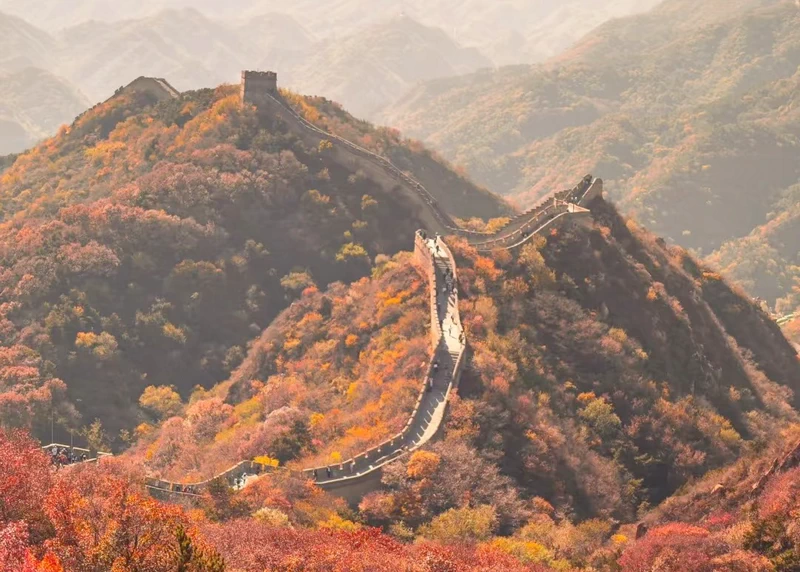
Shifting hues across the northern mountains bring two distinct visual rewards—fiery fall foliage and soft spring azalea blooms. From late October to early November, golden ginkgo, crimson maple, and amber oak frame the Great Wall in a patchwork of warm color. Jinshanling, Jiankou, and Mutianyu particularly shine in this season, offering postcard-perfect ridgeline compositions during the crisp, haze-free days of autumn.
In contrast, April and May welcome clusters of wild azaleas blooming near the steps and valleys around Huanghuacheng and Simatai. Their pink and lilac shades add softness to the otherwise stony palette, especially at sunrise when light catches dew-laced petals. These shoulder seasons bring optimal temperatures, moderate foot traffic, and excellent visibility for landscape photography.
Avoid national holidays like Golden Week (early October) or Labor Day (May 1st) when crowds swell and accommodations vanish quickly. Early morning hikes are best for undisturbed scenes and cooler trail conditions.
Whether you’re chasing autumn reds or spring pastels, plan hikes around forecasted clear days for optimal lighting. A small tripod, polarizing lens, and layered clothing make your kit complete. Seasonal transitions bring the Wall’s textures to life—its stone bones wrapped briefly in nature’s most fleeting colors.
Pack Altitude Water + Trail Snack Kit

Long stair climbs and sun-drenched ridges demand more hydration than expected—especially in sections like Jiankou, Simatai, or Gubeikou, where facilities are nonexistent along the trail. Carrying at least 1.5 liters of water per person is essential, with more for summer or multi-hour hikes. Refillable bottles with filtration capabilities are ideal, though few spots offer refill options without descending.
Electrolyte tablets or sports drink pouches help balance salt loss on hot days, while compact snack kits provide needed energy. Trail mixes, protein bars, and fruit leather pack light and resist spoilage. Avoid sugary or greasy foods that lead to energy crashes or thirst spikes.
If tackling full-day routes like Jinshanling to Gubeikou or Jiankou to Mutianyu, plan meals around high-protein, moderate-carb intake. Some boutique guides offer boxed lunches with local flavors—egg pancakes, pickled vegetables, or rice cakes—perfect for scenic tower stops.
Trash bins are rare, so bring a sealable bag for waste. Wall preservation relies heavily on visitor care, so every wrapper carried out counts.
Proper hydration and nutrition transform a grueling climb into an enjoyable journey. With smart packing, even steep ascents feel manageable, letting you focus on views, history, and that fulfilling sense of walking through centuries.