
Sunbaked clay walls rise above the desert, guarding centuries of caravan trade and cinematic legend. Just beyond the High Atlas Mountains, this UNESCO World Heritage site stands as one of Morocco’s most iconic ksars, where earthen towers and narrow alleys reveal layers of Berber and Saharan history. Its cinematic presence in films like Gladiator and Game of Thrones draws global attention, but its cultural depth runs far deeper. Travelers seeking heritage, architecture, and desert beauty will find this guide essential.
Clay Labyrinth Architecture

Winding through a maze of ochre alleyways reveals how centuries of adaptation shaped Aït Benhaddou’s layout into an intricate defensive labyrinth. Narrow corridors twist and rise unpredictably, creating choke points that once deterred invaders while protecting inhabitants from the desert’s scorching winds. These passages are bordered by high pisé walls whose sunbaked clay absorbs the heat by day and releases warmth at night, maintaining comfort in extreme conditions. Overhead, timber beams span small gaps, casting fractured patterns of shade that guide the eye deeper into the kasbah’s heart. The architecture reflects a fusion of Berber ingenuity and Saharan practicality, with hidden courtyards offering sheltered communal spaces. Elevation changes in the pathways provide vantage points over both the settlement and the surrounding Ounila Valley, allowing for discreet surveillance in times of threat. Many of the interior spaces remain untouched by modern renovation, their compact doorways and low ceilings evoking the scale of life centuries ago. Mud plaster repairs blend seamlessly into the weathered façades, preserving authenticity while ensuring structural longevity. This complex design not only served strategic and climatic needs but also fostered a tightly knit community, where every bend, stair, and archway played a role in daily life and collective survival.
Hilltop Granary Vantage

Perched at the kasbah’s highest point, the ancient granary stands as both a storehouse and a watchtower, commanding panoramic views across the valley and desert plain. Constructed from the same rammed earth as the surrounding dwellings, its fortified walls once safeguarded grain reserves vital during sieges or poor harvests. The positioning was deliberate—elevated to keep provisions safe from flooding, pests, and thieves, while also allowing for early detection of approaching caravans or potential threats. From here, traders’ dust trails could be spotted long before they reached the settlement, giving residents time to prepare for commerce or defense. Inside, the granary’s small, ventilated chambers ensured crops remained dry and preserved for months. Weathered wooden beams and latticed ventilation slits speak to centuries-old engineering that balanced security with practicality. Today, climbing to this vantage reveals an unobstructed sweep over terraced fields, date palms, and the serpentine Ounila River below. The silence at the summit contrasts with the bustling market life that once filled the streets below. As the sun sets, the granary’s silhouette becomes a striking emblem of endurance, embodying the community’s reliance on careful resource management, strategic planning, and the shared responsibility of safeguarding both sustenance and heritage.
Ounila Valley Backdrop
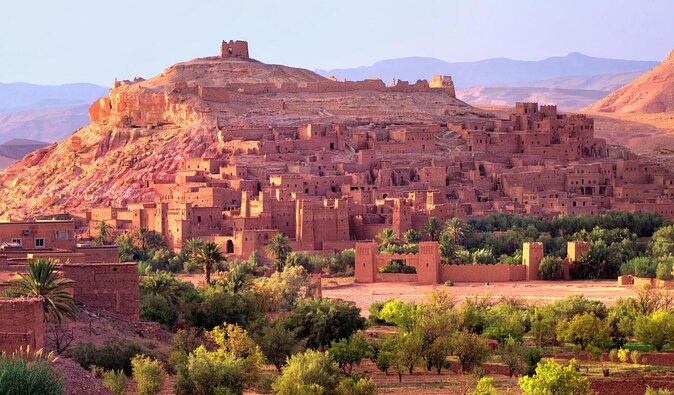
The kasbah’s dramatic setting owes much to the Ounila Valley, whose fertile ribbon of green cuts through otherwise arid landscapes. This valley served as a lifeline, channeling meltwater from the High Atlas into irrigation canals that nourished almond trees, date palms, and grain fields. Against the sunburnt hues of surrounding hills, the lush vegetation forms a stark, almost painterly contrast, making the fortress appear as a natural extension of the environment. Historically, the Ounila was part of a vital caravan route linking Marrakech to the Sahara, ensuring that Aït Benhaddou thrived as a trading post. Merchants traveling with salt, gold, and spices would descend into the valley, their arrival marked by the glint of pack animals winding through terraced plots. Seasonal shifts alter the scenery—spring carpets the valley in wildflowers, while late summer’s golden light bathes the crops in a warm glow. From the kasbah’s upper terraces, the view unfolds like a living tapestry, where cultivated fields meet untamed desert edges. The interplay of water, agriculture, and architecture speaks to centuries of adaptation and cooperation between nature and human settlement. Today, this fertile backdrop not only sustains local life but also frames the historic site in a setting of timeless, cinematic beauty.
Living Clay Village

Life within the fortified walls unfolds in a rhythm shaped by climate, tradition, and close community ties. Houses built from sun-dried clay bricks blend seamlessly into the landscape, their earthy tones shifting with the light. Narrow lanes lead past communal courtyards where families gather to share meals, exchange news, and prepare for market days. The walls’ thermal properties keep interiors cool in summer and warm in winter, a natural insulation perfected over generations. Everyday activity once centered around shared ovens, granaries, and water wells, ensuring that resources were used collectively. The sounds of weaving looms, children playing, and livestock braying would echo through the labyrinth, carried on the dry desert breeze. Decorative wooden doors, some centuries old, mark thresholds to private living quarters, while rooftops serve as extended living spaces, ideal for drying crops or enjoying evening air. Religious and cultural practices were deeply embedded in the layout—mosques, prayer rooms, and gathering spaces anchored the village’s spiritual life. Even today, a handful of families still reside within the old walls, maintaining customs and crafts passed down for centuries. This living heritage transforms Aït Benhaddou from a silent monument into a place where history continues to breathe through daily rituals and enduring craftsmanship.
Kasbah Gateway Passage

Approaching the fortress, visitors are drawn toward the imposing gateway—a fortified entrance that once regulated every person and caravan seeking passage. Built with thick pisé walls and heavy wooden doors reinforced with iron, this threshold was both a security measure and a statement of authority. The entrance opens onto a narrow, inclined path leading toward the heart of the settlement, intentionally designed to slow movement and allow guards to assess travelers. Carved niches within the walls once housed guards or stored lanterns, casting a watchful glow after sunset. The transition from open plain to enclosed passage creates an immediate sense of protection, as the sounds of the outside world soften behind the mudbrick fortifications. Traders carrying goods like salt, dates, and textiles would pause here for inspection, their animals tethered nearby while negotiations began. The gateway’s arched silhouette frames a view of the inner lanes, offering a glimpse of the intricate urban network beyond. Decorative elements—geometric patterns etched into clay or traces of faded paint—hint at a blend of functional design and artistic expression. Crossing this passage was more than entering a physical space; it marked entry into a thriving hub of trade, culture, and strategic significance in Morocco’s desert frontier.
UNESCO Preservation Story

Recognition by UNESCO in 1987 cemented Aït Benhaddou’s status as a site of global cultural importance, sparking renewed efforts to preserve its fragile clay architecture. Decades of exposure to wind, rain, and modern pressures had left many structures vulnerable, prompting a careful balance between restoration and authenticity. Preservation teams, often working alongside local craftsmen, employed traditional building techniques—rammed earth, straw reinforcement, and lime washes—to repair damaged walls without altering the original character. This commitment to authenticity ensures that every archway, tower, and alley retains the tactile history embedded in its surfaces. The designation also brought global attention, leading to funding and training programs that empowered local residents to maintain their heritage. Tourism increased, but strict regulations now limit modern construction within the historic perimeter, protecting the kasbah’s skyline from intrusion. Educational initiatives teach younger generations both the value and methods of conservation, ensuring skills are passed down. The site’s preservation is not only a safeguard for its architecture but also for the intangible heritage—stories, customs, and trade legacies—that give it meaning. This UNESCO status acts as both a protective shield and a bridge, connecting the past to a future where heritage and sustainable development can coexist.
Cinema-City Mirage
The kasbah’s striking silhouette has lured filmmakers from around the world, transforming it into a cinematic icon. Its earthen walls, dramatic setting, and timeless atmosphere have doubled for ancient cities, desert kingdoms, and even fictional worlds. Productions such as Lawrence of Arabia, Gladiator, and Game of Thrones have brought global recognition, each framing the fortress in sweeping shots that highlight its raw beauty. For filmmakers, the location offers authenticity that no studio set could replicate—sunlight bouncing off clay towers, dust swirling in the wind, and the vast expanse of the Ounila Valley as a natural backdrop. During shoots, local residents often participate as extras or assist with production, creating a unique blend of real life and staged storytelling. While film crews bring economic benefits, careful coordination ensures that structures are not damaged by equipment or large-scale set alterations. For visitors, walking the same paths seen on screen adds an extra layer of fascination, blending the tangible experience of heritage with the dreamlike narratives of cinema. This intersection of history and modern media has turned Aït Benhaddou into more than a preserved village—it is a living stage where Morocco’s past and global imagination meet under the desert sun.
Light-play Through Clay

As the day progresses, sunlight transforms the kasbah into a shifting mosaic of light and shadow. Early mornings bathe the clay walls in a soft amber glow, revealing textures of straw fibers and hand-shaped mud. Narrow alleyways act as channels for the sun, casting sharp beams that illuminate small courtyards while leaving others in cool shadow. By midday, the intense desert light bleaches the earth tones to a near golden-white, emphasizing the fortress’s commanding silhouette against a deep blue sky. Openings in the walls—tiny windows, carved latticework, and doorways—filter light into patterned shapes, creating an ever-changing interplay that moves across floors and walls. This dynamic lighting once served both practical and symbolic purposes: controlling interior temperatures, guiding movement, and marking time as shadows shifted. At sunset, the clay deepens to rich terracotta, and the towers seem to glow from within, reflecting the final light of day into the valley below. For photographers and painters, these transformations are a study in natural artistry, proof of how architecture and environment are inseparable here. The dance of light not only highlights the kasbah’s beauty but also underscores the ancient builders’ mastery of positioning and proportion in harmony with the desert sun.
Towers with Narrow Eyes

Rising above the clustered homes, the fortress towers are instantly recognizable for their slit-like windows—narrow “eyes” designed for defense rather than view. These apertures allowed guards to watch the surrounding plains while remaining concealed, an essential advantage during times of conflict. The small openings also reduced heat and glare inside, keeping watch posts comfortable in the intense desert sun. Built from layered pisé reinforced with timber beams, the towers stand as both functional military structures and symbols of authority. From their heights, sentinels could track the movement of caravans, herds, and potential threats across the valley. Decorative crenellations crown some towers, breaking the monotony of clay with subtle artistry, while the shadows cast by the narrow eyes add striking visual patterns. At sunrise and sunset, these windows glow like amber beacons, hinting at the human presence that once filled them. Climbing to a tower’s top reveals a commanding panorama—from the green thread of the Ounila River to the rugged, ochre slopes of the High Atlas foothills. These watchtowers were the kasbah’s vigilant guardians, blending strategic design with the enduring aesthetic of Saharan architecture, ensuring that protection and presence were etched into the skyline for centuries.
Relict Cemeteries & Ritual Space

Beyond the living quarters, the outskirts of Aït Benhaddou hold quiet spaces where history takes a more solemn form—ancient cemeteries and ritual grounds. Modest stone markers, some worn nearly smooth by time, stand among sparse vegetation, their orientation guided by religious tradition. These burial areas reflect centuries of spiritual continuity, with simple headstones emphasizing humility and equality in death. The surrounding ground often contains traces of ceremonial activity: remnants of pathways leading to communal prayer spaces or gathering areas for rites of passage. Here, the hum of the village fades, replaced by the rustle of wind through dry grass and the distant sound of river water. For past generations, these spaces were as integral to community life as markets and mosques, reinforcing bonds between the living and the departed. The location outside the main walls respected both religious custom and practical considerations, keeping sacred grounds undisturbed by daily bustle. Occasional visits by descendants to tend graves maintain a living connection to ancestry, preserving oral histories that tie the kasbah’s present to its earliest roots. In these quiet corners, the desert’s vastness seems amplified, and the awareness of time’s passage deepens, grounding the fortress’s vibrant life in its enduring spiritual traditions.
Almond & Palm Oasis Entrance

Approaching from the valley floor, the first signs of life appear in the form of groves—slender palms swaying gently above fields of almond trees. This oasis, nourished by the Ounila River’s irrigation channels, serves as both a natural welcome and a practical resource. In spring, almond blossoms perfume the air, creating a striking contrast to the surrounding arid hills. Palm fronds provide shade for smaller crops below, an age-old technique of layered agriculture that maximizes land use and protects delicate plants from the harsh sun. Historically, this lush entry point offered caravans a place to rest, water animals, and exchange goods before ascending to the kasbah. The shaded pathways between palms and almonds created a cool transition from the open desert to the fortified walls. Farmers tended these groves with a communal spirit, sharing irrigation duties and harvest celebrations. Today, the oasis remains a living symbol of resilience—proof that with careful water management, even the most challenging landscapes can yield abundance. For visitors, walking through the oasis is an experience of sensory richness, where rustling leaves, dappled light, and the fragrance of earth mingle, marking the final approach to one of Morocco’s most celebrated historic settlements.
High Atlas Pass Arrival
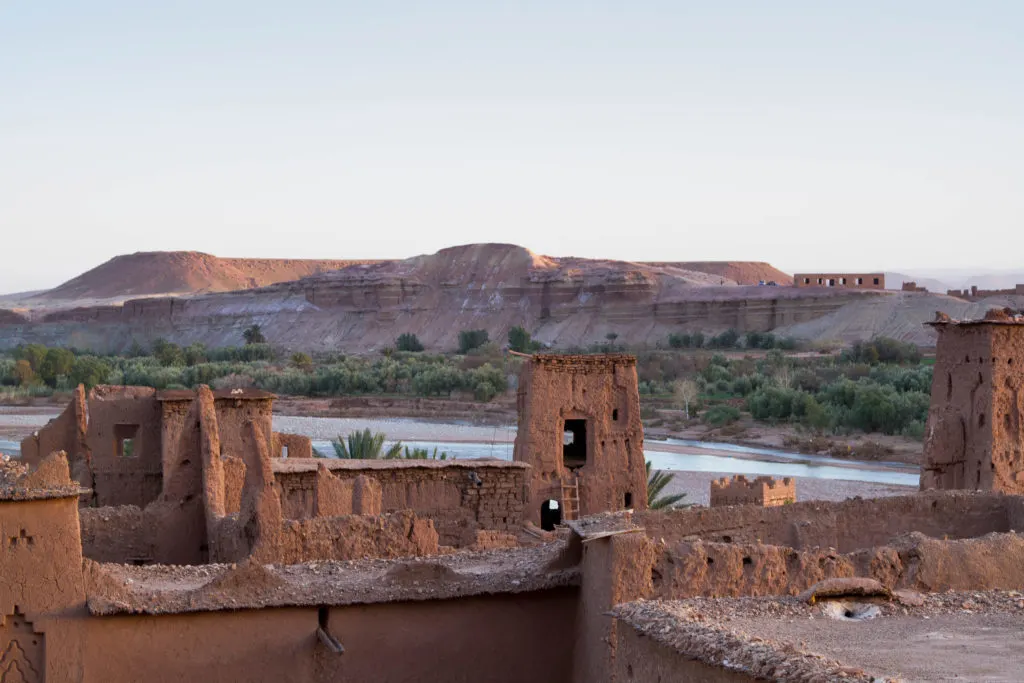
Travelers approaching Aït Benhaddou from Marrakech must first cross the High Atlas—a journey through winding roads, steep switchbacks, and breathtaking passes like Tizi n’Tichka. The descent toward the Ounila Valley offers the first distant glimpse of the kasbah, its earthy tones blending with the hills before its silhouette sharpens against the horizon. This route has been used for centuries, linking the imperial city to the Sahara and serving as a vital artery for trade caravans. Along the way, the changing scenery tells a geological story—snow-capped peaks give way to red rock canyons, then to fertile valleys dotted with villages. Historically, this approach allowed for controlled access, as the surrounding mountains provided natural defense. Caravans would time their journeys to avoid the harshest winter snows or summer heat, often arriving in the cool of morning. Upon reaching the valley floor, the shift in climate is immediate, with palm groves and cultivated terraces signaling the proximity of water and settlement. For modern visitors, the journey over the pass is as much a part of the experience as the destination itself, offering a dramatic build-up that culminates in the sight of the ancient fortress rising proudly from the edge of the desert.