
Rising dramatically above Tenerife, Mount Teide is the highest peak in Spain and one of the most iconic landmarks of the Canary Islands. This active stratovolcano, set within Teide National Park, attracts millions each year with its otherworldly landscapes, volcanic craters, and panoramic views that stretch across the Atlantic. Recognized as a UNESCO World Heritage Site, it offers both scientific importance and unforgettable adventure opportunities. This Mount Teide Canary Islands Travel Guide provides essential details, from access options to the best visiting times, ensuring travelers experience the park’s geological wonders and cultural significance to the fullest.
Above-the-Clouds Sunrise Rides
Moonlit Summit Stargazing

Nightfall transforms Mount Teide into one of the world’s premier astronomical stages. Thanks to minimal light pollution and stable atmospheric conditions, visibility is exceptional, with the Milky Way and planets often seen without telescopes. Organized stargazing tours frequently align with lunar cycles, offering views of a glowing summit illuminated by the moon. When conditions permit, constellations from both the Northern and Southern Hemispheres can be observed, a rarity due to Teide’s geographical position. Professional guides interpret celestial myths rooted in Guanche culture, while laser pointers outline star clusters and galaxies. For those interested in astrophotography, long exposures capture dramatic contrasts between rugged volcanic rock and dazzling night skies. Travelers are advised to dress warmly, as summit temperatures can plunge below freezing after dark, even during summer. The silence of the high-altitude terrain adds to the atmosphere, making the experience both educational and meditative. Visitors often remark on the clarity of Saturn’s rings or Jupiter’s moons through high-powered telescopes provided by local astronomy companies. Moonlit excursions combine natural scenery with cosmic exploration, ensuring unforgettable nights above Tenerife’s volcanic heart. Few destinations worldwide offer such an accessible yet profound connection to the universe.
Volcanic Texture Photo Trails

Exploring Teide’s hiking paths reveals landscapes carved by ancient eruptions, each trail offering textures perfect for photographers. The rough black basalt contrasts sharply with red and ochre scoria, while twisted lava ropes create natural sculptures. Routes like the Roques de García circuit showcase pinnacles eroded into striking forms, reminiscent of desert cathedrals. Morning and late afternoon provide the best lighting, with shadows highlighting ridges and crevices. For close-ups, macro lenses reveal crystallized minerals embedded in the rock, telling the island’s geological story. Trekkers should prepare for moderate altitude exertion, as trails often rise quickly across uneven volcanic ground. Water and sun protection are essential since vegetation is sparse in these zones. Many visitors focus on wide-angle shots that capture the vastness of lava plains against distant snow-topped Teide. Local regulations request travelers remain on marked trails to preserve fragile ecosystems and avoid dangerous loose rock. Photography workshops often include sessions here, teaching composition techniques to showcase depth and scale. The diversity of colors and formations makes Teide’s volcanic terrain one of the most visually rewarding destinations in Spain. For geology enthusiasts and casual travelers alike, these textures provide a rare canvas shaped by fire and time.
Cable Car Timing Tricks & Summit Plans

Efficient planning ensures the cable car ride to La Rambleta, Teide’s upper station at 3,555 meters, becomes smooth and worthwhile. Morning slots tend to be less crowded, with clearer skies before trade winds stir up clouds. Purchasing tickets online saves waiting time, and selecting flexible entry windows helps adapt to changing weather. Visitors aiming for the summit peak beyond La Rambleta must secure a special permit, booked weeks in advance through Spain’s park authority. Only 200 daily passes are issued to protect the delicate high-altitude environment. Experienced hikers often combine the cable car ascent with trekking routes like Montaña Blanca, allowing for a partial hike before boarding upward. Bringing layers is vital, as temperatures swing drastically from the base to the top. Sunscreen and hydration are equally important, since the thinner atmosphere increases sun intensity. Those not holding a summit permit can still enjoy breathtaking vistas from nearby trails such as the Mirador de la Fortaleza. Afternoon descents often include longer waits, so planning return rides earlier in the day reduces stress. For visitors with limited time, cable car strategies maximize both panoramic views and comfort at Spain’s highest point.
Hidden Lava Fields & Lesser Trails

Scattered across Teide National Park are hidden lava formations often overlooked by visitors who remain near main viewpoints. Trails branching from Montaña Blanca and Siete Cañadas reveal frozen rivers of black basalt, twisted pahoehoe flows, and jagged aʻa ridges that showcase the park’s volcanic power. These quieter paths allow solitude, where the crunch of volcanic gravel underfoot becomes the only sound. Hikers encounter lava tubes and hollow cavities formed when molten rock cooled unevenly, offering insight into eruption history. Some trails pass ancient pyroclastic deposits, their ash layers preserving botanical imprints from past centuries. Proper footwear is essential since surfaces can be sharp and unstable. Signage is minimal in lesser-used areas, making maps or GPS guidance important for safety. Wildlife sightings, including lizards sunning themselves on dark rock, add vibrant moments to the stark scenery. Travelers seeking off-the-beaten-path photography will find extraordinary angles without the crowds typical of Teide’s cable car zone. Visiting with a licensed guide can uncover historical anecdotes and ensure safe exploration of fragile landscapes. These hidden trails prove that beyond iconic peaks and tourist hubs, Teide offers intimate encounters with the raw geology that continues to shape Tenerife’s identity.
Weather Layers & Climate Swings
Few places demonstrate microclimates as vividly as Mount Teide. At the base, subtropical warmth often dominates, with temperatures comfortable enough for light clothing. Mid-altitude zones introduce cooler air, sometimes misty with clouds driven by the island’s trade winds. Higher elevations contrast sharply, where temperatures plummet, winds intensify, and snow occasionally caps the cone in winter months. This layering effect means a single ascent can feel like crossing several seasons in hours. Visitors are urged to bring clothing that adapts: breathable fabrics for heat, insulating layers for chill, and waterproof jackets in case of sudden rain. Sunscreen and sunglasses remain vital, as UV radiation grows stronger with altitude. Forecasts can change within minutes, and while skies may appear clear at sea level, summit zones can close due to extreme winds. Park authorities regularly update access conditions, particularly for cable car operations. Hikers often prepare for swings of 20 degrees Celsius between trailheads and summit paths. These rapid shifts contribute to Teide’s unique ecosystems, where plants and animals adapt to harsh extremes. For travelers, understanding these swings is both practical and fascinating, ensuring safe journeys while revealing how climate diversity shapes the Canary Islands’ volcanic crown.
Sunset in Volcanic Shadow Plays
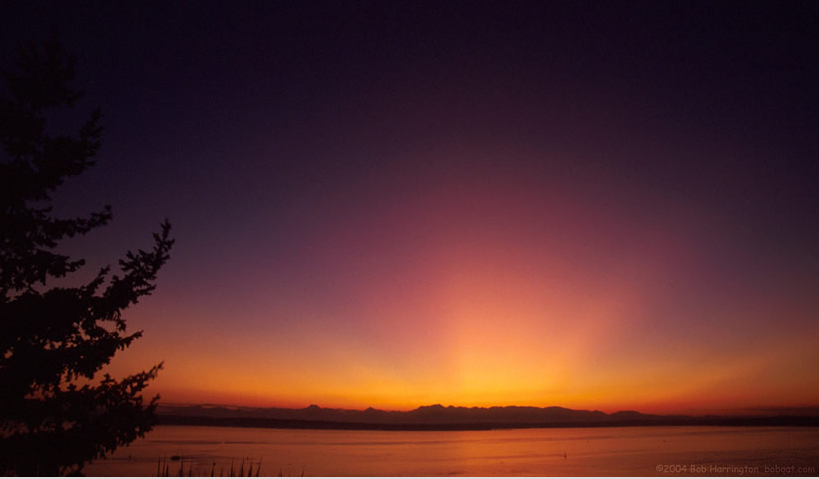
Evenings at Teide present one of the world’s most extraordinary natural phenomena: the triangular shadow of the volcano stretching across the Atlantic Ocean. As the sun descends, this immense silhouette extends for nearly 200 kilometers, visible from vantage points near the summit and Montaña Blanca. The effect is amplified by the clarity of the island’s skies, creating crisp outlines against glowing orange and purple horizons. Photographers often time their ascents specifically to capture this shadow, which lasts only a short window each day. The experience differs with the seasons, offering varying colors and angles. While temperatures drop quickly after sunset, the visual reward compensates for the chill. Many visitors combine the spectacle with a picnic or brief stargazing session as night falls. For safety, flashlights or headlamps are crucial for returning after dusk, since trails lack artificial lighting. Tour operators frequently schedule sunset excursions, guiding participants to optimal spots away from crowds. Watching Teide’s shadow unfold is more than a photo opportunity—it connects travelers to the geological might of Spain’s tallest peak. This fleeting, dramatic display ranks among the park’s most memorable highlights, blending volcanic power with celestial artistry in the fading light.
Flora of Teide: Endemic Life in Harsh Terrain
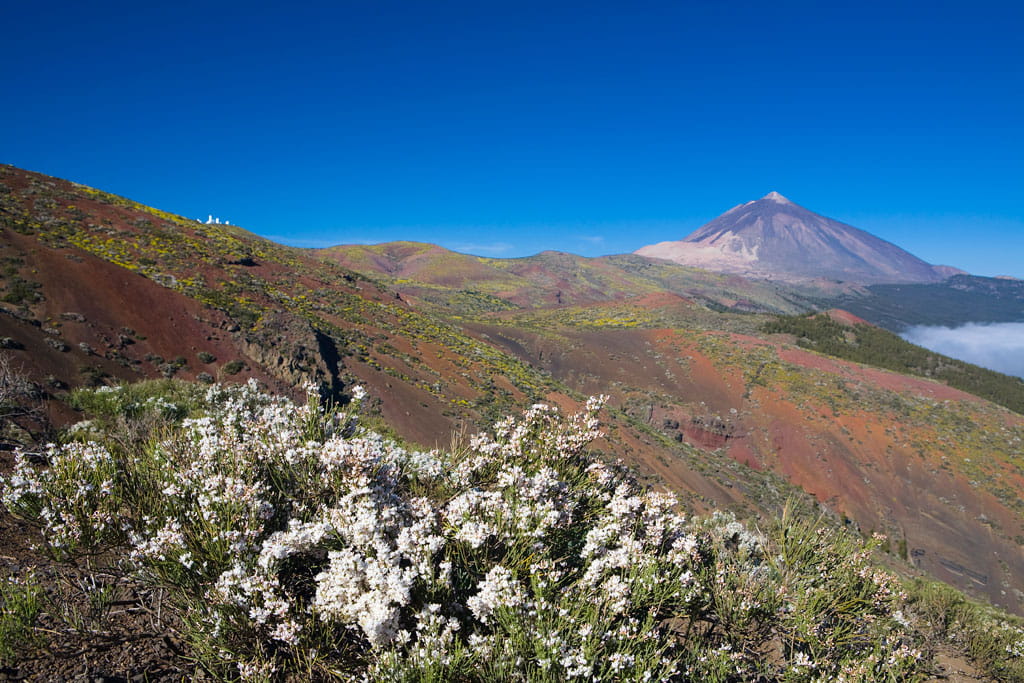
Despite its barren appearance, Teide hosts a surprising variety of endemic plants uniquely adapted to altitude and volcanic soils. Spring months paint the landscape with violet Teide bugloss, a towering flower that can reach three meters, drawing bees and photographers alike. The Teide white broom blankets slopes in creamy blossoms, while rosettes of Teide violet cling to rocky outcrops at nearly 3,500 meters, one of Europe’s highest-altitude flowering plants. These species thrive in extremes of sun, frost, and limited water, demonstrating remarkable resilience. Walking trails reveal small ecosystems where insects pollinate blossoms, continuing cycles of survival against challenging conditions. Visitors are asked not to pick flowers, as many are endangered and protected by law. Information panels along popular routes describe adaptations such as hairy leaves that reduce evaporation and cushion-like growth that shelters roots from wind. For botanists, Teide offers a living laboratory showcasing island evolution, with species existing nowhere else in the world. Photographers and casual travelers alike marvel at the contrast of delicate blossoms against stark lava. Experiencing this flora highlights the importance of conservation, reminding visitors that even volcanic deserts harbor vibrant, fragile life deserving respect and care.
Cost-Smart Access & Passes

Budget-conscious travelers can still experience Teide’s grandeur by planning smartly around access fees and transportation. Entry to Teide National Park itself is free, but the cable car ride and summit permits incur costs. Purchasing online tickets in advance not only guarantees a spot but often comes at lower rates than on-site purchase. Summit permits are free but must be reserved weeks in advance due to daily quotas, avoiding last-minute disappointment. For visitors without summit ambitions, numerous hiking trails around Roques de García and Las Cañadas provide world-class views at no charge. Public buses from Tenerife’s major towns connect to the park affordably, while shared shuttles offer flexible schedules at mid-range prices. Renting a car remains economical for groups, especially when exploring multiple viewpoints in one day. Pack food and water, as dining options near the park are limited and expensive. Some guided tours combine transport, cable car, and stargazing packages, bundling experiences at lower total cost. Staying in nearby villages like La Orotava or Vilaflor provides cheaper lodging compared to resort towns. With thoughtful planning, Teide can be experienced thoroughly without overspending, ensuring access to Spain’s highest peak remains both memorable and affordable for every traveler.
Photo Angles: Mirror Lakes, Reflections & Silence

Seasonal meltwater occasionally forms shallow reflective pools near Teide’s trails, transforming volcanic backdrops into natural mirrors. These temporary lakes, appearing most often in late winter and spring, create striking compositions where the peak doubles in shimmering reflections. Early mornings deliver the calmest surfaces, undisturbed by wind, making conditions perfect for long-exposure shots. Photographers often seek out quiet stretches of Las Cañadas crater floor, where silence heightens the surreal atmosphere. Wide-angle lenses capture both sky and ground symmetry, while telephoto shots highlight intricate reflections of snow-capped slopes. Beyond pools, smooth volcanic pumice fields provide minimalist backdrops that emphasize scale. Visitors are encouraged to tread carefully, as fragile ecosystems surround water features. Silence is part of the experience, offering rare moments of tranquility away from busier viewpoints. Some professional workshops guide participants to these locations, ensuring timing and angles align with ideal light. As clouds drift, shifting reflections offer new interpretations within minutes, rewarding patience. For non-photographers, the stillness alone provides an unforgettable memory of Teide’s contrasts—harsh rock meeting ephemeral beauty. These fleeting lakes, combined with hushed volcanic plains, remind travelers that Teide is as much about atmosphere as it is about grandeur.
Star Trails & Astro-Photography Workshops

Clear skies above Teide create unmatched conditions for capturing star trails and astrophotography. Long-exposure techniques reveal celestial arcs circling Polaris, contrasting beautifully with silhouetted volcanic formations. Professional workshops, often led by local astronomers, teach camera settings, composition, and post-processing to maximize results. Sessions typically begin before twilight, allowing participants to practice focusing on foreground lava structures as stars gradually emerge. Equipment recommendations include sturdy tripods, wide-aperture lenses, and intervalometers for timed sequences. High-altitude clarity ensures minimal atmospheric distortion, producing sharper images than coastal locations. Beginners and experts alike benefit from instruction on balancing exposure, preventing star “blowout,” and layering multiple shots for enhanced depth. Beyond technical skills, workshops emphasize storytelling—framing constellations above Teide’s crater to highlight scale and perspective. Safety remains important, as temperatures drop quickly at night; participants should dress warmly and carry headlamps for returning along unlit paths. Many workshops are offered in English, Spanish, and German, reflecting Tenerife’s international tourism appeal. For enthusiasts, few experiences rival capturing the Milky Way arching across a dormant volcano. These images often become cherished souvenirs, linking travelers’ memories of Teide with the vastness of the night sky overhead.
Observatory Visits & Night Sky Culture

Teide Observatory, perched on Izaña ridge at over 2,300 meters, stands as one of the world’s premier astronomical facilities. Open to guided daytime tours, it introduces visitors to solar telescopes, cosmic radiation studies, and cutting-edge research carried out by international teams. Evenings shift the focus to cultural stargazing sessions, where guides connect celestial observations with myths from Guanche traditions and global astronomy. Visitors learn why Tenerife’s skies are legally protected by Spain’s “Sky Law,” ensuring minimal light pollution and ideal conditions for science and tourism alike. Public programs often include telescope viewing of planets, nebulae, and star clusters, with explanations tailored to all knowledge levels. Beyond scientific value, the observatory experience deepens appreciation for humanity’s shared relationship with the cosmos. Access requires advance booking, as tour groups are capped to preserve equipment and ensure quality. Transportation is usually arranged from major towns, simplifying logistics. For those unable to reach summit altitudes, Izaña provides equally spectacular night skies, merging education with awe. Standing beside state-of-the-art instruments, travelers gain both practical knowledge and a cultural link between ancient stargazing and modern exploration. Teide’s observatory remains a gateway to understanding the universe while rooted firmly in Canary heritage.