
Vast mountain ranges, mirror-still lochs, and ancient glens shape one of Europe’s last great wilderness regions. The Scottish Highlands matter because they deliver raw scenery, deep history, and true escape in a way few destinations can match. From legendary landscapes like Glencoe and Loch Ness to coastal routes along the North Coast 500, every stop blends outdoor adventure with centuries of clan heritage. Hikers, road trippers, photographers, and slow travelers all find something different here. This guide to places to visit in the Scottish Highlands highlights essential stops, quieter alternatives, and practical planning insights so readers can build unforgettable journeys through dramatic peaks, remote shores, and timeless Highland culture.
Glencoe Valley Scenic Pull-Offs
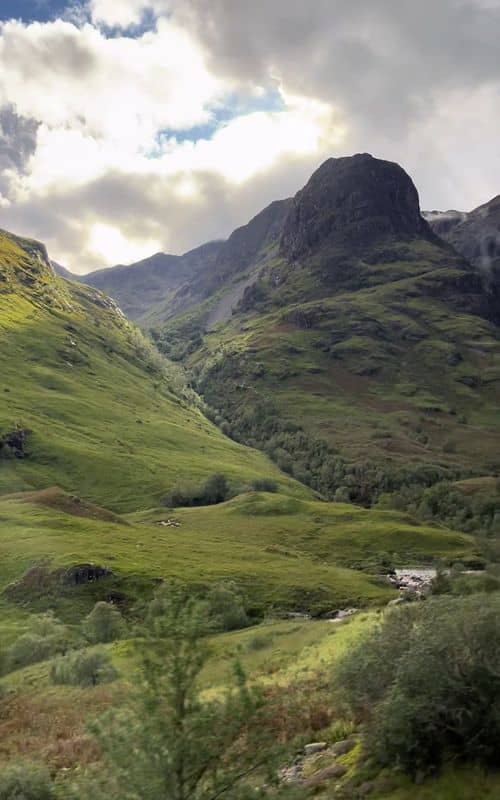
Sheer rock walls, sudden waterfalls, and wide-open moorland define the roadside pauses scattered through this legendary Highland corridor. Several signed and informal stopping points allow visitors to absorb the raw scale of the valley without committing to long hikes. These pull-offs sit along the A82 between Ballachulish and the Kingshouse area, offering safe places to step out for photographs, short walks, and wildlife spotting. Red deer frequently graze on lower slopes, while golden eagles circle the upper ridgelines.
Light shifts dramatically throughout the day, turning dark volcanic rock silver at sunrise and bronze during late afternoon. Seasonal waterfalls surge after rainfall, cutting white ribbons down black cliffs. Short footpaths lead toward river viewpoints and heather-covered hillsides, making these stops ideal for travelers with limited time. Winter adds another layer of drama as snow dusts the peaks and ice coats the streams.
Traffic can be heavy during summer, so early mornings and late evenings provide the quietest moments. With minimal walking required and constant scenery changes, these roadside viewpoints deliver continuous visual reward across every mile of the valley floor.
Fairy Pools, Isle of Skye
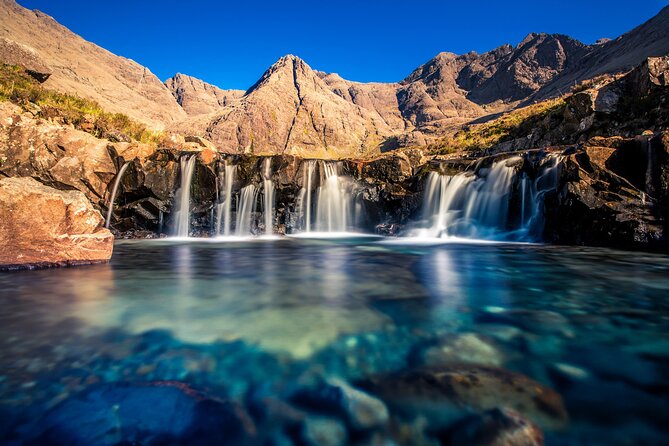
Crystal-clear water sliding over stepped rock basins forms one of Skye’s most photographed natural attractions. These vibrant blue pools lie at the foot of the Cuillin mountains near Glen Brittle and are reached by a well-marked gravel path across open moorland. Water tumbles from tier to tier in a sequence of cascades, each pool reflecting sky and stone with remarkable clarity.
Conditions change quickly depending on rainfall, with water levels rising fast after storms. Even on cooler days, brave visitors attempt short swims in the deeper pools, though temperatures remain cold year-round. Most people explore the lower sections, while fewer continue upstream to quieter upper falls and narrower channels.
Footwear with strong grip is essential due to wet rock surfaces, and wind exposure can be significant along the open approach. Sunset often brings softer color and thinner crowds, allowing uninterrupted views toward the jagged Cuillin skyline. For those seeking accessible Highland water scenery with dramatic mountain framing, this location delivers constant movement, color, and contrast within a compact walking area.
Eilean Donan Castle Lookout

Stone walls rising from tidal waters create one of Scotland’s most recognizable silhouettes. The best vantage points sit along the roadside before reaching the island bridge, where elevated ground opens wide views across three lochs meeting beneath the fortress. From these outlooks, shifting tides reveal changing reflections that mirror the sky, surrounding hills, and castle towers with near-perfect symmetry.
Photographers often arrive before opening hours to avoid traffic and tour groups, using the early light to capture the structure under soft cloud cover or warm sunrise tones. Evening light produces rich shadows that define the battlements and arched bridge. Wind plays a constant role here, rippling water surfaces and pushing fast-moving weather through the narrow glens.
Short footpaths lead from parking lay-bys to higher grassy banks where wider angles appear. Wildlife sightings commonly include seabirds and seals in the adjacent waters. While interior tours draw large numbers, these exterior viewpoints offer uninterrupted access to the most iconic visual presentation without time restrictions.
Loch Ness South Shore Stops

Long stretches of quieter shoreline define the southern edges of this world-famous freshwater loch. Small parking bays along minor roads between Fort Augustus and Invermoriston provide easy lake access without the congestion seen on the busier northern routes. From these stops, water stretches outward for miles, often framed by dense pine forest and distant hills fading into mist.
Early morning fog frequently settles low across the surface, creating mirror-like conditions broken only by passing boats and feeding birds. Picnic benches appear at several points, allowing relaxed pauses with uninterrupted loch views. These roadside areas also give entry to short woodland paths leading toward pebbled shorelines.
Boat traffic moves steadily through this stretch as part of the Caledonian Canal system, adding motion without breaking the calm. Autumn deepens the surrounding colors with rust, amber, and evergreen contrast. These quieter southern viewpoints deliver classic Highland water scenery without crowds, making them ideal for travelers seeking peaceful observation rather than busy attractions.
Fort William & Ben Nevis Base Trails

Wide forest tracks and stony paths spread outward from the lower slopes of Britain’s highest mountain. These base-level routes attract walkers who want alpine-scale scenery without committing to the summit climb. Located just outside Fort William, trail networks lead through pine woodland, open glens, and river crossings beneath towering vertical faces.
The Lower Glen Nevis area offers flat riverside walking with dramatic cliff scenery overhead, while higher trailheads introduce steeper gradients and cooler air. Waterfalls cascade across the darker rock faces after rain, creating powerful soundscapes throughout the valley. Mountain weather shifts rapidly here, with sunshine, rain, and low cloud often cycling within hours.
Facilities in Fort William support all visitor levels, including gear shops, cafés, and transport connections. Wildlife sightings frequently include red squirrels, deer, and mountain birds. These lower trails provide flexibility, allowing short scenic walks or longer circular routes depending on time and energy. For those seeking proximity to extreme Highland topography without technical climbing, this area offers constant scale and accessibility.
Neist Point Lighthouse Clifftop Walk

Sweeping Atlantic views unfold along one of Skye’s most exposed headlands. A steep concrete path descends from roadside parking toward a white lighthouse perched on layered basalt cliffs. Sheer drops fall directly into crashing surf, while seabirds glide level with the walking route.
Strong winds are common year-round, adding both drama and challenge to the experience. During calm spells, water clarity reveals deep turquoise tones near the rocks, while stormier conditions transform the coastline into a roaring spectacle. The route itself remains short but physically demanding on the return ascent.
Late evening draws many visitors for sunset, when the lighthouse silhouette stands against wide ocean horizons. Whale and dolphin sightings occasionally occur offshore during summer months. Even in overcast weather, cloud textures enhance the stark geometry of land and sea. This clifftop path delivers one of the most powerful combinations of light, motion, and exposed coastal elevation anywhere in the Highlands.
Glenfinnan Viaduct Viewpoint
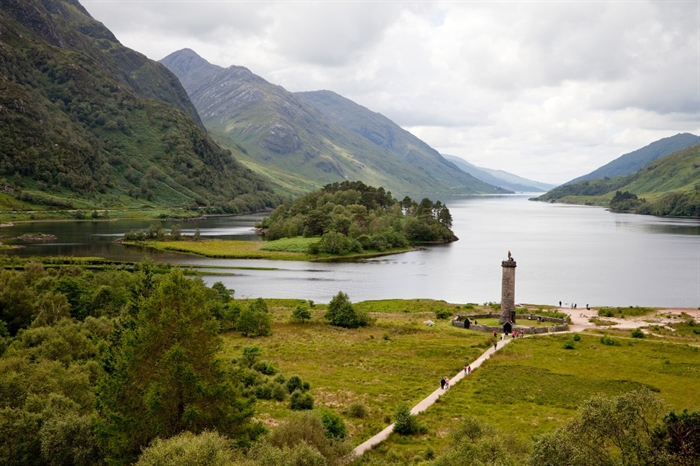
Curving railway arches rising above wooded slopes form one of Scotland’s most distinctive engineered landscapes. The main viewpoint sits on a hillside footpath just west of the visitor center, reached by a moderate uphill walk across open grass and gravel track. From this elevation, the full sweep of the viaduct becomes visible, framing distant mountains through its stone arches.
Steam train crossings remain the most anticipated moments, typically scheduled twice daily during peak season. The sound arrives first, echoing across the valley before white plumes appear drifting above the treeline. Timing arrivals around the train dramatically enhances the experience.
Beyond the railway, surrounding scenery includes Loch Shiel, moorland slopes, and dense native woodland. Weather can change quickly, shifting visibility from crystal clear to fog-draped within minutes. Despite its popularity, multiple viewing angles spread along the hillside, allowing quieter perspectives away from crowd clusters. This viewpoint blends mechanical heritage with expansive Highland wilderness in a single framed panorama.
Quiraing Loop Mini-Hike

Strange rock towers, tilted plateaus, and knife-edge ridges define this compact but highly varied walking circuit on northern Skye. The loop follows a well-marked trail that threads between landslip formations shaped by ancient geological movement. Walking distance remains manageable, yet elevation changes and uneven ground demand steady footing.
Sharp pinnacles rise abruptly from grass-covered slopes, while hidden corries reveal sheltered pockets of still air beneath constant winds. Sheep frequently wander across the route, navigating narrow ledges with ease. Weather visibility transforms the landscape entirely, from endless layered ridges under clear skies to ghostly silhouettes emerging through drifting cloud.
Upper viewpoints open long-distance views across the island and out toward surrounding sea cliffs. The loop design allows a gradual return without retracing steps, creating continual scene variation. Cooler temperatures dominate even in summer due to exposure and elevation. This short circuit delivers one of the highest concentrations of unusual landform variety found anywhere in the Scottish Highlands.
Inverness Riverside Old Town

Stone bridges, narrow lanes, and river-edge promenades shape this compact historic center beside the River Ness. Gentle walking routes follow both banks through landscaped gardens, passing cafés, small museums, and traditional shopfronts set within preserved Victorian and medieval architecture.
The river itself moves steadily from Loch Ness toward the Moray Firth, reflecting trees, rooftops, and passing swans along wide embankments. Evening light softens the buildings as foot traffic thins and city noise fades into water movement. A short climb leads to elevated viewpoints offering full town panoramas framed by distant hills.
Boat tours operate seasonally, linking urban streets directly with open loch scenery. Local musicians often perform along the riverside during warmer months, adding cultural texture to the stroll. Compact scale makes the area easy to explore without transport, allowing relaxed discovery between historic landmarks. This riverside district blends Highland character with small-city accessibility in a walkable, scenic setting.
Plockton Coastal Village

Palm trees, sheltered water, and pastel cottages create an unusually mild coastal atmosphere at the edge of Loch Carron. This small fishing village faces a calm bay protected from Atlantic weather by surrounding hills, producing reflective water conditions rare along the west coast.
Short waterfront paths run between jetties, gardens, and small harbors where boats rest in neat rows. Seal colonies frequently surface near the shoreline, drawing quiet observation from benches along the promenade. Kayaking and short boat excursions operate during warmer months, offering low-impact exploration of nearby islands.
Evenings bring soft light across the water, illuminating cottage fronts and moored vessels with warm reflections. Local eateries serve fresh seafood caught from surrounding waters, reinforcing the village’s working harbor identity. Rainfall remains lower here than in many neighboring regions due to natural shelter. With slow pace, compact size, and constant shoreline access, this village delivers relaxed Highland coastal scenery without exposure to harsh maritime conditions.
Smoo Cave in Durness
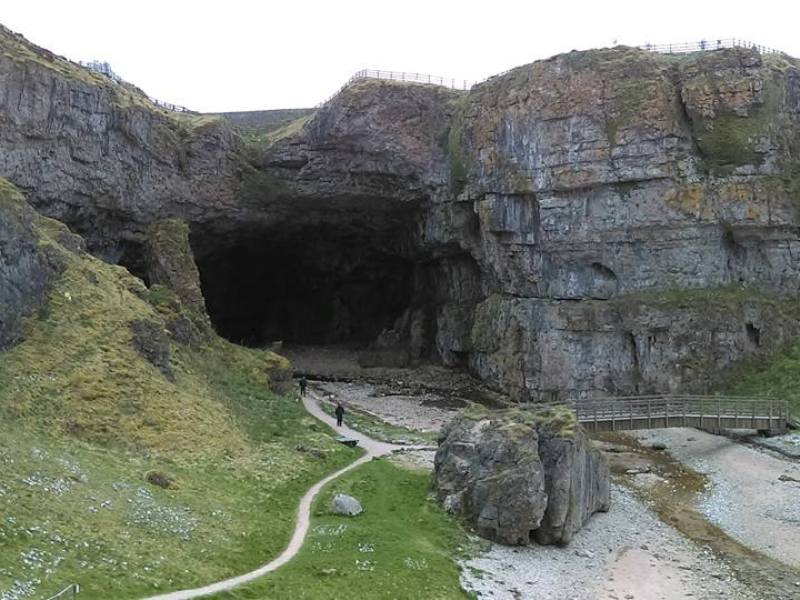
Sheer limestone walls rise abruptly above the entrance of this vast coastal cavern on the far northern mainland. A stone staircase descends into the cavern mouth, revealing a massive chamber partly lit by daylight pouring through the wide arch opening. Within, a freshwater river plunges into the cave, meeting tidal seawater at lower levels.
During calmer conditions, small guided boat trips enter deeper sections inaccessible on foot, navigating narrow passages carved by centuries of water movement. The contrast between dark interior rock and bright coastal cliffs outside creates striking visual depth. Strong Atlantic winds often funnel through the opening, producing echoing air currents within the chamber.
High tide submerges lower sections, while low tide reveals additional rock formations and swirling pools. Seabirds nest along nearby cliff edges, filling the air with sound above the cavern. This site combines geological scale, hydrological power, and raw northern coastline within one compact, dramatic setting.
Applecross Pass (Bealach na Bà)

Hairpin bends, steep gradients, and sweeping mountain exposure define Scotland’s highest paved road pass. Rising from sea level near Tornapress, the route climbs rapidly into alpine terrain rarely experienced elsewhere in the country. Narrow single-track sections demand careful driving, with passing places positioned along sharp curves and ridges.
At the summit, panoramic views stretch across the Cuillin range of Skye, Torridon peaks, and wide moorland plateaus. Weather conditions shift abruptly, with clear skies sometimes giving way to fog and crosswinds within minutes. Snow frequently closes the pass during winter months.
Descending toward Applecross village reveals contrasting coastal scenery, where cliffs drop toward sheltered bays and tidal flats. Cyclists often attempt the ascent as a physical challenge, while photographers focus on the sculpted road cutting through rocky slopes. This historic cattle-driving route now functions as one of the Highlands’ most extreme scenic drives, delivering altitude, exposure, and long-distance views unmatched by any other single road.