
Alpine Dry-Suit Ritual

Sliding into a dry suit before entering Silfra feels less like gearing up for a swim and more like preparing for a polar expedition. The water temperature remains just above freezing year-round, so every zipper, neck seal, and wrist gasket matters. Guides emphasize patience during this process because a small fold or loose fit can ruin insulation and lead to discomfort. Thermal base layers are worn beneath, usually merino wool, which keeps the body warm even when damp from condensation. Unlike wetsuits, dry suits do not allow water in, creating an air pocket that insulates against glacial chill. Breathing techniques help offset the initial shock as cold air fills the lungs when stepping in. Visitors quickly learn that freedom of movement is limited, but the security of staying dry outweighs the stiffness. Adjustments are checked twice before anyone enters the fissure, ensuring safety in this uniquely demanding environment. Once zipped, clipped, and tested, anticipation builds—the suit transforms nervous energy into focus. Standing at the edge, participants realize that this ritual is both physical and mental, priming them for one of the most surreal aquatic landscapes on earth where clarity, geology, and history merge beneath the surface.
Continental Rift Explorer

Standing in Silfra means positioning yourself directly between two tectonic giants—the North American and Eurasian plates. Few other places on earth allow divers and snorkelers to literally float within a continental rift. The fissure is part of Þingvellir National Park, a UNESCO World Heritage Site, and represents millions of years of geological shifting. Every year, the plates drift apart by about two centimeters, gradually reshaping the rift walls and altering passageways. For explorers, this isn’t just a swim but a direct encounter with earth’s restless crust. The underwater landscape is marked by jagged lava formations, hidden crevices, and sudden drop-offs that remind visitors of the raw forces at play. Guides often explain the science before entry, helping participants understand they are not only witnessing history but also moving through it. The visibility—often exceeding 100 meters—turns exploration into a panoramic experience where boundaries blur between near and far. Photographers find the rift dramatic, with sharp contrasts of basalt rock and shifting blue tones of glacial water. Unlike other dive sites, there is no marine life spectacle; the true attraction is immersion inside the living geography of the planet. Every fin kick reinforces the wonder of traveling through a fracture that continues to widen year after year.
Spring & Fall Aura

Seasonal transitions bring out distinctive moods at Silfra. In spring, melting snow enriches Þingvellir Valley with green bursts and lingering ice patches that frame the fissure’s crystal waters. The surrounding moss glows vividly, offering contrast against stark volcanic rock. Days grow longer, creating opportunities to dive under softer sunlight, which refracts beautifully underwater. By autumn, the air carries a crisp edge and the landscape shifts to warm golds, ochres, and muted browns. Snorkelers surface to see mirrored skies tinged with seasonal color, reflecting Iceland’s dramatic shift toward winter. These shoulder seasons are particularly attractive because they balance manageable weather with smaller crowds. While summer delivers accessibility and winter provides stark drama, spring and fall reward those seeking atmosphere over convenience. The chill of the water remains unchanged—it is always glacial—but the aura surrounding the fissure transforms. Photographers often prefer these months because lighting is dynamic, with low-angled sunbeams creating intense underwater shafts of light. Guides recommend layering appropriately, as winds can be unpredictable during these transitional times. Many visitors combine their Silfra experience with seasonal highlights, from lambing farms in spring to northern lights in autumn. Each season frames the fissure differently, but spring and fall lend it moods that feel uniquely ephemeral.
Guide-Only Entry
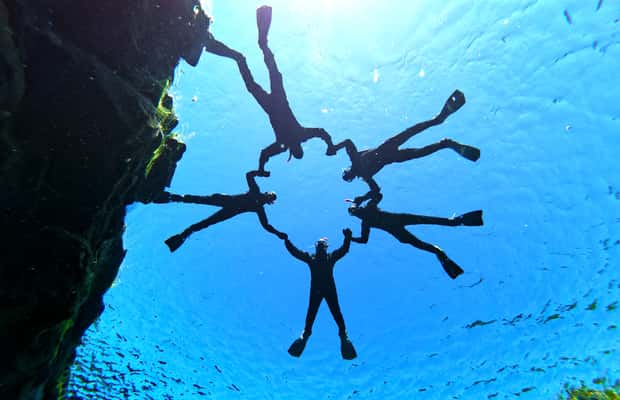
Access to Silfra is tightly regulated, ensuring the site remains both pristine and safe. Unlike casual snorkeling spots, entry is only permitted under the supervision of certified local guides. The reasons are twofold: first, the environment is extreme, with icy water, shifting geology, and potential hazards; second, Iceland enforces strict conservation measures to protect this fragile ecosystem. Every guide is trained in cold-water rescue, dry-suit fitting, and rift navigation. Before the tour begins, participants receive thorough briefings on what to expect—water temperature, safety signals, and step-by-step entry procedures. Groups are small by design, usually no more than six to eight people, so that every individual can be monitored closely. Guides also handle the logistics of dry-suit adjustments, weight belts, and buoyancy checks, all of which are essential in maintaining control within the fissure’s strong currents and narrow channels. Beyond safety, their role extends to storytelling, providing context about geology, history, and cultural significance of Þingvellir. Visitors often find that the presence of a guide elevates the entire experience, offering both reassurance and depth of knowledge. Without them, Silfra would not be accessible, preserving its integrity for future travelers while ensuring that those who do enter leave with memorable yet safe impressions.
Foggy Sunrise Drift

Early morning brings an almost ethereal quality to Silfra. Fog often lingers across Þingvellir Valley at sunrise, rolling low over the rift and softening the jagged edges of volcanic rock. Entering the water during this time feels like slipping into a dream. Above the surface, the muted landscape looks mysterious and quiet; below, the clarity remains undisturbed, offering a stark contrast to the mist above. Light beams break through gradually, filtering down as divers or snorkelers drift with the slow current. The surreal sensation of floating between two worlds—misty skies and crystalline depths—becomes heightened in these hours. Guides favor early entries for the serenity and for avoiding the busier mid-day groups. Photographers find sunrise particularly rewarding, as the interplay of fog and light produces rare moments both above and below water. For travelers, this drift offers more than visuals; it creates a calm rhythm where every fin stroke feels in tune with nature’s tempo. Silence dominates, broken only by the sound of breath through snorkels. While the temperature at dawn can be colder, the reward is immersion in one of Iceland’s most peaceful spectacles. Those who experience Silfra at sunrise often describe it as a meditative encounter with the raw elements.
Zero-Refill Glacial Sip

Few dive sites invite visitors to drink the water directly, but Silfra is one of them. Fed by meltwater from Langjökull glacier, filtered for decades through porous volcanic rock, Silfra’s water emerges astonishingly pure. Guides often encourage snorkelers and divers to take a sip mid-drift, noting that this is among the cleanest natural water sources on earth. The taste is crisp, cold, and refreshing, with no trace of minerals or impurities. It’s a simple act that becomes unexpectedly memorable, grounding the experience in something tactile and primal. Unlike bottled water, which can feel detached from origin, Silfra’s glacial sip connects visitors directly to Iceland’s natural cycle. However, the tradition is not just about refreshment; it highlights the importance of Iceland’s geological filtration system, where lava fields act as natural purifiers. For many, the act of sipping reinforces respect for the environment, showing how fragile yet generous it is. Photographers sometimes capture participants tilting their masks to drink, creating candid moments that reflect joy and awe. While the fissure’s main attraction lies in visuals, this zero-refill ritual adds flavor—literally and figuratively—to the journey. Each swallow is a reminder of the glacier’s reach, linking travelers to a source that is as ancient as it is vital.
Split-Second Mirror Shot
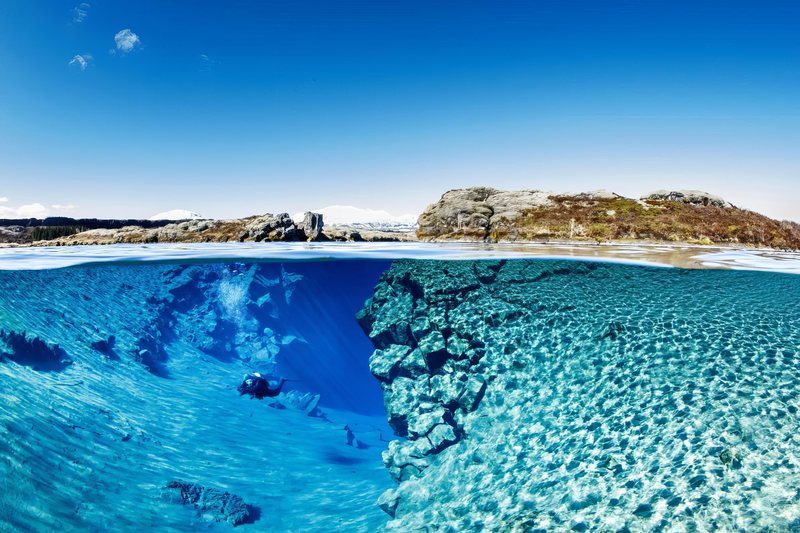
Still conditions at Silfra occasionally transform the surface into a flawless mirror. On such days, snorkelers floating belly-down can glance up and see their reflection hovering above, suspended between worlds. Photographers treasure these fleeting opportunities, as capturing a mirror shot requires precision, timing, and patience. The fissure’s clarity amplifies the effect, creating a symmetrical frame where underwater lava formations appear doubled. Divers who pause mid-kick may notice the surreal sensation of swimming inside a reflection, as though the surface were a glass ceiling. Guides advise early morning or calm afternoons for the best chance at mirror-like water, since wind or foot traffic can disturb the surface. Specialized cameras, often with wide lenses, maximize the effect, though even smartphone housings can catch glimpses if timed right. Beyond aesthetics, this phenomenon deepens appreciation for the fissure’s stillness, reinforcing how fragile and unique the environment is. For many visitors, the split-second reflection becomes their favorite image—proof of the silence and symmetry that define the site. Unlike staged shots elsewhere, this moment cannot be manufactured; it relies entirely on nature’s cooperation. When achieved, the mirror shot symbolizes not only the beauty of Silfra but also the patience required to truly experience it.
Multi-Zone Fissure Swim
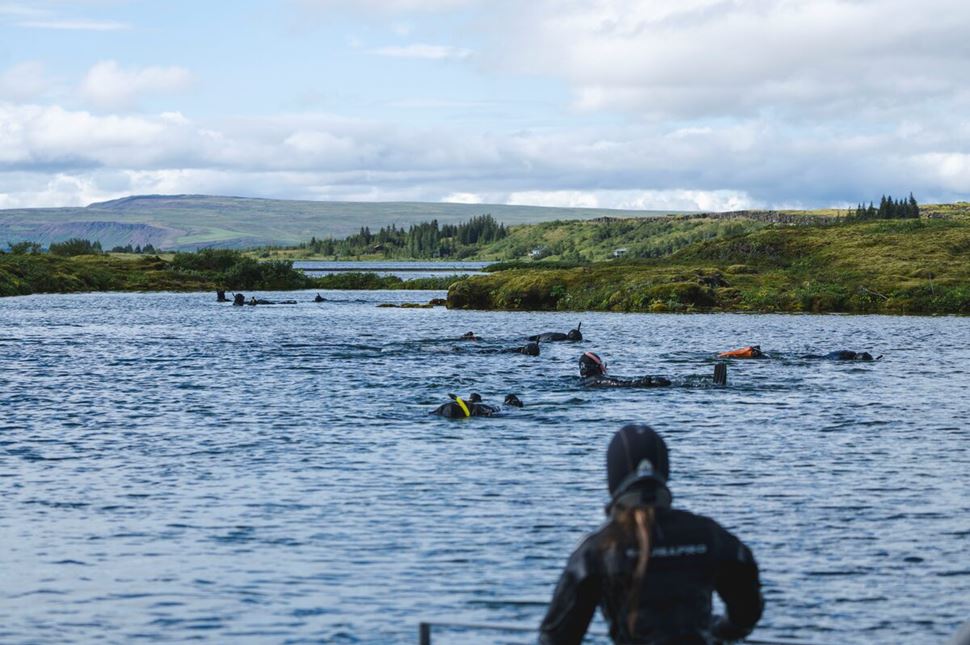
The fissure is not a single uniform corridor but a sequence of distinct zones, each offering a different perspective on geology and light. Snorkelers first encounter Big Crack, a narrow stretch where the continents feel closest, towering like walls. From there, the fissure widens into Silfra Hall, a cathedral-like chamber with panoramic views of basalt columns stretching into the distance. The journey continues into Silfra Cathedral, where visibility reaches its peak, often over 100 meters, giving divers the sensation of flying. Finally, participants drift into Silfra Lagoon, where shallower waters glow with turquoise brilliance. This multi-zone progression creates a narrative journey rather than a single static experience. Guides often describe it as moving from intimacy to grandeur, with each section carrying its own mood. Safety protocols vary too: in narrower zones, controlled fin movements prevent contact with rock, while in open areas, participants can spread out and relax. The contrast between these sections keeps the swim engaging and memorable, especially for those who expected a uniform environment. By the time travelers reach the lagoon exit, they realize they have experienced four unique atmospheres within one fissure. It is this layered progression that makes Silfra not just a dive but a journey through natural architecture.
Solo Van Campfire Prep

Many travelers approach Silfra as part of a self-guided road trip, often parking camper vans nearby for an overnight stay. After the intense cold of the dive, the return to simple comforts—preparing a meal and lighting a small campfire at designated areas—feels deeply satisfying. Iceland’s camping culture thrives on minimal amenities but maximum atmosphere, and Þingvellir’s surroundings provide just that. Setting up a portable stove or cooking over embers offers warmth and a sense of accomplishment after braving glacial waters. Solo travelers, in particular, find these moments grounding, balancing the shared intensity of guided tours with private reflection. The contrast between submerging in near-freezing clarity and sitting beside a crackling fire underscores the duality of Iceland’s extremes. Some visitors journal or review photos while their dinner simmers, while others simply watch the shifting light over the valley. This slower rhythm complements the adrenaline of diving, making the experience holistic rather than rushed. It’s important to follow local guidelines, as campfires are permitted only in designated areas to protect fragile moss landscapes. With mindful preparation, the combination of van life and post-dive campfire becomes a memory as vivid as the fissure itself, weaving together independence, survival, and quiet Icelandic beauty.
Minimal Life, Max Color

Unlike tropical reefs teeming with fish, Silfra’s underwater ecosystem is surprisingly sparse. Only a few species—such as dwarf char or brown trout—occasionally pass through from nearby Þingvallavatn Lake. Yet, what the fissure lacks in biodiversity it compensates with extraordinary color. The water’s clarity refracts sunlight into shimmering blues that range from sapphire to turquoise, shifting with depth and angle. Algae cling to volcanic rock in neon green hues, adding unexpected bursts against dark basalt. These contrasts create an environment that feels painted rather than organic, emphasizing minimal life but maximum vibrancy. Visitors quickly realize that the attraction is not wildlife but the geology itself, transformed into living art by glacial water and light. Photographers often leave surprised at how images look saturated without filters, proof of the fissure’s natural intensity. For divers used to coral ecosystems, the silence and stillness of Silfra present a different kind of wonder: beauty in absence rather than abundance. Guides point out how this environment mirrors Iceland’s larger landscape, where sparse vegetation is offset by dramatic scenery. The result is an experience that reminds travelers that color can exist without chaos, and simplicity often reveals the most striking visual palette.
Underwater Tunnel Thrill

Certain stretches of Silfra offer natural tunnels formed by fractured lava rock, creating narrow passageways that adventurous divers can navigate. These tunnels are not mandatory parts of the tour—guides assess conditions carefully and only allow experienced participants to attempt them. For those who do, the thrill comes from threading through geological corridors where the rock seems alive with history. The sensation of confinement contrasts sharply with the openness of Silfra Hall or Cathedral, producing adrenaline alongside awe. Light filters in dramatically through cracks, illuminating suspended particles and giving the illusion of swimming through a cavern of stars. Safety is paramount, so divers must maintain buoyancy control and steady breathing to avoid scraping suits or gear against sharp surfaces. These tunnels highlight the dynamic processes that created the fissure, as each formation tells a story of seismic shifts and glacial carving. Photographers who capture these areas often describe the images as surreal, with walls pressing close but glowing with hidden textures. While not everyone attempts the tunnels, even observing them reinforces the sense that Silfra is more than a simple rift; it is a labyrinth shaped by tectonic drama. For thrill-seekers, these underwater corridors become an unforgettable highlight.
Lodge & Lagoon Loop

Many visitors extend their Silfra excursion by pairing the dive with nearby facilities and trails, creating a balanced loop of activity. After hours in glacial water, warmth and comfort await at Þingvellir’s lodges, where hot drinks and hearty meals revive tired bodies. Some travelers stay overnight in guesthouses, enjoying Icelandic hospitality while reflecting on their fissure experience. From there, short hikes around the national park reveal further wonders, including panoramic views of Þingvallavatn Lake and moss-covered lava fields. The loop continues with a return to Silfra Lagoon, where calm shallows allow for relaxed swimming or photography without the pressure of a guided timeline. Families or less experienced swimmers often appreciate this second visit, as the lagoon offers accessibility without the intensity of the fissure’s deeper zones. Combining lodge comforts with lagoon leisure balances extremes, showing both Iceland’s rugged side and its gentler offerings. For those planning longer stays, this loop also integrates well with the Golden Circle route, connecting Silfra with geysers and waterfalls nearby. Guides encourage this rhythm because it turns a single dive into a holistic journey, merging natural wonder with cultural hospitality. The lodge-and-lagoon balance ensures travelers leave not only exhilarated but also restored.