
Mosques glazed in turquoise, ancient madrasahs echoing with tales, and bustling bazaars once brimming with silk and spices—this is where history hums beneath every stone. Samarkand, a jewel of the Silk Road, isn’t just another stop on a map—it’s a layered cultural epic. Travelers drawn to architectural marvels, Persian influences, and enduring legends will find this guide essential. From Registan Square to Shah-i-Zinda’s blue tombs, every corner holds depth for heritage lovers and adventurers chasing timeless stories.
Celestial Tile Glow

Evening light across Samarkand’s monuments turns the famed azure tiles into a living constellation. This phenomenon is most striking in the Registan and Shah-i-Zinda, where centuries-old mosaics capture subtle gradients of gold, turquoise, and lapis. The interplay of sunset hues and ceramic glaze is not accidental—Timurid artisans designed patterns to shimmer under low light, symbolizing a link between heaven and earth. As the city settles into night, geometric motifs reveal hidden depth, while calligraphy glows faintly against the fading sky. Photographers and history lovers alike find this moment irresistible, as the architecture seems to breathe under the softening light. Locals often pause in these moments, chatting quietly along shaded archways or strolling nearby gardens, a timeless rhythm echoing through generations. The effect offers more than visual beauty; it is a reminder of Samarkand’s role as both a cultural and spiritual center along the Silk Road. Standing in that glow connects you to centuries of travelers who arrived at this very hour, awed by the city’s otherworldly ambiance. For anyone seeking the city’s essence, witnessing the celestial tile glow is not just a highlight—it is an emotional encounter with Samarkand’s enduring soul.
Registan at Magic Hour

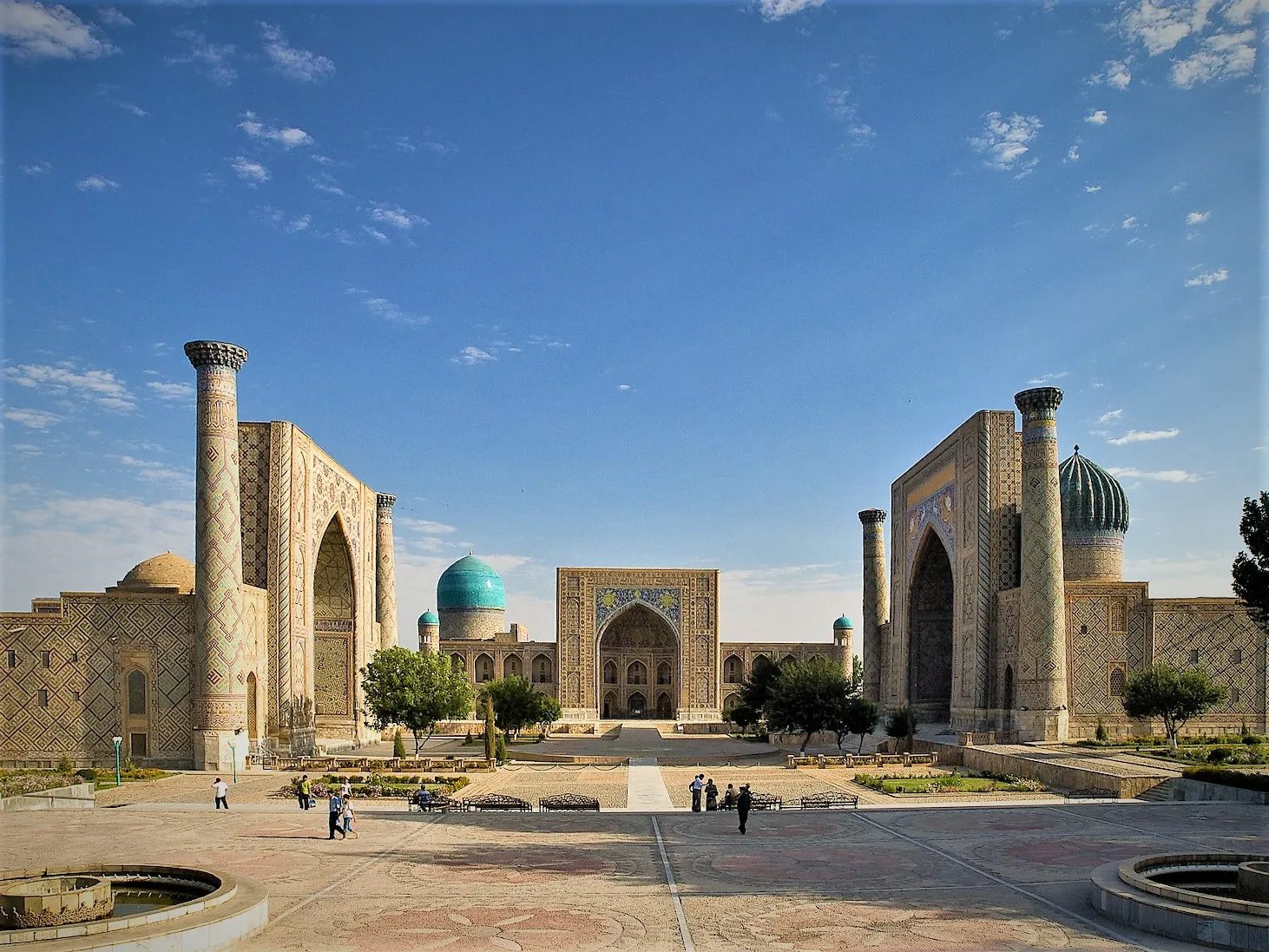
Late afternoon transforms the Registan into a grand theatrical stage where stone and sky perform in harmony. As sunlight softens, the three madrasas—Ulugh Beg, Sher-Dor, and Tilya-Kori—shift from imposing to inviting, their facades bathed in amber warmth. Intricate tilework takes on a velvety glow, and carved niches throw deep shadows that highlight every architectural detail. Street sounds dim here, replaced by the gentle murmur of visitors and the occasional echo of footsteps across the vast square. This time of day has long been favored by locals for evening gatherings, when the heat of the day has passed and the square becomes a place of relaxed conversation. Historically, merchants and scholars would also meet here at dusk, exchanging news and knowledge. Photographers prize this hour for its perfect balance of light, revealing both the scale and intimacy of the site. The architectural symmetry feels more pronounced, almost alive under the fading sun. As twilight deepens, artificial lighting begins to pick out arches and domes, adding another layer of drama. Witnessing the Registan at this moment is not just sightseeing—it’s standing in a living canvas where history, design, and atmosphere combine in a way that leaves an indelible impression.
Living Classroom at Ulugh Beg Madrasa

Scholarship once thrived behind Ulugh Beg Madrasa’s towering portal, where astronomy, mathematics, and philosophy were taught to students from across the Islamic world. Commissioned by the visionary ruler Ulugh Beg in the early 15th century, the madrasa was as much an observatory of ideas as his famous astronomical instruments. The courtyard still carries an academic energy, framed by arched student cells and lecture halls. Decorative star patterns on the facade are more than ornament—they reflect Ulugh Beg’s devotion to science and his belief in the cosmos as a guide to understanding life. Today, walking its grounds feels like stepping into a living archive, where each tile and inscription whispers lessons from centuries past. The site’s symmetry and precision speak to the mathematical rigor once taught within. Guides often share anecdotes of Ulugh Beg himself lecturing here, blending royal authority with scholarly humility. Modern visitors linger to imagine debates under shaded iwans or scholars poring over manuscripts by lantern light. This madrasa is not merely an architectural masterpiece; it’s a symbol of Samarkand’s legacy as a hub for intellectual exchange. Standing here, you’re reminded that knowledge was—and still is—one of the most powerful currencies of the Silk Road.
Mirror Mausoleums of Shah-i-Zinda
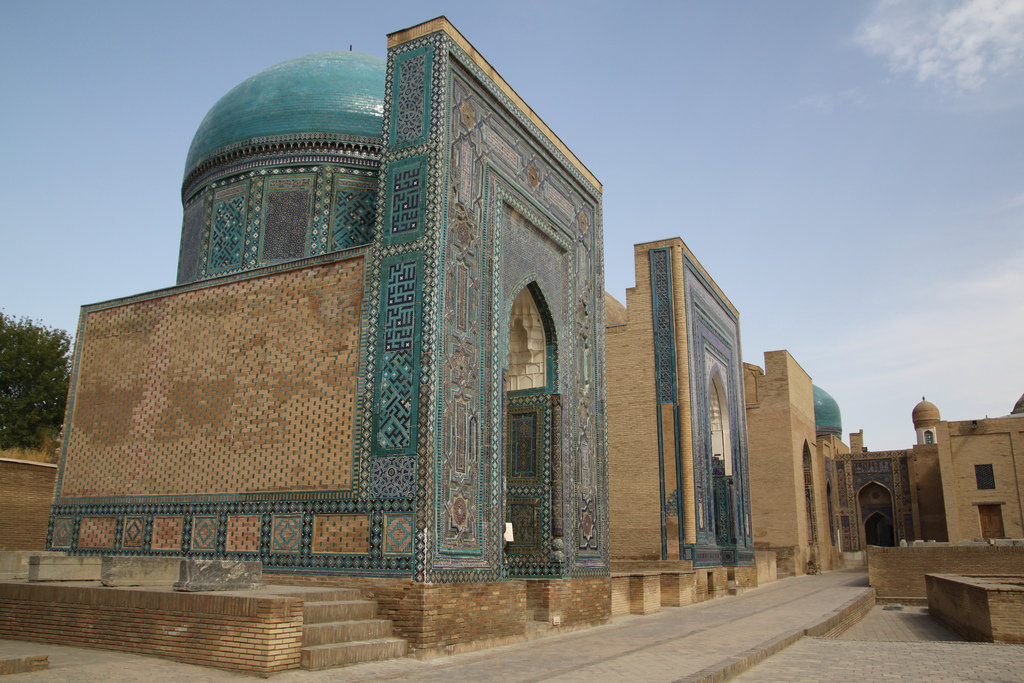
A narrow pathway climbs past a series of mausoleums whose tiled facades shimmer like glass under sunlight. Known as the “Living King,” Shah-i-Zinda is less a single monument and more a sacred avenue of history, with tombs dating from the 9th to the 19th centuries. Each structure is clad in intricate mosaics—turquoise, cobalt, and white—that seem to mirror one another in both color and artistry. The reflection effect is heightened by the site’s intimate scale, where opposing walls catch and bounce light across glazed surfaces. This burial complex is both solemn and spectacular, housing royals, nobles, and artisans whose work shaped Samarkand’s identity. Pilgrims and visitors tread quietly here, often pausing to trace carved inscriptions that weave together blessings and poetry. The craftsmanship is so refined that modern restorers still marvel at the precision achieved without contemporary tools. As you ascend, the vista opens to reveal the city beyond, a reminder of the living world outside this serene necropolis. Shah-i-Zinda is not only a masterpiece of architecture but also a deeply spiritual space where art becomes a conduit for memory, and light transforms stone into something ethereal.
Quiet Majesty of Bibi-Khanym Mosque

Once among the largest mosques in the Islamic world, Bibi-Khanym still commands awe with its colossal scale and graceful design. Commissioned by Timur in the late 14th century, the mosque was intended to symbolize the might of his empire and the cultural brilliance of Samarkand. Even in partial ruin, the vast entrance portal dwarfs visitors, while fragments of original tilework hint at its former opulence. The central dome, reconstructed with care, dominates the skyline, its ribbed surface gleaming under sunlight. Legend ties the mosque’s name to Timur’s queen, adding a romantic layer to its grandeur. Within the courtyard, quiet pathways lead to prayer halls where acoustics once carried sermons to thousands. The space exudes a calm dignity, far from the bustle of nearby markets. Ornamental calligraphy on the walls speaks of divine greatness and human aspiration. For travelers, standing beneath the soaring arches provides a rare sense of proportion, both physically and historically. This is a monument that tells two stories at once—of ambition that reached the heavens and of time’s inevitable reshaping of human achievement. The Bibi-Khanym Mosque remains an enduring emblem of Samarkand’s architectural and spiritual heritage.
Art & Commerce at Chorsu Dome
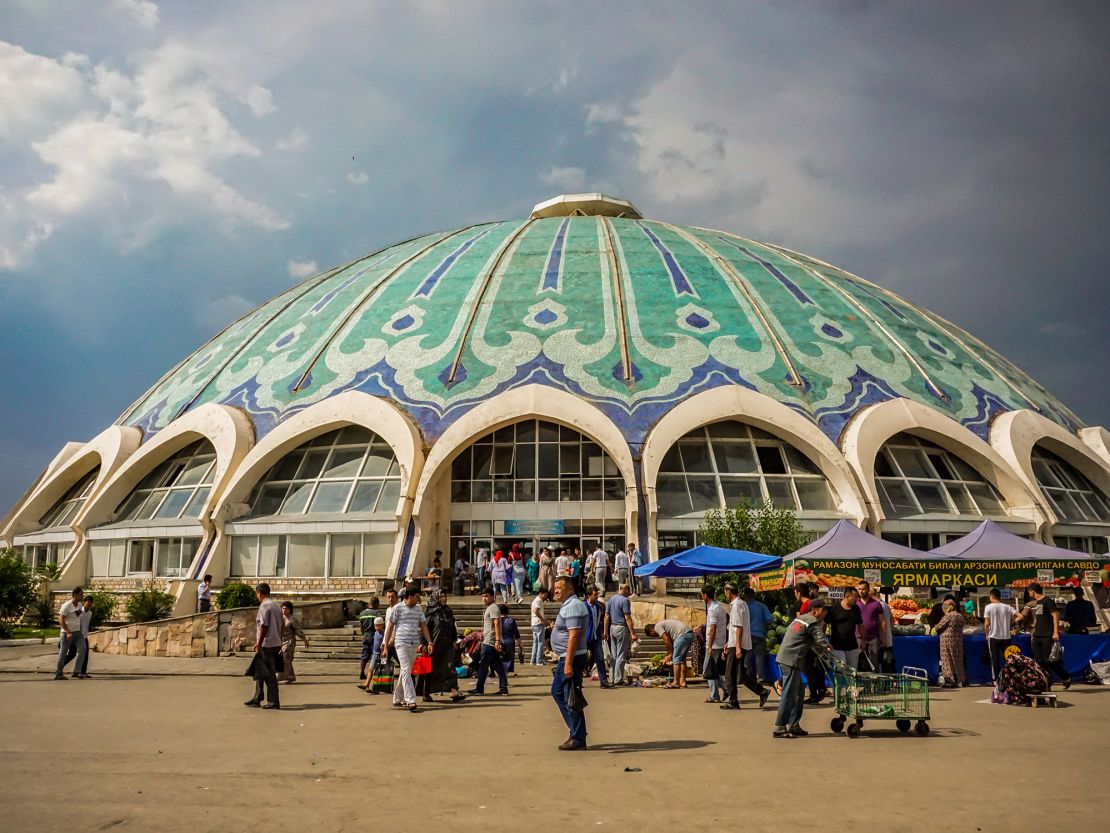
Beneath the circular arches of the Chorsu Dome, centuries of trade and craftsmanship converge in a single space. Once a vital Silk Road marketplace, this 18th-century structure remains a hub where textiles, spices, and ceramics mingle with the sound of bargaining voices. Its design is both functional and elegant, allowing air to circulate naturally while diffused light filters through small windows in the high dome. The architecture itself tells of Samarkand’s strategic position—able to welcome goods from distant Persia, China, and India while exporting its own renowned artistry. Today, visitors find vendors selling handwoven suzanis, delicate silk scarves, and intricately painted pottery, all echoing traditions passed down through generations. Artisans often work on-site, turning the market into a living exhibition of skill. Conversations with these craftspeople reveal not only techniques but also stories of heritage and family trade. The scent of fresh bread from nearby stalls drifts through the air, blending with the fragrance of dried fruits and saffron. Standing in Chorsu Dome offers more than shopping; it’s an immersion in a cultural rhythm that has pulsed for centuries, where commerce is inseparable from artistic expression. This is Samarkand’s marketplace legacy, preserved and thriving beneath an unforgettable architectural crown.
Bazaar Backstage of Siyob
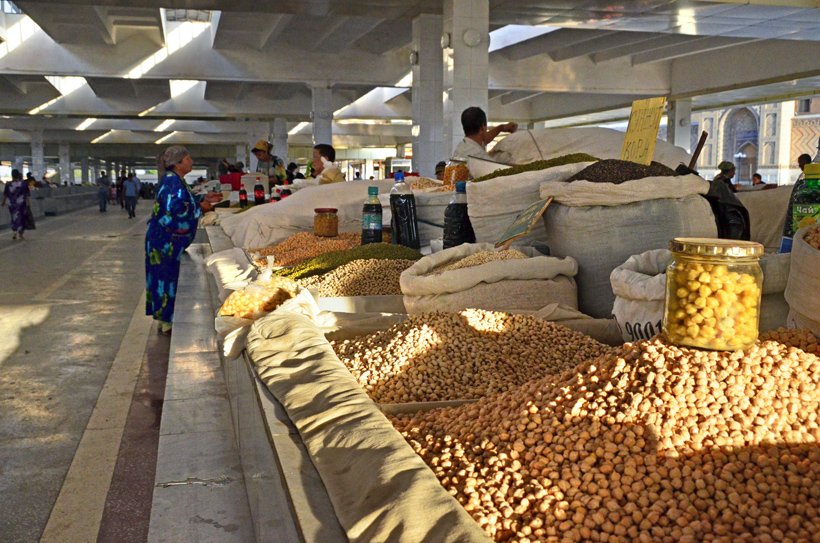
Behind the lively front stalls of Siyob Bazaar lies a quieter, more intimate world where the market’s real heart beats. Here, traders prepare goods, sort produce, and share tea with neighbors in spaces shielded from the crowd. This backstage area reveals the human network that keeps Samarkand’s largest market running smoothly—a blend of trust, tradition, and informal agreements honed over decades. Wooden crates brim with melons, onions, and fragrant herbs, ready to replace stock in the front aisles. Conversations in Uzbek, Tajik, and Russian weave together in a multilingual tapestry, reflecting the city’s diverse roots. The atmosphere is relaxed yet efficient, with workers moving in well-practiced rhythms. While tourists browse saffron and sweets outside, here the focus is on logistics, relationships, and sustaining livelihoods. Many vendors occupy spaces passed down through families, their knowledge of trade embedded in daily routine. Occasionally, elders pause to share stories of market days in Soviet times or even earlier, linking past and present in a few quiet sentences. This hidden side of Siyob is not staged for visitors—it’s authentic life, unfolding at its own pace. Observing it offers a rare perspective on the invisible effort behind Samarkand’s vibrant public face.
Hidden Corners Walks

Wandering beyond Samarkand’s main monuments reveals a network of narrow lanes and quiet courtyards where history feels personal. In these hidden corners, brick homes with carved wooden doors open onto shaded gardens, and children play beneath the watchful gaze of elders seated on tapchans. The hum of daily life mingles with faint echoes of the Silk Road, evident in architectural flourishes or a centuries-old well tucked between walls. Some paths lead to forgotten caravanserai ruins, their archways now sheltering workshops or small tea houses. These neighborhoods are where cultural continuity thrives—where recipes, crafts, and songs have been handed down without interruption. Morning light often catches on decorative latticework, while the scent of baking bread escapes from tandir ovens. Engaging with residents here often leads to spontaneous invitations for tea, offering a chance to exchange stories beyond the tourist lens. This slower rhythm contrasts sharply with the grandeur of Samarkand’s public squares, yet it is equally revealing. Walking these routes is not about sightseeing alone—it’s about understanding the living city, where heritage is woven into the fabric of ordinary days, hidden from guidebooks but rich in authenticity and warmth.
Gilded Sanctuary – Tilya-Kori’s Golden Heart

Inside Tilya-Kori Madrasa, the central prayer hall glows with gold leaf so lavish it seems to radiate its own light. Built in the mid-17th century, the madrasa served as both an educational center and Samarkand’s main mosque. The gilded interior is a masterpiece of craftsmanship, with floral motifs, geometric designs, and Quranic calligraphy blending seamlessly into a dazzling whole. Light filtering through high windows catches on the gold surfaces, shifting subtly as the day passes. The effect is both opulent and serene, inspiring awe without overwhelming the senses. This golden heart is a testament to the city’s prosperity during its later Silk Road period, when art and devotion flourished hand in hand. Standing within, visitors often fall silent, instinctively lowering their voices as though entering a sacred dialogue. Beyond the prayer hall, the courtyard offers a moment to breathe, framed by elegant arches and decorative tilework. Guides sometimes explain the techniques used for the gilding, revealing the delicate balance between artistic ambition and religious symbolism. Experiencing Tilya-Kori is more than an architectural appreciation—it’s an encounter with the spiritual and cultural confidence of a city that understood beauty as an expression of both faith and civic pride.
Street Life + Historic Layers
Samarkand’s streets offer a layered narrative where modern rhythms weave seamlessly with echoes of the Silk Road. Bustling avenues lead past bakeries turning out fresh non bread, while just steps away, centuries-old facades whisper of merchant caravans and imperial processions. Street vendors sell seasonal produce beside shops offering mobile phone repairs, a juxtaposition that captures the city’s dual identity—rooted in history yet attuned to the present. Side alleys may reveal hidden madrasas or crumbling caravanserais, each carrying architectural traces from Persian, Mongol, and Timurid eras. The soundscape is equally textured: the call to prayer blends with car horns, market chatter, and children’s laughter. Residents navigate this mix effortlessly, treating the past as an integral part of daily life rather than a relic. Even the smallest details—a fragment of carved stone in a garden wall, an antique door repurposed for a modern cafe—tell stories of adaptation and continuity. For visitors, walking through these streets is a sensory immersion that resists being neatly categorized. It’s history experienced not in static displays but in motion, carried forward in gestures, flavors, and voices that belong entirely to the living city.
Sunlit Minaret Vistas

From the base of Samarkand’s iconic minarets, upward views stretch to blue-tiled crowns framed against an open sky. Climbing one of these slender towers, where possible, offers a perspective that unites the city’s grandeur with its intimate scale. Below, courtyards, domes, and bustling markets form a patterned quilt, their colors shifting under the sun’s path. The vantage point makes architectural symmetry more apparent, revealing how builders aligned monuments to frame one another across the urban landscape. Historically, minarets served both as calls to prayer and as visual markers for travelers arriving from the steppe. Today, they remain powerful symbols of identity, anchoring Samarkand’s skyline. Light plays a central role in their beauty—morning brings crisp definition to carved details, while afternoon bathes them in amber warmth. Photographers find endless compositions here, but the experience is not purely visual; there’s also a sense of connection to the generations who once scanned the horizon for approaching caravans. Standing in this sunlight, high above the hum of the streets, offers a rare stillness and a deeper appreciation for the artistry and purpose that shaped these enduring sentinels of the Silk Road.
Craft & Conversation in Local Homes

Stepping into a Samarkand home where artisans work transforms sightseeing into personal connection. Many families continue traditions in ceramics, embroidery, or woodcarving, their workshops often tucked into courtyards shaded by grapevines. The pace here is unhurried, allowing visitors to watch each stage of a craft unfold—whether it’s the steady stitching of a suzani or the rhythmic shaping of clay on a wheel. These spaces are not tourist showrooms but genuine living environments where art is interwoven with daily routine. Conversations flow easily over tea served in patterned pialas, covering everything from the origins of a design to the changes brought by modern life. The scent of fresh bread from a tandir oven or the sight of fruit laid out for guests adds layers of warmth to the encounter. Such visits reveal how skills are passed from parent to child, preserving not only techniques but also the stories behind them. Engaging directly with artisans in their own homes offers insight into the city’s enduring creative spirit—one that thrives as much in domestic spaces as in grand monuments. It’s a reminder that Samarkand’s cultural wealth lives equally in the hands of its people as in the stones of its historic landmarks.