
Jagged cliffs rise from the Atlantic like something out of myth, yet they’re very real—and steeped in cinematic and spiritual history. Off Ireland’s wild western coast, Skellig Michael lures travelers with its otherworldly presence, ancient stone steps, and ties to early Christian monks and Star Wars lore alike. Visiting this UNESCO World Heritage Site isn’t just about scenery—it’s a rare chance to walk where both Jedi and hermits once stood. This guide reveals how to get there, what to expect, and why this island pilgrimage deserves a top spot on your Ireland itinerary.
Mid‑May to End‑September Landing Tours Only

Access to Skellig Michael is limited to a specific window between mid-May and late September, tightly aligned with weather conditions and wildlife protection. Outside this period, harsh Atlantic swells and high winds make the crossing too dangerous, and landings are suspended for safety. Tour operators strictly follow this seasonal opening regulated by Ireland’s Office of Public Works to ensure preservation of both the fragile ecosystem and the historic monastery ruins. Those aiming to visit must plan within this short summer window or settle for non-landing tours. Summer months offer the best chance for clear skies and calmer waters, though weather can still turn quickly. Visitors arriving outside this window won’t be allowed to set foot on the island. Staying flexible with your travel dates helps account for last-minute cancellations due to rough seas. The season’s opening also coincides with puffin nesting, adding to the appeal. Planning your trip during this operational timeframe is non-negotiable if you want to experience the island’s spiritual solitude and ancient stonework firsthand. Travelers booking during these months enjoy exclusive access to the UNESCO World Heritage Site and its cinematic landscape famously featured in the Star Wars films, all while respecting seasonal conservation efforts.
Book Landing Slot 2+ Months Ahead

Availability for Skellig Michael landing tours is notoriously scarce, with permits capped and demand overwhelming. Booking at least two months ahead isn’t just advisable—it’s essential. Operators can only transport a handful of guests per day, and slots disappear quickly, particularly for peak puffin season and weekends. Tickets typically open for reservation in March and are often sold out within weeks. Procrastination leaves most would-be travelers disappointed or forced to join non-landing alternatives. Don’t expect to simply walk up or book last minute, even if you’re staying nearby. Each tour operator receives a limited number of daily landings, so flexibility with your travel dates may be required. Most trips depart early morning, and tour companies enforce strict check-in procedures and weather-related cancellations. Early booking also allows time to arrange nearby accommodation, especially in Portmagee or Caherdaniel, which book out just as quickly. Delaying plans often results in missing out entirely. For those aiming to walk the storied monastery path and witness cinematic history where Luke Skywalker once stood, securing your place months in advance is your only real shot. Once your date is confirmed, stay informed with operator updates, as rough seas can still force last-minute itinerary changes.
Visit May–Mid‑July for Puffin Season

Birdwatchers and photographers hoping to witness Ireland’s beloved puffins should aim for a visit between May and mid-July. This is when the island’s grassy ledges and rock crevices are bustling with thousands of Atlantic puffins, nesting and feeding under the watchful eyes of their mates. During this short but spectacular window, Skellig Michael becomes one of the best puffin-viewing sites in Europe. The birds’ comical expressions and vibrant beaks offer up-close encounters rarely available elsewhere without disturbing natural habitats. Puffins begin arriving in late spring and typically depart by mid-July to early August, depending on food supply and weather. Beyond puffins, other seabirds like gannets and razorbills fill the skies, creating a dynamic wildlife scene atop this remote monastic outpost. Planning your landing tour within this avian peak guarantees the rare chance to walk among centuries-old ruins while surrounded by wildlife. The combination of medieval architecture, cliffside drama, and puffin colonies draws nature lovers from across the globe. With limited tour slots and a narrow seasonal window, this time frame requires both early booking and careful travel planning. Puffin season adds an unforgettable layer of life and motion to an already mystical landscape—perfect for visitors seeking nature and heritage intertwined.
Portmagee/Caherdaniel Departure Points

Reaching Skellig Michael begins on the southwest coast of Ireland, with departure points primarily located in the small villages of Portmagee and Caherdaniel. Portmagee serves as the most popular and consistent launch site, known for its proximity to the island, reliable operators, and harbor-side accommodations. Caherdaniel, while offering fewer departures, provides an alternative route with stunning coastal scenery en route. Both locations offer only licensed boat tours permitted by Ireland’s Office of Public Works. These remote villages are not accessible by public transportation alone, so travelers often rent cars or use tour transfers from larger towns like Killarney or Kenmare. Staying overnight before your scheduled departure is highly recommended, especially with early morning check-ins and unpredictable sea conditions. The area offers more than just a launchpad—it’s a slice of quiet Irish life with seafood pubs, traditional music, and harbor sunsets. Booking your departure point in advance is critical, as different operators may offer landing or eco-tours exclusively from their base. Being clear on where your boat departs from ensures smooth coordination and prevents last-minute logistical issues. Choosing between Portmagee and Caherdaniel may come down to accommodation availability and preferred travel route, but both grant access to Ireland’s most cinematic offshore destination.
Limit of 180 Daily Visitors
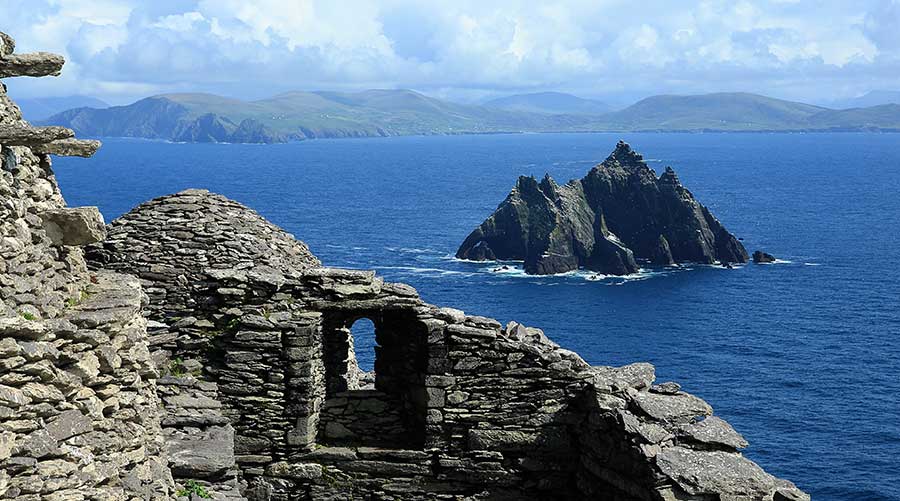
Skellig Michael operates under one of Ireland’s strictest conservation visitor limits—only 180 people are permitted to land each day. This cap ensures the preservation of the fragile monastic site and the nesting grounds of protected seabird species. Managed by the Office of Public Works, the policy prevents overcrowding and reduces erosion on the steep, narrow paths carved into the island’s rock. Operators must adhere to daily quotas, and no private landings are allowed. This restriction amplifies the importance of early booking, as demand far exceeds supply, especially during peak summer months. Tour operators divide the quota among multiple licensed boats, each allowed only a fixed number of passengers. Once on the island, visitors must follow strict safety protocols and remain on designated paths to limit environmental impact. The site’s UNESCO designation makes it one of the few World Heritage locations with such a tight access policy. While the limitation may frustrate those unable to secure a spot, it guarantees a quiet, respectful visit for those who do. The sparse foot traffic preserves the atmosphere that makes Skellig Michael so surreal—offering solitude, ancient silence, and a deeper connection to its monastic past and cinematic future.
618 Medieval Steps to Monastery

The climb to Skellig Michael’s summit involves ascending 618 hand-carved medieval steps—an unfiltered journey through time. Winding up steep, uneven rock faces without modern railings or barriers, the ascent demands focus and physical readiness. This path was once the monks’ only route to their clifftop monastery, and centuries later, it remains unchanged. Visitors must exercise caution, as there are no safety nets or guardrails, and weather conditions can make surfaces slippery. The experience isn’t suited for those with mobility challenges or severe vertigo, as exposure to heights is constant. That said, those who make the climb are rewarded with breathtaking views over the Atlantic and access to one of Europe’s most remarkable early Christian sites. The journey itself becomes a rite of passage—equal parts pilgrimage and physical challenge. Along the way, seabirds may swoop overhead, and ancient retaining walls peek from the stone. The steps also hold cinematic legacy, having featured prominently in Star Wars: The Force Awakens and The Last Jedi. Guides on the island are available to answer questions but offer limited assistance during the climb. Proper footwear and a patient pace are key. This stone stairway offers both a physical ascent and spiritual encounter, unmatched in Ireland.
Explore Monastery & Beehive Cells

Stone structures perched near the summit of Skellig Michael reveal a monastic settlement that dates back over 1,400 years. Built by early Christian monks, the complex includes six dry-stone beehive cells, two oratories, and a cemetery, all incredibly preserved despite centuries of Atlantic gales. These corbelled huts once sheltered monks from harsh elements and now offer a rare look into Ireland’s ascetic spiritual past. Visitors are free to walk among the structures, guided by marked paths and occasional interpretive signage. The entire site rests dramatically on a ledge nearly 200 meters above sea level, with no added modern construction to mar the authenticity. The architecture’s simplicity belies the ingenuity required to build on such a remote, unforgiving terrain. This ancient community survived through fishing, prayer, and self-sufficiency, and its remains feel remarkably intimate and human-scale. The layout suggests a deep commitment to solitude, discipline, and devotion. Walking through the complex offers more than just a historical lesson—it provides a visceral sense of what life meant in isolation. Restoration work ensures visitor access without damaging the original structures. These monastic ruins stand as a tribute to spiritual endurance and now double as a cinematic pilgrimage for Star Wars fans retracing Luke Skywalker’s exile.
Boat‑Only Access; No On‑Island Facilities

Visiting Skellig Michael requires advance understanding that this is a raw, uncommercialized island—reached only by boat and devoid of modern facilities. There are no bathrooms, no shelter, no food or water sources, and absolutely no shops. The experience is deliberately untamed to preserve its spiritual and ecological integrity. Once your boat leaves Portmagee or Caherdaniel, you are off-grid for the duration of the tour. Weather and sea conditions can delay your return, so packing essentials is crucial. Waterproof layers, sunscreen, and hydration must be sorted beforehand. Boats are often open to the elements, and landings are via a basic pier. Upon arrival, guides offer a brief safety overview, but once on the steps, visitors are largely on their own. Cell service is minimal or nonexistent. Emergency aid is limited, and evacuation options are dependent on sea conditions. This isolation, while challenging, adds to the authenticity of the journey. Skellig Michael offers no distractions—just you, the wind, the sea, and stone. For travelers used to comfort or predictability, the visit demands preparation and respect. Those who arrive equipped and informed will find the island’s remoteness part of its soul-stirring magic.
Alternate: Eco‑Tour Loop Without Landing
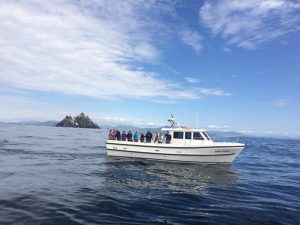
Not all travelers will secure a landing permit—but that doesn’t mean missing out. Eco-tours offer a remarkable alternative, allowing guests to circle both Skellig Michael and nearby Little Skellig by boat without stepping ashore. These sea-only excursions bring visitors face-to-face with the islands’ towering cliffs, seabird colonies, and dramatic spires from the waterline, often in smaller vessels with better maneuverability. Without the time constraints of a landing, these trips often last longer on the water and offer more flexible timing. Guides provide detailed commentary on the monastic ruins, geology, and wildlife, making it an educational and visually rich experience. For wildlife lovers, eco-tours are often better for viewing gannet colonies on Little Skellig, home to one of the world’s largest populations. Puffins, seals, and dolphins are also commonly spotted. Photographers appreciate the low-angle views of the island’s dramatic silhouette—especially under golden hour lighting. Sea conditions still apply, and motion sickness precautions are advised. While the spiritual stillness of the summit may be out of reach, the surrounding Atlantic spectacle delivers its own brand of wonder. Eco-tours are also more accessible for those with mobility concerns, offering Skellig’s mystery and majesty without the rigorous climb or landing risks.
Morning Crossing for Calmer Seas

Sea conditions in the Skellig region are notoriously unpredictable, but early morning offers the best window for smoother crossings. Most tour operators schedule departures between 8:00 and 10:00 AM, before afternoon winds pick up and swells intensify. Atlantic waters become increasingly volatile later in the day, often forcing afternoon cancellations or rougher rides that challenge even seasoned sailors. Morning tours minimize this risk and increase the likelihood of a successful landing. Calm seas also mean better wildlife spotting, clearer photo opportunities, and a more comfortable journey for those prone to motion sickness. Boats tend to operate at full capacity, so early crossings also avoid heat buildup and exposure during long waits. Getting on the earliest boat available maximizes time spent on the island and improves your overall experience. Many tour operators recommend arriving at the harbor well in advance, as schedules are tight and delays are rare. Morning light over the water adds to the ethereal approach, with Skellig Michael often shrouded in soft mist that gradually lifts to reveal its iconic shape. For the best shot at safe passage and unforgettable views, prioritizing a morning tour is more than smart—it’s the golden rule for any Skellig-bound traveler.
Pack Anti‑Nausea Gear & Sturdy Shoes

Preparation can make or break your trip to Skellig Michael, especially when it comes to motion sickness and safety. Even on calm days, Atlantic swells can leave passengers queasy within minutes, especially in smaller open-deck boats. Motion sickness tablets, pressure wristbands, and ginger chews are highly recommended before departure. Some travelers also benefit from pre-trip fasting or light snacks like dry crackers. While nausea can pass once you disembark, the ride back can be equally rough, so don’t underestimate the need to come prepared. Once ashore, the terrain shifts from sea to steep stone, making proper footwear critical. The island’s 618 steps are steep, narrow, and uneven, without railings. Hiking boots or supportive walking shoes with solid grip are non-negotiable. Avoid sandals or any footwear with smooth soles. Rain can make the path slick, so tread carefully. The combination of Atlantic exposure, rigorous ascent, and zero infrastructure demands serious readiness. Packing light but smart is key. Sunscreen, water, a windbreaker, and a small backpack will serve you better than anything bulky. Those who arrive geared-up experience fewer hiccups and enjoy more of what the island offers. Preparation isn’t optional—it’s essential to safely enjoy one of Ireland’s most rugged and awe-inspiring sites.
Wildlife & Star Wars Filming Photo Spots

Skellig Michael delivers a rare pairing: cinematic legacy and raw natural wonder. Star Wars fans can photograph exact locations from The Force Awakens and The Last Jedi, including the clifftop where Luke Skywalker first appeared. These scenes were shot using the island’s real structures—no sets or CGI replacements—which means visitors walk the same paths seen on screen. But the film connection is only part of the draw. Skellig is also a sanctuary for seabirds, particularly puffins during nesting season. With careful footing, photographers can capture these charismatic birds just steps from ancient monastic walls. Views of Little Skellig from the summit add depth to wide-angle landscape shots, especially under golden hour skies. Seals, dolphins, and sometimes even basking sharks may appear during the boat ride, so cameras should stay ready throughout the journey. While drones are prohibited, the raw elevation and open terrain offer plenty of stunning angles without artificial tricks. Visitors seeking both pop culture thrills and wildlife moments will find Skellig’s contrasts unparalleled. Respect for the island’s fragile environment is crucial, so stick to marked paths and avoid disturbing birds. With the right timing and gear, you’ll return with some of the most surreal and cinematic photographs Ireland has to offer.