
Sheer cliffs rise from mist-laced jungle, forming a prehistoric plateau that inspired The Lost World and countless trekking dreams. Straddling the borders of Venezuela, Brazil, and Guyana, this tepui stands as one of Earth’s oldest geological formations. Its summit reveals alien-like terrain, carnivorous plants, and panoramic views found nowhere else. Remote, demanding, and utterly breathtaking, the journey to its top is both physical and spiritual. This guide unpacks everything needed for those drawn to raw nature and high-altitude isolation.
Ancient Sandstone Sentinel
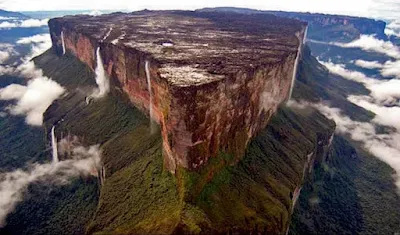
Standing as one of Earth’s oldest geological formations, this sandstone giant has guarded Venezuela’s borderlands for nearly two billion years. Weathered by wind, rain, and time, its sheer vertical cliffs rise dramatically from surrounding savannas, giving an almost fortress-like presence visible for miles. Layers of rock reveal prehistoric stories—each stratum a chapter in the planet’s deep past. Geologists are drawn here to study its Precambrian origins, while adventurers admire its monumental scale. The base is fringed with lush greenery, contrasting sharply with the bare, towering walls above. Morning light paints the sandstone in shifting tones of gold, rose, and amber, while evening shadows transform it into a silhouette of mystery. Its height and isolation have preserved unique plant life, with some species clinging only to its ledges. For the Indigenous Pemon people, this sentinel holds spiritual significance, representing a link between the earthly and the divine. Whether approached through mist-laden valleys or under cloudless skies, the experience of standing before it is both humbling and awe-inspiring. This natural wonder is not merely a mountain—it is a living monument to endurance, resilience, and the slow artistry of geological time, embodying the timeless spirit of Venezuela’s tepui landscapes.
Three-Nation Plateau
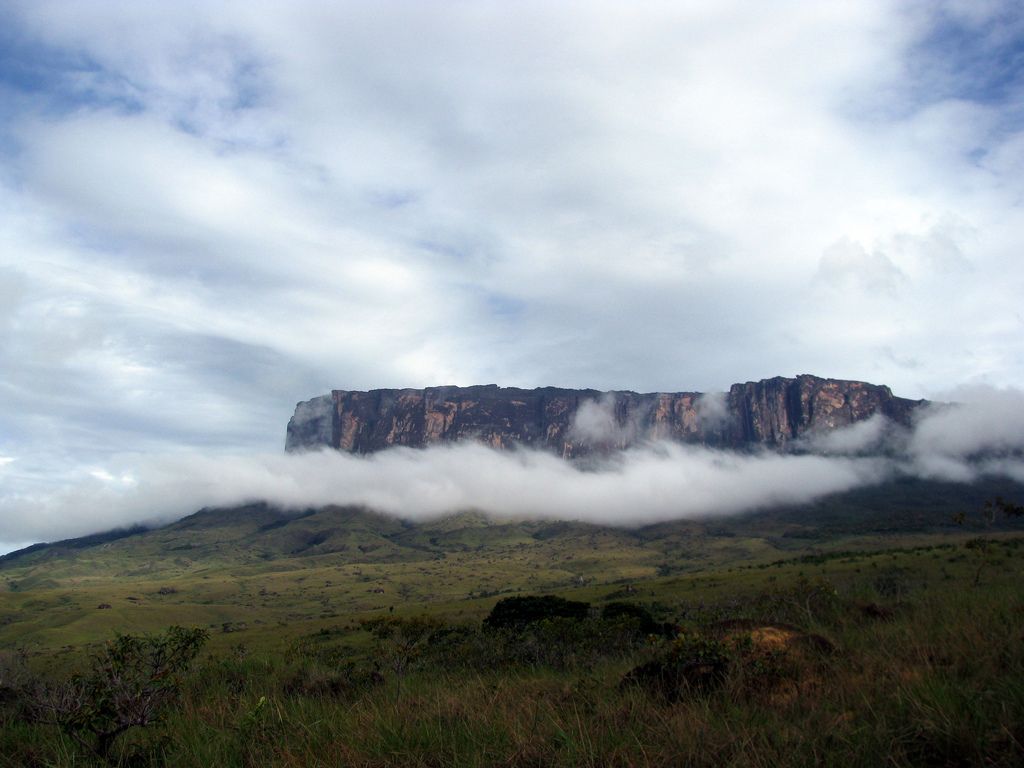
At the summit, travelers stand where Venezuela, Brazil, and Guyana meet—a rare tri-border point atop a prehistoric mesa. This plateau stretches across political boundaries yet remains a single, unbroken natural wonder. Marked by a modest monument, the site offers a geographical curiosity: a single step can shift you between three nations. Here, the horizon rolls endlessly, with sweeping views over the rainforest expanse and distant tepui silhouettes. The thin, crisp air and the constant breeze remind visitors of the altitude’s quiet dominance. Despite its remote location, the plateau attracts dedicated trekkers eager to experience its unparalleled sense of “being everywhere and nowhere” at once. Geological formations—strange rock pillars, water-sculpted depressions, and quartzite veins—dot the surface, each shaped by millions of years of erosion. Cloud banks drift across the plateau, sometimes obscuring the markers and then revealing them in sudden bursts of light. Beyond its novelty, this is also an ecological treasure, with unique mosses, bromeliads, and insect species adapted to life on this sky-high frontier. For those who reach it, the Three-Nation Plateau becomes more than a border—it is a symbol of shared natural heritage, a reminder that landscapes transcend the lines humans draw on maps.
“Crystal Carved” Legends

Local tales speak of an otherworldly treasure hidden in the quartz-lined crevices of the mountain’s summit. Vast beds of milky and rose quartz scatter the plateau, shimmering under direct sunlight and glowing faintly in misty conditions. Over centuries, the Pemon people have passed down legends describing spirits who “carved” these crystals as gifts for the land’s guardians. Scientists explain their formation through slow mineral deposition in the ancient sandstone, but even the most rational visitor cannot deny the sense of magic when walking among glittering shards. Some quartz fragments are shaped like arrowheads or abstract sculptures, naturally chiseled by water and wind. Pools of rainwater collect in crystal basins, refracting light into delicate rainbows. The crunch of quartz underfoot and the sparkle in every direction create a surreal, dreamlike atmosphere. While removing stones is prohibited to protect this fragile ecosystem, photography captures the brilliance without harm. Every crystal seems to carry a silent story—part geological chronicle, part cultural myth. Here, science and folklore intertwine seamlessly, making “Crystal Carved” landscapes one of Mount Roraima’s most enchanting features, where nature’s artistry meets ancestral imagination.
Maverick Rock Peak
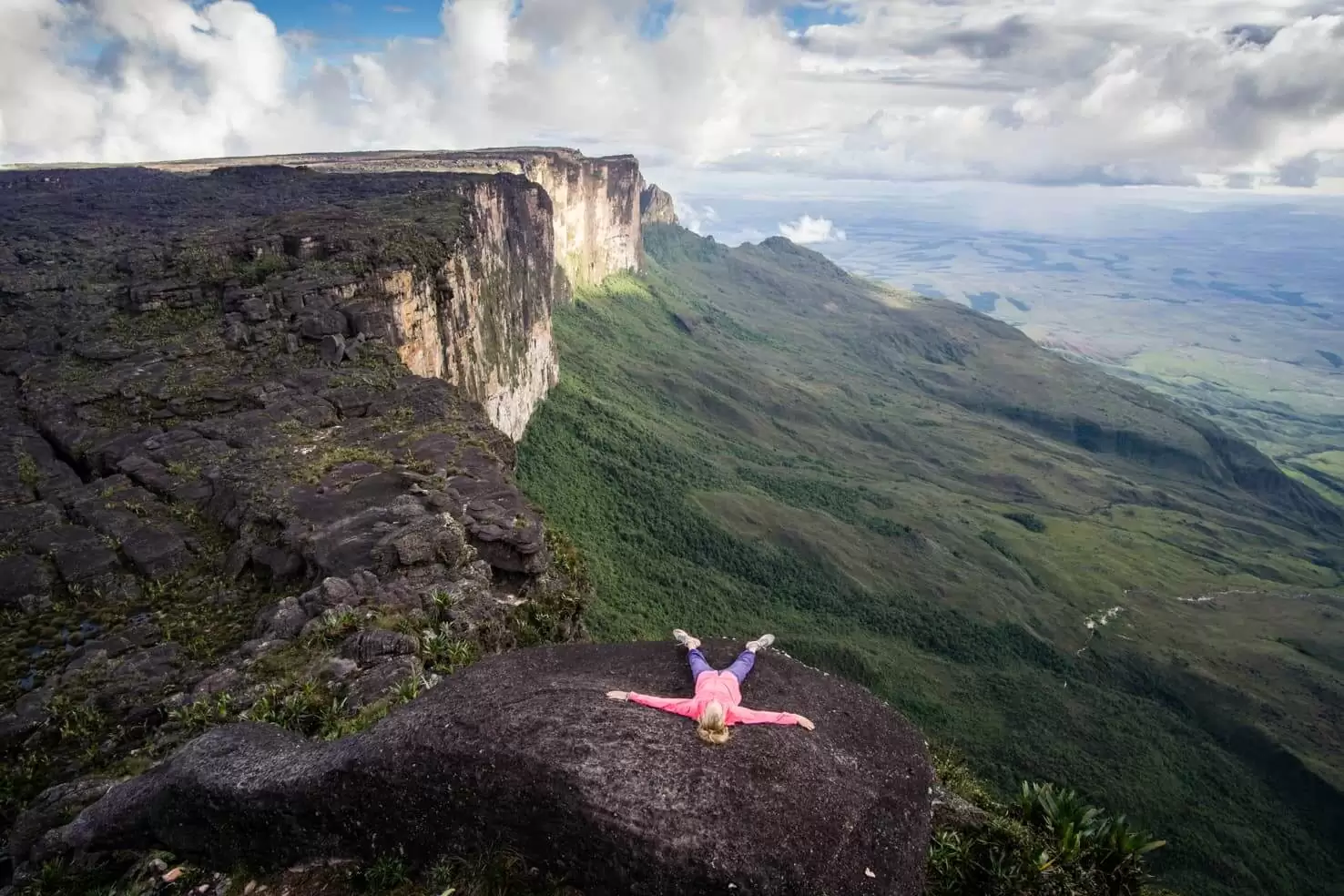
A lone spire rises defiantly from the otherwise flat summit, its jagged profile resembling a sentinel separated from the main cliffs. This peak has become a navigational landmark for trekkers exploring the plateau’s labyrinthine terrain. Its formation owes itself to differential erosion, where harder rock resisted weathering while the surrounding sandstone slowly wore away. Over time, wind-blown grit sculpted its surface into deep grooves and angular overhangs. The spire’s base is often shrouded in drifting mist, while its tip emerges into blue skies, creating a striking contrast. Adventurers often pause here to rest, using the vantage point to orient themselves before continuing deeper into the tepui. The Pemon legends speak of a guardian spirit inhabiting the peak, watching over both travelers and the land. Closer inspection reveals patches of rare lichen clinging to its vertical walls, thriving where almost no other vegetation survives. During late afternoon, the stone takes on a burnished copper hue, amplifying its rugged beauty. This solitary outcrop embodies Mount Roraima’s rebellious geology—standing apart, defying time, and challenging the forces of erosion. For many, reaching this point is both a photographic reward and a moment of personal triumph on the mountain’s challenging trek.
Island in the Sky
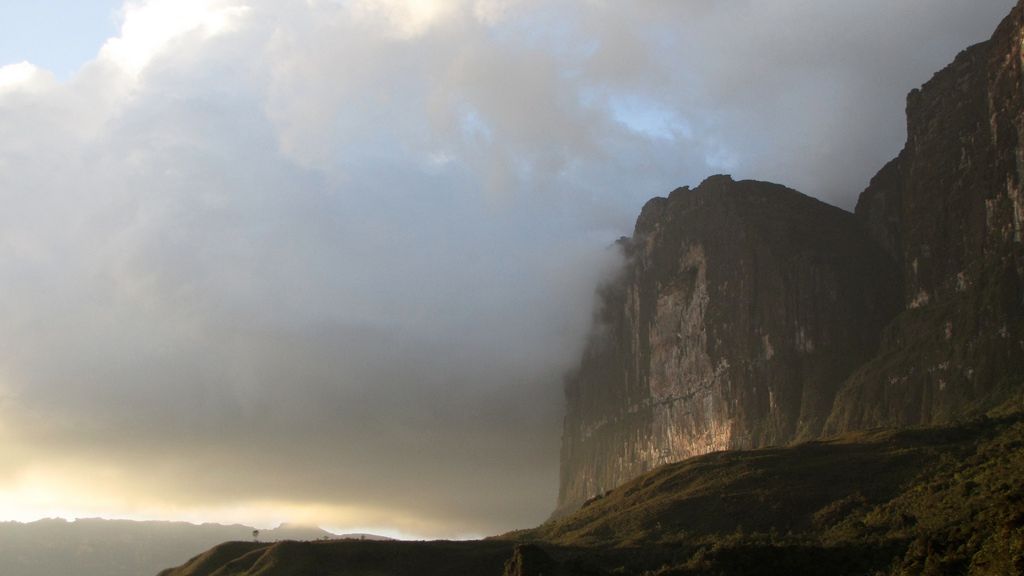
From the base, the sheer cliffs of Mount Roraima rise so abruptly that its summit feels detached from the world below—earning it the nickname “Island in the Sky.” Encircled by cloud seas, the plateau’s edges often vanish into mist, leaving only a vast flatland floating above the rainforest canopy. This natural isolation has preserved species found nowhere else, a phenomenon likened to the Galápagos Islands but suspended in the air. The sense of separation is heightened during the ascent, as vegetation shifts from tropical forest to sparse highland flora. On clear mornings, distant tepuis appear like other “islands” on the horizon, creating a surreal archipelago of stone. At sunrise, low clouds spill over the cliffs in slow motion, resembling waterfalls of vapor. The silence here is profound, broken only by wind and the occasional call of a rare bird. For biologists, this isolation provides a living laboratory; for trekkers, it offers a rare feeling of stepping into another realm entirely. The climb to this sky-borne table is challenging, but the reward—standing on a prehistoric landmass adrift in the clouds—remains one of South America’s most unforgettable experiences, blending raw natural beauty with the thrill of remoteness.
Hidden Biodiversity Hotspot
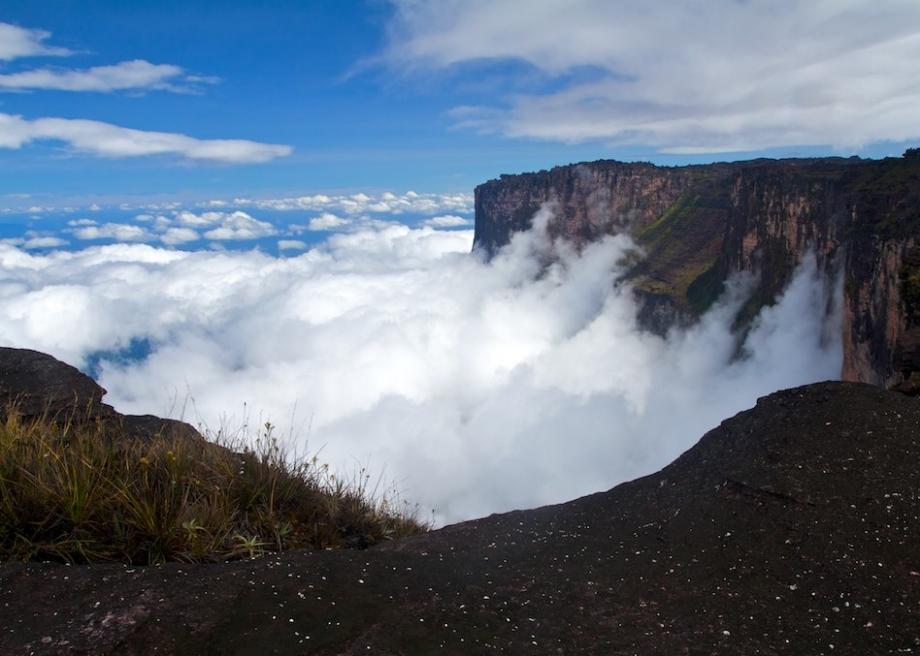
Life clings to Mount Roraima in ways invisible at first glance, rewarding patient explorers with discoveries of rare and delicate species. Tiny carnivorous plants, such as Heliamphora pitcher plants, nestle in water-filled rock hollows, trapping unsuspecting insects. Endemic bromeliads bloom with vivid colors despite the nutrient-poor soil, while mosses and liverworts carpet shaded crevices in velvety green. Amphibians, including the distinctive pebble toad, have adapted to the harsh plateau climate, rolling rather than hopping to evade predators. Scientists often describe the summit as a microcosm of evolutionary experimentation, where isolation over millions of years has fostered life forms found nowhere else. Seasonal rains feed miniature streams and crystal-clear pools, creating habitats for tiny invertebrates that thrive only in this high-altitude environment. Even birds visiting from the lowlands treat this place as a seasonal haven. For ecologists, each new survey uncovers species that add to the tepui’s already legendary biodiversity record. For trekkers, the realization that every step might cross paths with a one-of-a-kind organism deepens the sense of awe. This hidden biological treasure underscores Mount Roraima’s status not just as a geological marvel but also as a sanctuary of evolution, reminding visitors that its isolated summit is as alive as it is ancient.
Hiker-Friendly Trek Route

The most accessible path to Mount Roraima’s summit begins in the Pemon village of Paraitepui, offering an epic journey through the Gran Sabana’s rolling grasslands. Trekkers cross shallow rivers, traverse open plains, and steadily gain elevation with the tepui looming ever larger ahead. The route is well-trodden yet still demanding, requiring multi-day endurance and readiness for unpredictable weather. Campsites along the way—Tek and Base Camp—offer clear views of the cliffs, especially during sunrise and sunset when the rock glows in shifting colors. The final ascent is via the “La Rampa,” a natural rock ramp with sections shaded by lush vegetation and nourished by trickling streams. Porters from local communities often guide visitors, sharing stories about the mountain’s cultural and natural history. Along the trail, hikers encounter an array of wildlife and diverse plant life, from lowland orchids to highland ferns. Clear days reveal sweeping vistas over the savanna, while misty conditions add an element of mystery. The trek’s combination of physical challenge, cultural interaction, and breathtaking scenery makes it one of South America’s most rewarding hiking experiences. For many, reaching the summit is less a finish line and more the gateway to exploring a world that feels entirely removed from the one below.
Ever-Changing Summit Weather
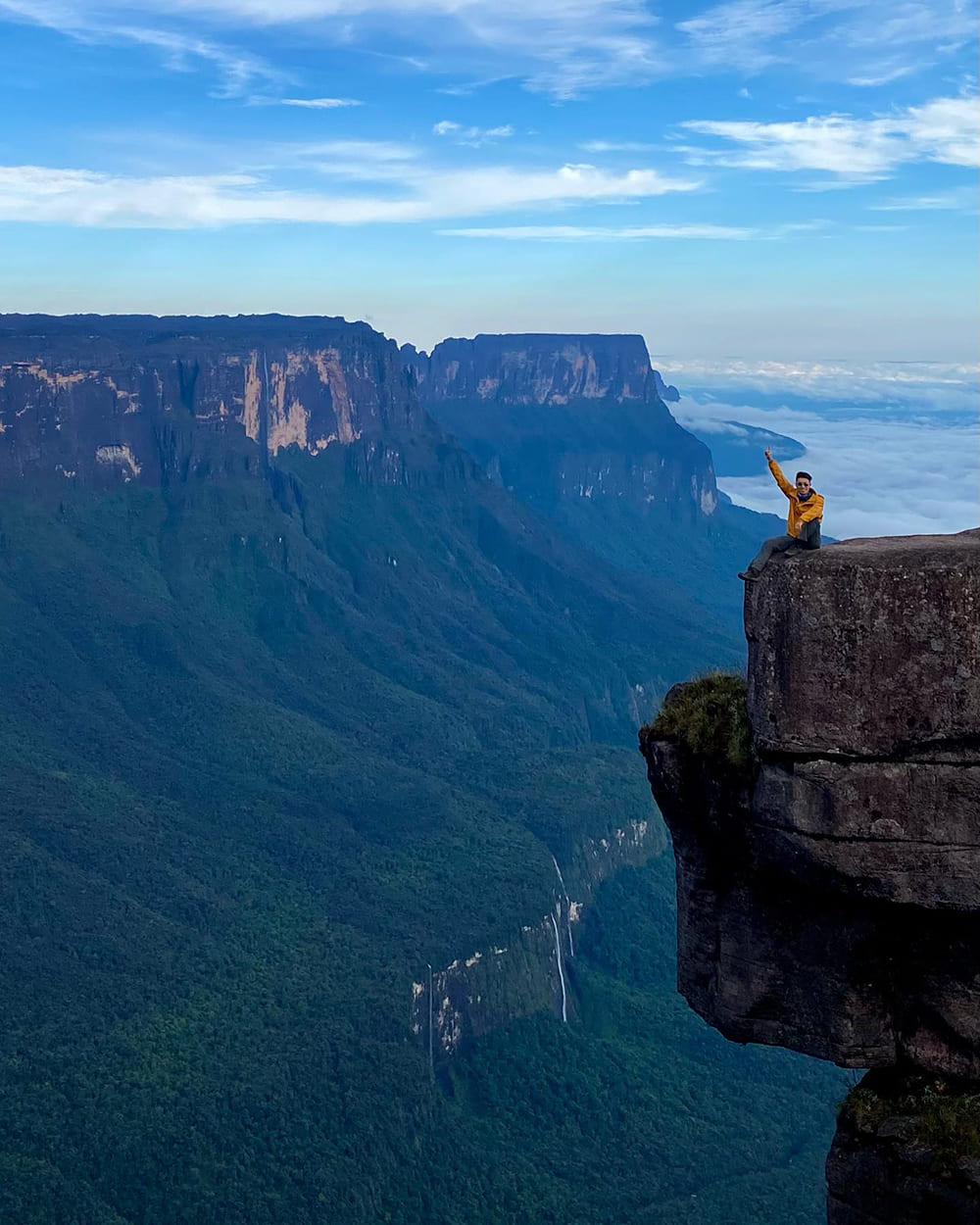
Conditions atop Mount Roraima shift with little warning, transforming the landscape in moments. One hour, the plateau may bask under bright sunlight, its quartz crystals sparkling; the next, thick fog can envelop everything in a ghostly haze. Frequent rain showers feed the network of streams, pools, and waterfalls, while powerful gusts sweep across the open terrain. Temperatures remain cool year-round, but sudden drops occur when storms roll in, making layered clothing essential for trekkers. Cloud inversions often occur at dawn, when lowland mist floods the cliffs and then dissipates as the sun rises. This rapid weather turnover adds both challenge and allure to summit exploration—photographers, in particular, prize the fleeting light conditions that can change a scene’s mood entirely within minutes. These shifts also play a crucial ecological role, sustaining the fragile high-altitude plant and animal life. For seasoned hikers, adapting to the mountain’s whims becomes part of the adventure, a reminder that this is a living, breathing environment shaped daily by wind and water. Whether bathed in golden light or swallowed by silver mist, the summit’s ever-changing atmosphere ensures that no two visits to Mount Roraima are ever truly the same, adding an element of unpredictability to its timeless majesty.
Sacred to the Pemon

For the Pemon people, Mount Roraima is more than a geological wonder—it is a sacred entity woven into their cultural identity. Oral traditions speak of the mountain as the stump of a mighty tree that once held all the world’s fruits, felled in an ancient act that shaped the land. Its flat summit is believed to be a dwelling place of spirits, and certain areas are avoided out of deep respect for these presences. The Pemon view the mountain not as something to conquer but as a revered ancestor, a keeper of stories and a provider of life through its rivers and streams. Ritual offerings and blessings often precede expeditions, ensuring harmony between visitors and the land. Many local guides share these traditions along the trek, giving travelers a richer understanding of the mountain’s role in Pemon cosmology. This cultural dimension transforms the climb into a journey of mutual respect—nature’s grandeur interwoven with human heritage. By preserving both the mountain’s physical integrity and its spiritual narratives, the Pemon continue to protect Mount Roraima as a living legacy. For visitors, learning these stories deepens the experience, turning the ascent into not just an adventure but a cross-cultural exchange grounded in reverence.
Storytelling Landscape
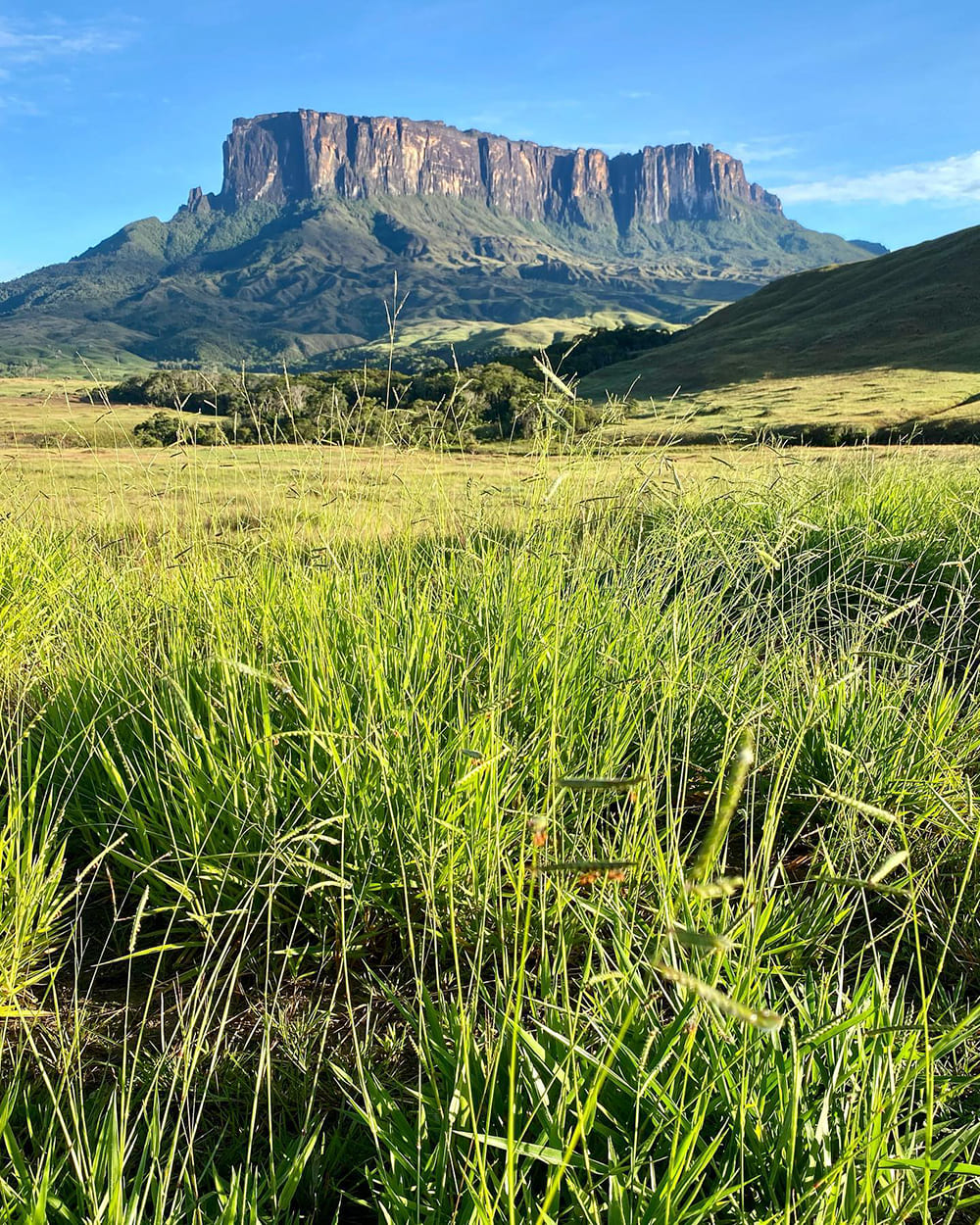
Every ridge, crevice, and cliff face on Mount Roraima seems to carry a tale, blending geological history with human imagination. The jagged silhouettes of weathered rock formations inspire names like “El Foso” and “Maverick Rock,” each tied to legends passed down by the Pemon and shaped by explorers’ observations. Shallow valleys resemble ancient amphitheaters, where wind and water have etched patterns into stone that look like symbols from a lost language. Seasonal waterfalls appear and vanish, leaving only faint mineral stains that hint at their brief presence. Pools take on mirror-like qualities, reflecting skies that shift from cobalt blue to stormy grey in minutes. Trekkers often speak of the summit as a natural library—its “pages” written in quartz veins, sediment layers, and fossil impressions of ancient plants. The interplay of light and shadow turns rock faces into living murals, changing with every passing hour. For those attuned to its rhythm, the landscape tells not one story but many: of continental drift, of ancient seas, of Indigenous mythology, and of the explorers who risked everything to stand here. This fusion of fact and fable ensures that Mount Roraima remains not just a sight to behold, but a narrative to experience with every step.
Raw Flat-Top Terrain

Stepping onto Mount Roraima’s summit reveals an alien world—stark, windswept, and pitted with strange depressions carved by millennia of erosion. The ground is predominantly dark sandstone, rough underfoot and fractured into geometric slabs that seem purposefully arranged. Rainwater fills natural basins, creating networks of shallow pools bordered by mats of moss and tiny flowering plants. Towering rock pillars stand like sentinels across the expanse, while deep crevices hint at the hidden caverns below. The lack of soil and the constant exposure to wind and rain limit vegetation, giving the area an austere beauty. In certain places, the rock has weathered into shapes resembling petrified animals or sculpted monuments, sparking the imagination of visitors. During clear weather, the flatness stretches toward every horizon, broken only by dramatic cliffs that drop abruptly to the forest far below. This raw environment challenges trekkers physically, but its minimalism and isolation create a profound sense of peace. The terrain forces an awareness of each step and each moment, stripping away distractions and leaving only the elemental connection between human and stone. For those seeking unfiltered contact with nature, the summit’s stark plateau delivers an unforgettable reminder of Earth’s primal landscapes.
Gateway to Gran Sabana

The journey to Mount Roraima begins in the vast Gran Sabana, a highland region of sweeping grasslands, scattered tepuis, and cascading waterfalls. This natural gateway sets the stage for the trek, offering a gradual immersion into the region’s unique ecosystems. Wide vistas stretch toward the horizon, punctuated by the distinctive silhouettes of distant plateaus. Along the trail, hikers cross crystal-clear rivers, skirt small jungle patches, and pass through rolling hills dotted with wildflowers. The Gran Sabana is also home to Pemon communities, where travelers can learn about local customs, language, and traditions before beginning the ascent. Wildlife sightings—such as giant anteaters, colorful macaws, and elusive foxes—add to the sense of adventure. The approach toward Roraima is especially dramatic: each day of hiking brings the mountain’s sheer walls closer, until they dominate the skyline. For many, the Gran Sabana is more than just a starting point—it is an integral part of the Mount Roraima experience, blending cultural richness with natural splendor. Its vast openness contrasts sharply with the enclosed summit world above, making the transition from grassy plains to stone plateau even more striking. This landscape serves as both the physical and emotional prologue to one of South America’s most iconic treks.